




What are hiking poles?
If you've ever seen hikers using what look like ski poles on a trail, you might have wondered, "What are hiking poles?" More than just an accessory, hiking poles (also called trekking poles) are fundamental tools that can transform your outdoor experience. They provide stability, reduce fatigue, and protect your joints, making them a wise investment for walkers of all levels.
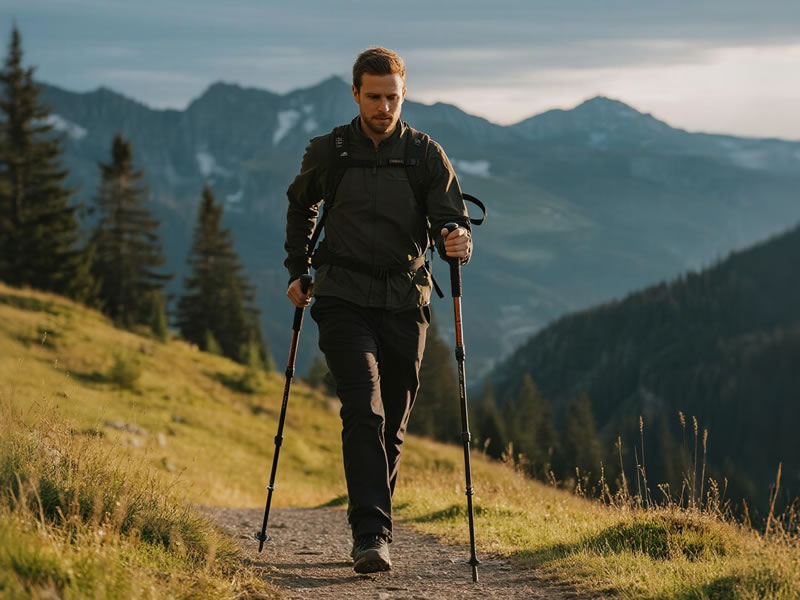
Recommended trekking pole purchase link: https://s.click.aliexpress.com/e/_c4M7OWaN
Beyond Simple Walking Sticks
At their core, hiking poles are adjustable poles, typically made from lightweight aluminum or carbon fiber, designed to be held in each hand. Unlike a traditional walking stick found on the trail, they are engineered with specific features for performance and safety:
- Adjustable Shafts: Allow you to customize the pole's length for uphill, downhill, and flat terrain.
- Ergonomic Grips: Made from cork, foam, or rubber to fit comfortably in your hand and minimize blisters.
- Wrist Straps: Enable you to transfer weight through your arms without constantly gripping the pole tightly.
- Durable Tips: Carbide or steel tips provide excellent grip on dirt, rock, and roots, often accompanied with rubber "paws" for use on pavement.
The Multifaceted Benefits: Why You Should Use Them
The advantages of using hiking poles extend far beyond just having something to lean on.
- Enhanced Stability and Balance: This is the most immediate benefit. Four points of contact with the ground are inherently more stable than two. Poles provide crucial support on uneven terrain, slippery rocks, loose scree, and when crossing streams, significantly reducing your risk of slips and falls.
- Joint Protection and Reduced Fatigue: On descents, hiking poles absorb a substantial amount of impact that would otherwise be transferred to your knees, ankles, and hips. By engaging your upper body, they distribute the workload across more muscle groups, which conserves energy and reduces leg fatigue over long distances. This makes them invaluable for hikers with existing knee issues or those carrying a heavy backpack.
- Increased Power and Pace: On uphill sections, you can use your arms and shoulders to "push off" with the poles, propelling yourself forward. This powerful motion can help you maintain a steady pace and conquer inclines with less leg strain.
- Versatile Trail Tool: Their utility doesn't end with walking. Hiking poles can be used to:Test Depth: Probe the depth of mud or water before stepping in.Clear Obstacles: Push aside thorny bushes or spider webs.Create a Shelter: In a pinch, they can serve as the frame for an emergency tarp shelter.
Choosing the Right Pole for You
When selecting hiking poles, consider these factors:
- Material: Aluminum poles (e.g., 7075 alloy) are durable and cost-effective. Carbon Fiber poles are lighter and better at dampening vibration but can be more brittle and expensive.
- Grip Material: Cork molds to your hand and wicks moisture. Foam is soft and absorbent. Rubber is durable but can feel sweaty in hot weather.
- Locking Mechanism: Lever locks are robust and easy to adjust, even with cold hands. Twist locks are sleek but can sometimes slip or freeze.
In conclusion, hiking poles are not just for seasoned mountaineers. They are a versatile, performance-enhancing tool that makes hiking safer, more comfortable, and more enjoyable for everyone. By reducing the cumulative stress on your body, they empower you to hike longer, explore further, and protect your joints for a lifetime of adventure on the trails.




