




Walking Pole Storage Ideas: The Complete Guide to Protecting Your Investment
After a long day on the trail, it's tempting to just lean your trekking poles in a corner and forget about them until next time. However, improper storage can lead to damaged shafts, compromised locking mechanisms, and frustrating equipment failure when you need them most. Proper storage is a crucial yet often overlooked aspect of trekking pole maintenance that can significantly extend their lifespan. This comprehensive guide will explore innovative and practical walking pole storage ideas for every space and situation, ensuring your trusted gear remains in peak condition for your next adventure.
Recommended trekking pole purchase link: https://s.click.aliexpress.com/e/_c4M7OWaN
Why Proper Storage Matters: Beyond Simple Organization
Understanding the consequences of poor storage habits provides motivation for implementing better solutions:
- Preserves Locking Mechanisms: Storing poles fully extended relieves tension from internal springs and locking systems, preventing them from losing their grip strength over time.
- Prevents Structural Damage: Leaning poles against walls can cause gradual bending, while tossing them in a pile risks cracking carbon fiber or denting aluminum shafts.
- Protects Tips and Points: Exposed carbide tips can damage other gear, floors, and furniture—and become dull themselves when left unprotected.
- Prevents Corrosion: Storing poles while damp or in humid environments accelerates corrosion in metal components, particularly in adjustable sections and locking mechanisms.
- Ensures Trail Readiness: Well-organized poles are easy to locate, inspect, and pack, eliminating last-minute frustration before your next hike.
Home Storage Solutions: Creating Your Gear Headquarters
Vertical Storage Options:
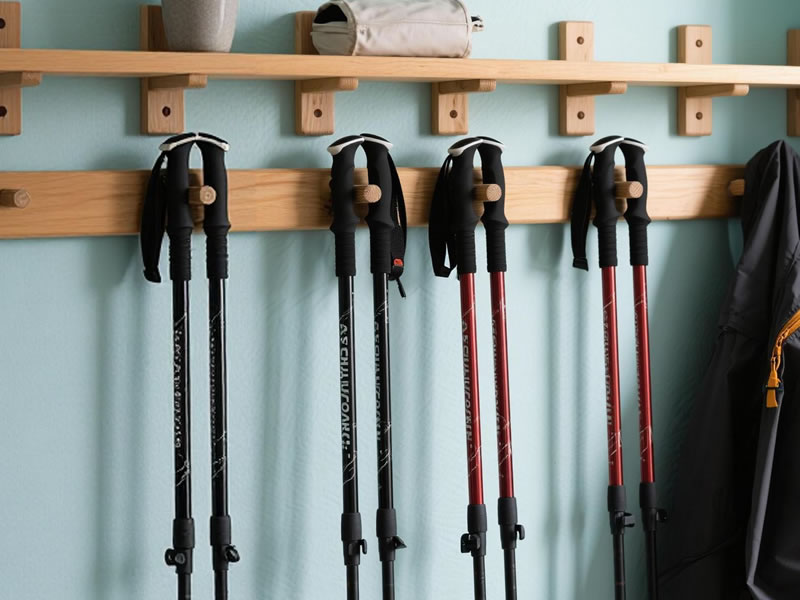
- Wall-Mounted Hooks: Simple screw-in hooks installed in a garage, closet, or gear room keep poles upright and off the floor. Position them high enough to accommodate fully extended poles.
- Pegboard Systems: Customizable pegboard panels with specialized hooks offer flexible storage that can adapt as your gear collection grows. This system works particularly well for storing poles alongside other outdoor equipment.
- Vertical Stands or Umbrella Holders: Repurpose a sturdy umbrella stand or create a custom vertical holder from PVC pipe. This solution works well for corner placement and provides stable, contained storage.
Horizontal Storage Solutions:
- Wall Racks: Install horizontal racks or brackets that cradle poles along their length. This method distributes weight evenly and provides easy visual access to your collection.
- Overhead Storage: Utilize ceiling-mounted racks or hooks in garages or storage areas to keep poles safely out of the way while maximizing floor space.
- Under-Bed Storage: For limited space, store poles in protective cases under beds. This approach protects them from dust, moisture, and accidental damage.
Space-Saving Solutions for Small Homes and Apartments
Limited space requires creative thinking:
- Behind-Door Storage: Install over-the-door hooks or racks on closet doors or room doors to utilize often-wasted vertical space.
- Multi-Functional Furniture: Choose storage benches or ottomans with long, narrow compartments designed to hold sports equipment.
- Tension Rod Systems: Place a tension rod horizontally in a closet and use S-hooks to hang poles vertically along the rod.
- Corner Utilization: Install corner shelving units or create a simple DIY corner rack using angled brackets.
Specialized Storage for Different Pole Types
Adjustable Trekking Poles:
- Store fully extended to maintain locking mechanism integrity
- Loosen twist locks slightly during long-term storage to preserve spring tension
- Consider individual sleeves for each section if frequently disassembled
Collapsible/Z-Poles:
- Store either fully collapsed or fully assembled—avoid intermediate positions
- Use storage tubes or cases that accommodate their specific folded length
- Keep joining mechanisms clean and free from debris
Antishock Poles:
- Store with shock mechanisms in the relaxed position
- Avoid compressing shock springs during storage
- Protect external adjustment knobs from accidental impact
DIY Storage Projects: Custom Solutions
For those who enjoy hands-on projects, these DIY ideas offer personalized storage:
- PVC Pipe Holder: Cut sections of wide-diameter PVC pipe and mount them vertically to a board for simple, effective pole holders.
- Magnetic Tool Strip: Install a strong magnetic tool strip on a wall to securely hold poles by their metal tips.
- Repurposed Wine Rack: A sturdy wooden wine rack can make an attractive and functional pole display stand.
- Bungee Cord System: Create a simple horizontal storage system by stretching bungee cords between two wall anchors to cradle poles securely.
Travel and Transportation Storage
Proper storage while traveling is equally important:
- Dedicated Pole Cases: Invest in a padded carrying case specifically designed for trekking poles. These protect poles during air travel and prevent damage to other gear.
- Pack Attachment Systems: Use the external attachment points on your backpack designed specifically for poles when not in use on the trail.
- Vehicle Storage: Install simple hooks or use a cargo management system in your vehicle to prevent poles from rolling around during transport.
Seasonal Storage Considerations
For long-term storage between seasons:
- Thorough Cleaning: Clean poles completely, removing all dirt, moisture, and debris from mechanisms
- Inspection: Check for any wear, damage, or corrosion that needs addressing
- Partial Disassembly: Remove baskets and rubber tips to prevent deformation
- Lubrication: Apply appropriate lubricants to moving parts
- Climate Control: Store in a temperature-stable, dry environment away from direct sunlight
Storage Mistakes to Avoid
- Never store poles damp or with mud caked on components
- Avoid long-term storage in extreme temperatures (attics, uninsulated garages)
- Don't hang heavy items from stored poles
- Avoid storing in positions that create constant pressure on any single point
- Never store with locking mechanisms engaged under tension
Conclusion: Organization Extends Lifespan
Implementing proper walking pole storage solutions is an investment in your gear's longevity and performance. Whether you choose simple wall hooks, a custom DIY project, or specialized cases, the right storage approach protects your equipment from damage, keeps your space organized, and ensures your poles are always ready for your next adventure. By taking a few moments to store your poles correctly after each use, you'll enjoy reliable performance for years to come. Remember: well-cared-for gear rarely fails when you need it most, and proper storage is one of the simplest yet most effective ways to demonstrate respect for your equipment and the adventures you share together.




