




Walking Poles for Mushroom Foragers: Your Unseen Guide in the Woods
The mushroom forager moves with a unique rhythm: a slow, deliberate pace, eyes scanning the forest floor, constantly bending and kneeling to examine nature's hidden treasures. This pursuit, while rewarding, leads them into some of the most challenging and unpredictable terrains—slippery slopes, hidden holes, and uneven ground covered in a deceptive blanket of leaves. For these quiet hunters, a walking pole is not just a hiking aid; it is an essential, multi-functional tool that enhances safety, efficiency, and success.
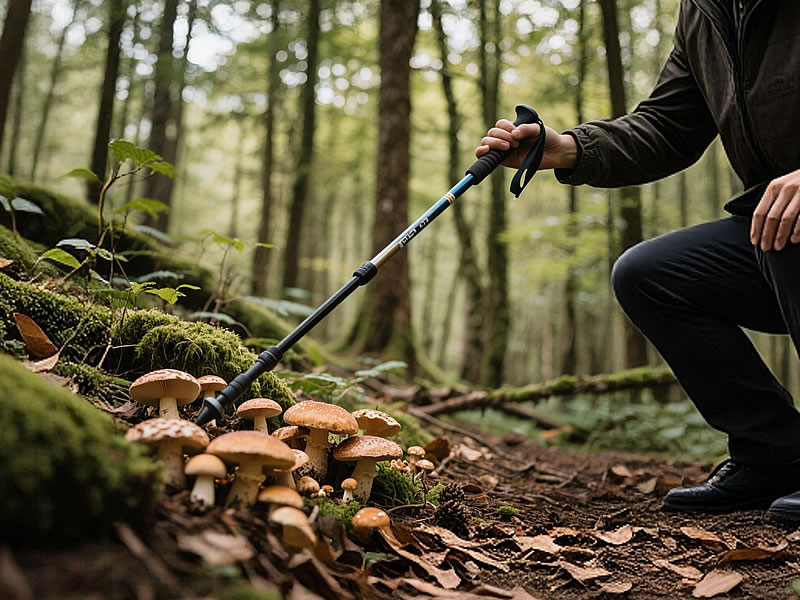
Recommended trekking pole purchase link: https://s.click.aliexpress.com/e/_c4M7OWaN
Beyond simply providing support, a well-chosen pole becomes an extension of the forager's own senses, a trusted companion in the quest for fungi.
The Core Benefits: More Than Just a Third Leg
The value of a walking pole in the context of mushroom foraging is profound and multifaceted.
- Unmatched Stability and Safety: The foraging environment is a hazard zone. Wet leaves, moss-covered logs, hidden roots, and muddy inclines are incredibly slippery. A pole provides a critical third or fourth point of contact, preventing slips and falls. This stability is indispensable when navigating stream banks, steep ravines, or simply crossing a patch of uneven ground while your attention is focused on the forest floor, not your feet.
- The Gentle Probe and Revealer: This is where the pole transitions from a mobility tool to a foraging instrument. Instead of using your hands or feet to push aside potentially thorny or tick-laden undergrowth, you can use the tip of your pole.Parting the Veil: Gently part ferns, brush, and low-hanging branches to reveal the ground beneath without disturbing the ecosystem.Probing the Unknown: Carefully probe under piles of leaves or around the base of logs where prized mushrooms like morels or chanterelles often hide. This allows you to check for snakes or other hidden obstacles before reaching in with your hands.
- Reduction of Physical Fatigue: Foraging involves constant micro-movements: stopping, bending, kneeling, and rising. This is exceptionally taxing on the knees, hips, and back. A walking pole acts as a portable support rail. You can use it to lower yourself down and push yourself back up with significantly less strain, preserving your energy for hours of productive searching.
- A Tool for Documentation and Identification: Many modern walking poles feature a standard 1/4-20 camera thread hidden under the handle. This allows you to screw on a smartphone adapter and instantly transform your pole into a sturdy monopod.Stable Photography: Capture sharp, blur-free photos of mushrooms in their habitat for later identification. This is crucial for distinguishing between look-alikes, where gill attachment, stem details, and the presence of a volva are key.Hands-Free Reference: Hold your field guide or phone steady for consultation without having to balance it on your knee or a muddy log.
Choosing the Perfect Foraging Pole
Not all poles are created equal for the specific needs of a mushroom hunter.
- Durability is Key: Aluminum Over Carbon Fiber. While carbon fiber is lighter, a quality 7075 aluminum pole is the better choice for foraging. It can withstand the side pressure of prying back branches, the accidental impact with rocks, and the general abuse of off-trail exploration without the risk of a catastrophic carbon fiber snap.
- Locking Mechanism: Flick Locks for Reliability. Lever-style flick locks are far superior to twist locks in the damp, dirty forest environment. They are less likely to jam with mud or debris, and they can be adjusted quickly and securely with cold, wet, or gloved hands.
- The Right Tip: A durable carbide tip is essential for biting into wood and soft ground. Removable rubber tip protectors are also useful for providing quiet, non-slip traction on mossy rocks or fallen logs.
- Grip Material: Cork for Comfort. Cork grips are excellent because they wick away moisture, mold to the shape of your hand, and remain comfortable in both hot and cold weather, which is ideal for long, patient hours in the woods.
Mastering the Forager's Technique
Using a pole for foraging is a subtle art. It's less about a rhythmic stride and more about deliberate placement.
- The "Probe and Step" Method: Before committing your weight to a step, use the pole to probe the area in front of you. Test for firmness, check for hidden holes, and clear away slippery leaf litter.
- The "Knee Saver" Lift: When bending down, plant the pole firmly and use it as a lever to control your descent and, more importantly, to help you push back up to a standing position, sparing your knees repeated stress.
In conclusion, for the serious mushroom forager, a walking pole is as fundamental as a good knife and a reliable field guide. It is a tool that safeguards your body against the terrain's unpredictability, extends your reach and perception, and aids in the critical task of documentation. It is the unseen guide that supports you, both physically and mentally, allowing you to focus on the joy of the hunt and the quiet wonder of the forest. Investing in a robust, feature-rich pole is an investment in more fruitful, comfortable, and safe foraging adventures for years to come.




