




How to Prevent Walking Poles From Sinking in Sand
There are few things more frustrating on a beautiful beach walk or coastal hike than your walking pole plunging deep into the sand with every step. What should be a source of stability becomes a jerky, inefficient anchor. Fortunately, with the right equipment and technique, you can conquer soft terrain and enjoy solid, reliable support.
The core of the problem is physics: the sharp tip of a standard walking pole concentrates all your weight and downward force onto a tiny surface area. In loose, granular sand, this creates immense pressure, causing the pole to instantly sink. The solution lies in distributing that force over a wider area.
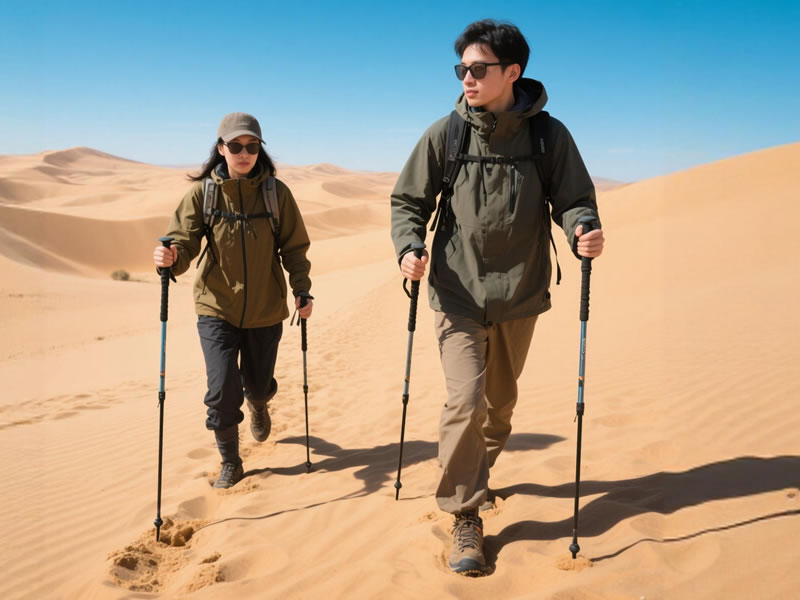
Recommended trekking pole purchase link: https://s.click.aliexpress.com/e/_c4M7OWaN
Your Essential Tool: Sand Baskets
The single most effective solution is to fit your poles with sand baskets (sometimes called "sand feet" or "mud baskets"). These are not the small, plastic discs that come standard with most poles. Sand baskets are specifically designed, larger-diameter attachments that function like snowshoes for your poles.
- How They Work: By significantly increasing the surface area at the tip, a sand basket disperses your downward pressure. This creates "flotation," preventing the tip from sinking more than an inch or two. The result is a stable, predictable platform.
- What to Look For: Genuine sand baskets are typically made of durable, molded plastic and can be 4 to 6 inches (10-15 cm) in diameter. They are easily installed by slipping them over the tip and securing them against the pole's shaft, often replacing your existing trekking basket.
Mastering the Technique
Even with the right gear, technique is crucial for effortless movement:
- The Planting Angle: Instead of planting the pole vertically, aim for a shallower, more forward angle. This utilizes the basket's full surface area more effectively against the sand and creates better forward propulsion.
- A Deliberate Motion: Avoid a sharp, stabbing motion. Use a slower, smoother, and more deliberate planting action. Imagine gently placing the pole on the sand rather than jabbing it.
- Follow Through: Apply steady pressure as you move your body weight forward over the pole. A quick, heavy push will still drive it downward.
Additional Pro Tips for Sandy Terrain
- Pole Type Matters: If you're frequently on sand, consider a trekking pole with a larger diameter shaft for added strength, as the lateral forces can be greater.
- Wet Sand is Your Friend: When possible, walk on wet, compacted sand near the water's edge. It provides a naturally firmer surface and requires less effort than soft, dry dunes.
- Check Your Tips: Ensure your rubber tips are removed. They offer no benefit in deep sand and can even trap the pole. The carbide tip should be clean and able to bite slightly into the firmer sand underneath the loose top layer.
Don't let soft terrain cut your adventures short. By equipping your poles with dedicated sand baskets and refining your technique, you'll transform your beach and dune hikes, gaining the confidence and stability to explore further.




