




Ultralight trekking poles for women.
The world of outdoor gear has evolved significantly, moving beyond unisex designs to recognize the unique biomechanics and preferences of female hikers. When it comes to ultralight trekking poles, this specialization is particularly valuable. Women-specific ultralight poles are not merely a marketing concept; they are engineered with distinct physiological considerations that enhance comfort, efficiency, and control on the trail, making them an excellent choice for female hikers seeking to optimize their gear.
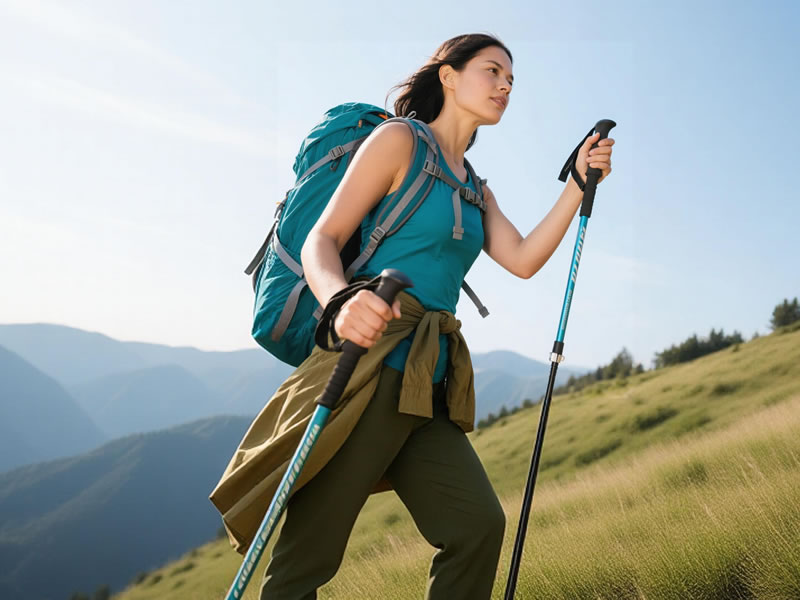
Recommended trekking pole purchase link: https://s.click.aliexpress.com/e/_c4M7OWaN
The core differences in women's models address common fit issues that can lead to discomfort and fatigue over long distances. The key distinctions lie in proportion, weight, and ergonomics, creating a pole that feels like a natural extension of a woman's body rather than a generic tool.
Key Design Features of Women's Ultralight Poles
- Shorter Length and Adjusted Range:Statistically, women often have a shorter arm length and overall height compared to men. Women-specific poles are calibrated for this, typically offering a maximum adjustable length of 100cm to 115cm (39 to 45 inches), rather than the 120cm+ range common in standard models. This ensures a proper 90-degree elbow bend for a wider range of users without needing to shorten the pole to its minimum, which can compromise stability.
- Narrower, Contoured Grips:This is one of the most critical differentiators. Women's poles feature grips with a smaller circumference that are shaped to fit a typically smaller hand more comfortably. This prevents the need for a "death grip" to maintain control, significantly reducing hand and forearm fatigue. Grips are often made from cork or foam, which provide excellent traction and comfort, even when wet from sweat or rain.
- Optimized Strap Design:The straps are not just scaled down; they are redesigned. They are narrower and often feature a different angle of attachment to the pole shaft to better fit the female wrist and forearm. A well-fitted strap allows the hiker to transfer weight through the strap rather than gripping tightly, further conserving energy.
- Proportionally Lighter Weight:While all ultralight poles are lightweight, women's models often push the boundaries even further. By using less material in the shafts and smaller components in the grips and straps, manufacturers can shave off additional ounces. A pair of women's ultralight poles can often be 20-30 grams lighter per pole than the equivalent unisex model, a noticeable difference over thousands of repetitions.
Leading Models and Brands
Several reputable brands have developed excellent women-specific lines:
- Black Diamond Distance FLZ Women's: A popular folding Z-pole known for its rapid deployment and compact packability. It features a women-specific grip and a shortened length range.
- Leki Micro Vario Carbon Women's: A telescopic pole that offers the superior vibration dampening of carbon fiber with the benefit of infinite adjustability, perfect for hikers who traverse variable terrain.
- REI Co-op Flash Carbon Women's: A great value-oriented option, offering high-quality carbon fiber construction with a tailored grip and strap system.
Choosing the Right Pole for You
When selecting a women's ultralight pole, the same fundamental rules apply:
- Fit is Paramount: Ensure the grip feels secure and comfortable without your fingers overlapping.
- Consider the Terrain: If you frequently hike steep, variable trails, a telescopic pole's adjustability may be worth a slight weight penalty. For fast-paced hiking on established trails, a folding Z-pole is ideal.
- Test Before You Buy: If possible, handle the poles in a store to assess the grip and strap comfort.
In conclusion, women's ultralight trekking poles represent a thoughtful and functional evolution in outdoor gear. By addressing the specific ergonomic needs of female hikers—through shorter lengths, narrower grips, and refined straps—these poles deliver a more comfortable, efficient, and empowering hiking experience. For any woman looking to invest in a pair of trekking poles, choosing a model designed with her physiology in mind is a decisive step toward longer, more enjoyable days on the trail.




