




How to Choose the Correct Length for Ultralight Trekking Poles
Selecting the proper length for your ultralight trekking poles is arguably the most critical decision you'll make when purchasing them. While their weight and materials are important, an incorrectly sized pole can lead to poor posture, inefficient energy transfer, and even injury. The right length transforms your poles from simple accessories into powerful extensions of your body, optimizing stability and propulsion while minimizing joint stress. Understanding the principles of pole fitting will ensure you get the maximum benefit from your ultralight investment.
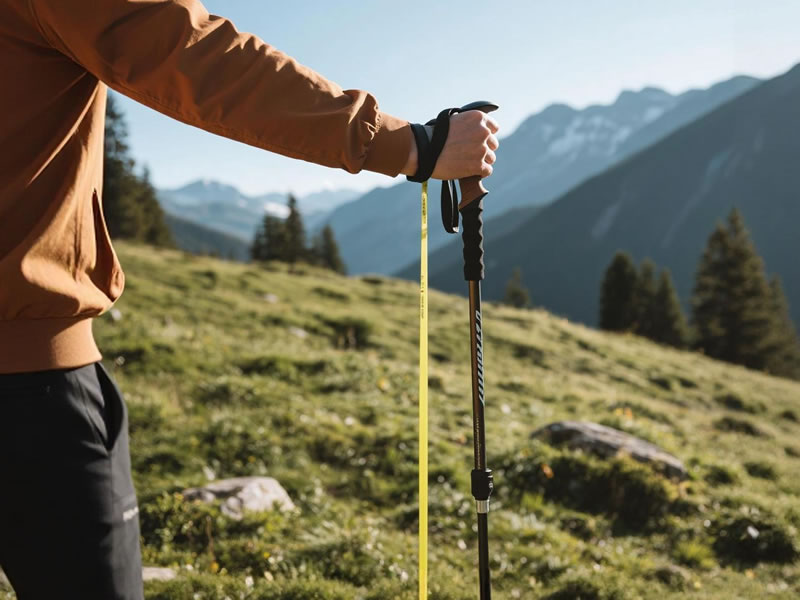
Recommended trekking pole purchase link: https://s.click.aliexpress.com/e/_c4M7OWaN
The fundamental rule for determining correct pole length is achieving a 90-degree bend at your elbow when the tip is on the ground beside your foot. This position allows for optimal power transfer and maintains a natural, efficient hiking posture. However, this is just the starting point—the true art lies in adjusting for different terrains and understanding the implications of your choice between adjustable and fixed-length poles.
The Basic Measurement Technique
Begin with this simple, reliable method:
- Wear the shoes you'll be hiking in.
- Stand upright on a flat, level surface.
- Hold the pole with your hand through the strap, as you would when hiking.
- Adjust the pole until your elbow forms a perfect 90-degree angle.
For a more precise measurement, many experts recommend this formula: Your Height (in cm) × 0.68 = Starting Pole Length. This calculation typically gets you very close to the ideal flat-ground length, which you can then fine-tune using the 90-degree method.
Terrain-Specific Adjustments: The Mark of an Experienced Hiker
The true power of adjustable poles reveals itself when you learn to modify length for different conditions:
- Uphill Travel: Shorten your poles by 5-8 cm (2-3 inches). This allows for better leverage and a more powerful push-off without causing you to hunch forward. It keeps your body in an efficient, forward-leaning climbing position.
- Downhill Travel: Lengthen your poles by 5-10 cm (2-4 inches). On descents, your feet are lower relative to your body. Longer poles enable you to plant them ahead of you for stability and braking power while maintaining an upright posture that protects your back and knees.
- Sidehill Traverses: On cross-slope terrain, shorten the uphill pole and lengthen the downhill pole. This adjustment helps maintain balance and creates a more stable platform against the slope.
Telescopic vs. Folding (Z-Pole) Considerations
Your choice between these two ultralight designs significantly impacts your length options:
- Telescopic Poles: Offer the greatest flexibility with their infinite adjustability. They're ideal for hikers who encounter constantly changing terrain and want the ability to fine-tune their pole length throughout the day.
- Folding Z-Poles: Typically come in fixed size ranges (e.g., 110-130cm). You must choose the range that best fits your primary needs. While some models offer limited adjustment via removable sections, they lack the on-the-fly versatility of telescopic poles. Choose these if you value minimal weight and packability over terrain-specific optimization.
Special Considerations and Pro Tips
- Test Before You Commit: If possible, rent or borrow poles before purchasing to get a feel for different lengths and styles.
- Consider Your Pack: If you typically carry a heavy overnight pack, you might prefer poles that are 2-3 cm longer than standard recommendations to account for the added weight and slight change in your center of gravity.
- Check the Range: When buying adjustable poles, ensure the minimum and maximum lengths accommodate both your basic needs and terrain adjustments.
- The "Wrist Test": A quick field check: with the tip on the ground and your arm straight down, your forearm should be parallel to the ground.
In conclusion, choosing the correct length for your ultralight trekking poles is a dynamic process that blends science with personal preference. By mastering the basic 90-degree rule and learning to adapt to your environment, you unlock the full potential of this essential hiking tool. Remember that the lightest pole is useless if it's the wrong length, while a properly fitted pole—even if slightly heavier—will enhance your comfort, efficiency, and safety on every trail you explore. Your perfect pole length is the one that makes the mountains feel more accessible and your body feel better at the end of every adventure.




