




Lightest Lighten Up Trekking Poles Available: A Guide to Ultralight Performance
For the dedicated ultralight hiker, every gram saved is a victory. When your entire kit is optimized to the ounce, your trekking poles become a prime target for weight reduction. While Lighten Up as a brand is synonymous with durable, value-driven gear, they also cater to the weight-conscious elite with specific models designed to be the lightest in their arsenal. If your primary goal is to minimize weight without completely sacrificing the brand's renowned reliability, here’s what you need to know about the lightest Lighten Up trekking poles available.
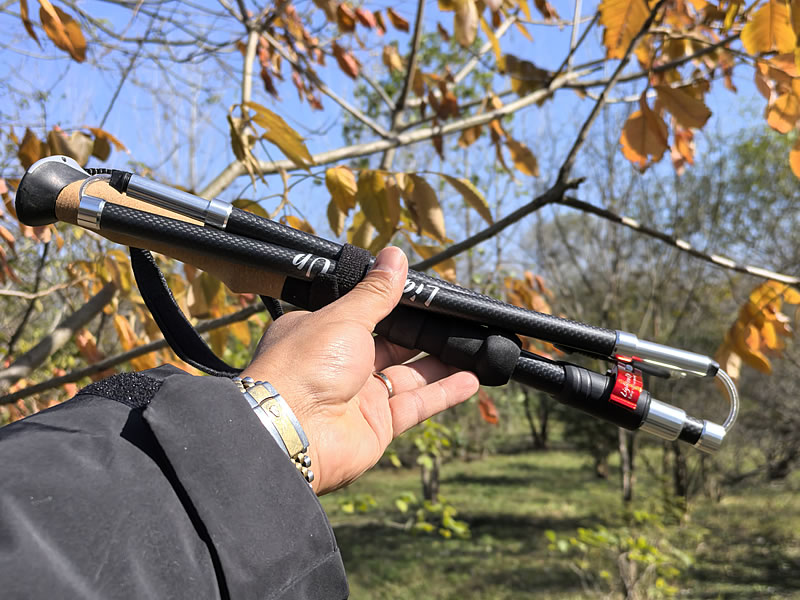
Recommended trekking pole purchase link: https://s.click.aliexpress.com/e/_c4M7OWaN
The undisputed champions of lightness in the Lighten Up stable are their carbon fiber models. While their 7075 aluminum poles offer a fantastic balance of weight and durability, it is the shift to carbon composite that enables the most significant weight savings. By using woven carbon fibers set in a resin matrix, these poles achieve a remarkable strength-to-weight ratio that aluminum simply cannot match.
Anatomy of an Ultralight Pole: Where the Weight Vanishes
Achieving a sub-150-gram (per pole) weight isn't accidental; it's a result of meticulous engineering and a strict "less is more" philosophy. The lightest Lighten Up poles exemplify this through several key design choices:
- High-Modulus Carbon Fiber Shafts: The core of the weight savings lies in the shaft material. Lighten Up's lightest poles utilize quality carbon fiber that is both thin and strategically layered to provide rigidity where needed, while shaving off every possible milligram. This results in a pole that feels noticeably lively and light in the hand.
- Minimalist Grips and Straps: Every component is scrutinized. The grips on these models are often made from slim, high-density foam, which is lighter than cork or rubber. The strap systems are pared down to the bare essentials—thin, lightweight webbing with simple, low-profile buckles. Comfort is not sacrificed, but unnecessary bulk is eliminated.
- Ultralight Hardware and Baskets: The quest for lightness extends to the smallest parts. The flick-lock mechanisms are often made from specially machined or forged aluminum to be as light as possible without compromising grip. The included baskets are typically the smallest available "basketettes," designed solely to prevent the pole from sinking deeply into soft ground, adding almost negligible weight.
The Trade-Off: Performance vs. Fragility
Choosing the lightest available model means entering a deliberate trade-off. The benefit is obvious: reduced energy expenditure with every arm swing over a long distance. However, the compromise is a fundamental one:
- The Failure Mode: As detailed in our material comparisons, carbon fiber's weakness is its brittleness. While strong under vertical compression, it is vulnerable to sharp, point-impact loads or sudden lateral stress. A hard strike against a rock could cause a crack or a full break, whereas an aluminum pole might only bend. The lightest poles, with their thinner walls, push this fragility to the extreme.
Who Are The Lightest Lighten Up Poles Really For?
These poles are not for everyone. They are a specialized tool for a specific type of hiker:
- The Gram-Counting Thru-Hiker: For someone who has their base weight down to a sub-10-pound kit and is hiking primarily on well-maintained trails like the PCT, the weight savings can be a game-changer.
- The Fastpacker: When speed and distance are the primary goals, and every step is optimized for efficiency, the lightest poles reduce upper body fatigue and allow for a quicker pace.
- The Experienced Ultralight Purist: This is for hikers who understand the limitations of carbon fiber and are willing to exercise extra care with their gear in exchange for minimal weight.
Making Your Choice: Is It Worth the Weight Savings?
Before opting for the absolute lightest model, ask yourself these questions:
- What is the terrain like? Rugged, off-trail travel demands the durability of aluminum.
- What is my hiking style? If you are hard on gear or use your poles aggressively for balance, a more robust model may be wiser.
- What is the rest of my pack weight? Saving three ounces on poles makes a bigger perceptual difference if your total pack weight is 15 pounds than if it is 25.
In conclusion, the lightest Lighten Up trekking poles represent the pinnacle of the brand's commitment to weight savings. They are masterfully engineered tools for those who prioritize minimal weight above all else. By choosing a carbon fiber model from Lighten Up, you are leveraging the brand's thoughtful design philosophy in its most focused form. You gain a supremely lightweight tool, but you must partner it with a heightened sense of care and an understanding of its limitations—a small price to pay for the ultimate feeling of freedom in your hands.




