




Weight Range of Lighten Up Trekking Poles: An In-Depth Analysis
When selecting trekking poles, weight is more than just a number on a spec sheet—it's a crucial factor that directly impacts your energy expenditure, hiking rhythm, and overall comfort over long distances. Lighten Up, true to its name, has built a reputation for creating poles that master the balance between durability and weight savings. Understanding the weight range of their trekking poles requires looking beyond a single figure and examining how different materials, designs, and features contribute to the final product you carry in your hands.
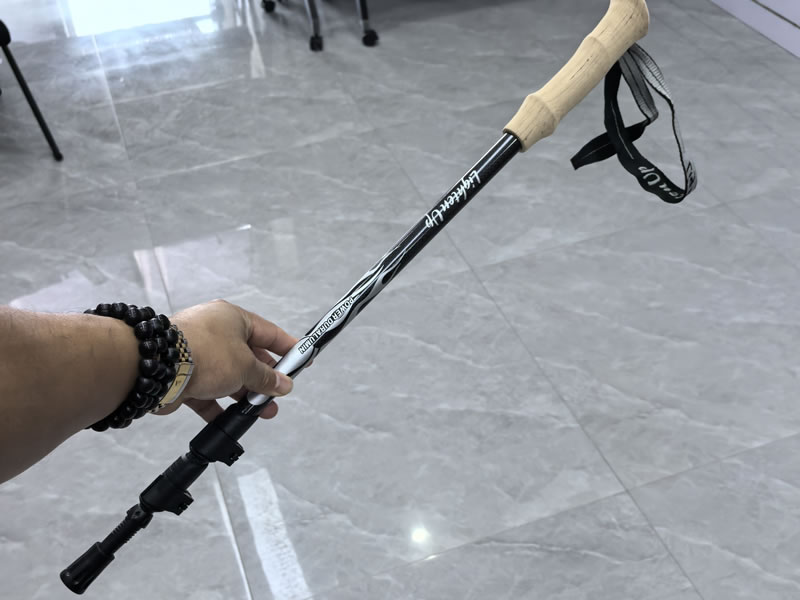
Recommended trekking pole purchase link: https://s.click.aliexpress.com/e/_c4M7OWaN
The weight spectrum of Lighten Up poles can be broadly divided into two main categories, each defined by its core material: the ultralight carbon fiber models and the durable aluminum workhorses. However, within these categories, significant variation exists based on specific model configurations.
The Ultralight Division: Carbon Fiber Models
For hikers whose primary philosophy is "every gram counts," Lighten Up's carbon fiber poles represent the pinnacle of weight optimization.
- Typical Weight Range: A single Lighten Up carbon fiber pole generally weighs between 150 grams (5.3 oz) and 190 grams (6.7 oz).
- The Quest for Sub-150 Grams: The lightest models in their lineup, often designed for fastpacking or extreme ultralight backpacking, can dip below the 150-gram mark. Achieving this requires a minimalist approach: slimmed-down carbon shafts, tiny flick-locks or specialized foldable mechanisms, minimal foam grips, and the omission of anything deemed non-essential.
- What Adds Weight in Carbon Models: Even within the carbon fiber family, weight can creep in. Features like more robust flick-lock mechanisms (for better adjustability and reliability), larger cork grips, and reinforced joint sections for increased durability will push a carbon pole toward the heavier end of its range.
The Durable Core: Aluminum Alloy Models
Lighten Up's 7075 aluminum poles are the choice for hikers who prioritize impact resistance and long-term reliability, accepting a modest weight increase for immense gains in toughness.
- Typical Weight Range: A single Lighten Up aluminum pole typically falls between 230 grams (8.1 oz) and 280 grams (9.9 oz).
- Why Aluminum Weighs More: The inherent density of high-strength 7075 aluminum is the primary factor. While engineered to be as light as possible, the material needed to achieve the brand's legendary durability results in a pole that is consistently heavier than its carbon counterpart.
- The Weight-to-Durability Ratio: It's vital to view this weight not as a penalty, but as an investment in resilience. The extra 80-100 grams per pole (compared to carbon) is the physical manifestation of the "bend-don't-break" philosophy that protects you from catastrophic failure on a remote trail.
Factors That Influence the Final Weight
Understanding the weight range means looking at the components that add grams:
- Locking Mechanism: A standard flick-lock is reliable but adds more weight than a simple foldable Z-pole connector. However, Z-poles sacrifice adjustability.
- Grip Material: Dense cork grips are often slightly heavier than minimalist EVA foam grips. The choice here is between long-term molding comfort (cork) and outright weight savings (foam).
- Baskets and Tips: The small, included "basketettes" add minimal weight, but opting for larger snow baskets will increase it. Durable tungsten carbide tips are standard and a non-negotiable for performance, regardless of weight.
- Pole Design (Telescopic vs. Foldable): Lighten Up's three-section telescopic poles offer excellent adjustability but will weigh slightly more than an equivalent two-section model due to extra hardware. Their foldable Z-poles often achieve the lowest weights by eliminating external locks entirely.
Making Sense of the Numbers for Your Hike
So, what does this weight range mean for you?
- Choose the Carbon Fiber Range (150-190g): If you are a fastpacker, an ultralight thru-hiker on maintained trails, or a gram-counting enthusiast, the weight savings is worth the premium price and the need for careful handling. The reduced weight will tangibly decrease arm fatigue over a 20-mile day.
- Choose the Aluminum Range (230-280g): If you are a traditional thru-hiker on rocky paths like the AT, an off-trail explorer, or a hiker who values bombproof reliability above all, this is your range. The weight is a fully justified trade for a tool you will never have to worry about.
In conclusion, the weight range of Lighten Up trekking poles is not a random spread but a direct reflection of intentional design choices tailored to different hiking disciplines. By aligning your personal priorities—whether they lean towards absolute minimal weight or unshakeable durability—with the corresponding weight category, you can select a pole that feels less like carried equipment and more like a natural, effortless extension of your own movement on the trail.




