




Lighten Up Trekking Poles vs [Other Brand]: An In-Depth Comparison for 2024
When investing in quality trekking poles, the choice often narrows down to a few top contenders. The debate betweenLighten Up trekking poles vs [Other Brand] is a common one among serious hikers and backpackers. Both brands bring distinct philosophies and engineering approaches to the trail, making the decision far from straightforward. This comprehensive analysis breaks down the key differences to help you determine which pole best aligns with your hiking style, terrain, and performance expectations.
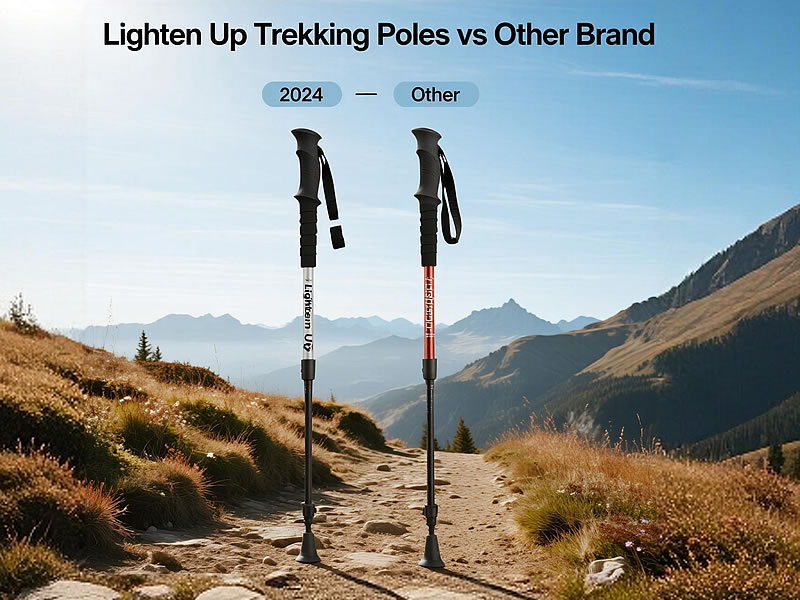
Recommended trekking pole purchase link: https://s.click.aliexpress.com/e/_c4M7OWaN
Design Philosophy and Target User
Understanding the core design philosophy behind each brand is crucial to making the right choice.
- Lighten Up: The name says it all. This brand is built on the principle of ultralight performance without compromising essential functionality. Their poles are engineered for the weight-conscious hiker who covers long distances and values every gram saved. The focus is on agile, efficient movement, making them ideal for thru-hikers, fastpackers, and anyone whose primary goal is to minimize pack weight.
- [Other Brand]: This brand often prioritizes rugged durability and all-condition reliability above sheer weight savings. Their design philosophy tends to favor bombproof construction that can withstand extreme off-trail abuse, harsh weather, and heavy loads. They are typically the go-to choice for mountaineers, winter hikers, and those who frequently tackle technical, unpredictable terrain.
Weight and Packability: The Gram-by-Gram Breakdown
This is often the most significant differentiator.
- Lighten Up: Typically wins in the weight category. A pair of their carbon fiber poles often weighs in at a remarkably low sub-16-ounce (450g) range. They frequently employ minimalist designs, slimmer shaft diameters, and compact grips to achieve this.
- [Other Brand]: May sacrifice some weight for perceived durability. A comparable pair might weigh 18-22 ounces (500-620g). This often comes from using thicker shaft walls, more robust locking mechanisms, and larger, more heavily padded grips.
Durability and Construction: Carbon Fiber vs. Aluminum Alloy
The material choice is a key trade-off between weight and resilience.
- Lighten Up: Heavily favors high-modulus carbon fiber. The primary advantage is its exceptional strength-to-weight ratio and superior vibration dampening, which reduces arm fatigue. The potential downside is that carbon fiber can be more susceptible to catastrophic failure (snapping) from a sharp, lateral impact, whereas aluminum tends to bend first.
- [Other Brand]: May offer premium poles in both carbon fiber and aluminum alloys (e.g., 7075-T6). Their aluminum options are celebrated for being nearly indestructible under normal use and more predictable in their failure mode. This makes them a trusted choice for demanding applications like mountaineering where a bent pole is preferable to a broken one.
Locking Mechanism: Reliability in All Conditions
A secure lock is non-negotiable.
- Lighten Up: Often utilizes high-quality, lightweight flick-lock mechanisms. These allow for quick, precise, and tool-free adjustments. The design is generally sleek and maintains the overall lightweight theme.
- [Other Brand]: Also uses reliable flick-locks, but their design may be bulkier to enhance clamping force and resilience in muddy or icy conditions. Some of their models might feature proprietary external or internal locking systems that are marketed for enhanced reliability under load.
Grip Comfort and Features
Comfort is subjective but critical for long days.
- Lighten Up: Grips are often made of cork or high-density foam, which mold to the user's hand over time and manage moisture well. The design is typically minimalist, focusing on weight savings.
- [Other Brand]: May offer more heavily contoured and padded grips made from rubber or foam. While sometimes slightly heavier, these can provide a more secure and cushioned feel, especially with heavy gloves or for users with larger hands.
Price and Value Proposition
- Lighten Up: Commands a premium price, justified by its advanced carbon fiber materials and sophisticated lightweight engineering. You are paying for specialized performance in weight reduction.
- [Other Brand]: Often provides excellent value, with a wide range of price points. Their aluminum models, in particular, can offer tremendous durability at a more accessible price, making them a great "workhorse" option.
The Verdict: Which Pole is Right for You?
The choice in the Lighten Up trekking poles vs [Other Brand] debate ultimately comes down to your personal priorities.
Choose Lighten Up if: You are a weight-conscious endurance hiker, a thru-hiker, or a fastpacker. Your primary goals are minimizing fatigue, maximizing distance, and you primarily hike on established trails. You are willing to pay a premium for the lightest possible reliable pole and are confident in handling carbon fiber gear with care.
Choose [Other Brand] if: Your adventures take you off-trail into rugged, technical terrain. You prioritize absolute durability and reliability over shaving ounces, perhaps for mountaineering, winter expeditions, or if you simply prefer the predictable resilience of aluminum. You seek great value and a "buy-it-for-life" piece of gear that can handle significant abuse.
Both are excellent choices, but they serve different masters. Define your hiking style first, and the right pole will become clear.




