




Lighten Up Hammock for Kayaking or Canoe Trips
For the paddler, every piece of gear must justify its place in the limited, precious space of a hatch or dry bag. A hammock isn't just a luxury on a kayaking or canoe trip; when chosen wisely, it becomes a transformative piece of kit that enhances safety, comfort, and the overall experience. The Lighten Up Hammock, with its specific design philosophy, is exceptionally well-suited to the unique demands of multi-day paddling adventures.
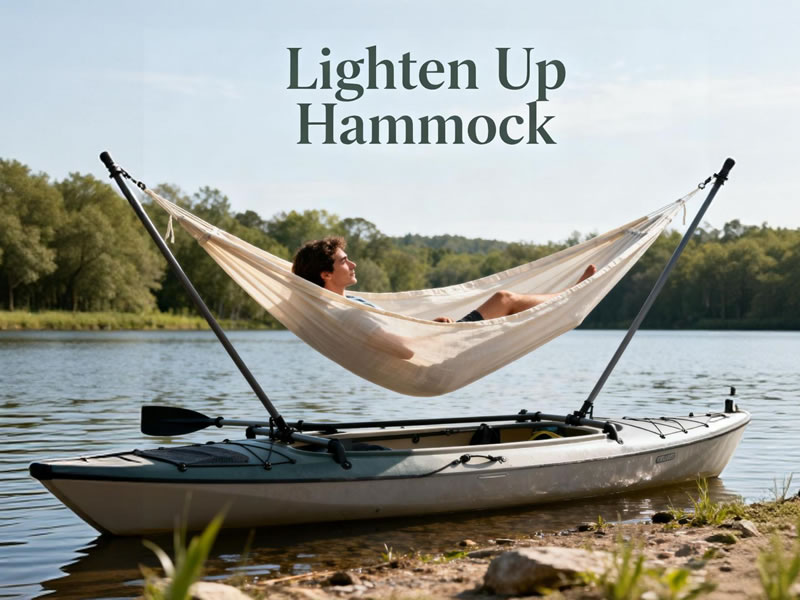
The Paddler's Dilemma: Space, Weight, and Wetness
Water-based travel imposes three strict filters on all gear:
- Extreme Space Constraints: Kayak hatches and canoe packs have finite, often oddly shaped volumes.
- Constant Exposure to Moisture: Gear will get damp from splash, humidity, rain, or capsizing.
- Weight Sensitivity: While less critical than backpacking, portaging or loading/unloading daily makes lighter gear always preferable.
How the Lighten Up Hammock Excels in a Marine Environment
1. Unmatched Packability: The Ultimate Space Saver
This is the most significant advantage. A Lighten Up Hammock, with its ultralight ripstop nylon construction, compresses into a bundle often smaller than a standard Nalgene bottle. This allows it to be stashed in a small dry bag and tucked into the nooks of a kayak’s bow or stern hatch, or at the bottom of a canoe pack, taking up negligible space that would otherwise be wasted. Unlike a tent with poles, it utilizes dead space efficiently.
2. Resilience in Damp Conditions
The synthetic, quick-drying ripstop nylon is ideal for paddling trips.
- Rapid Drying: After a morning of dew or light rain, it can be shaken off and will dry quickly in the sun or breeze, unlike canvas or heavy polyester.
- Mildew Resistance: Its material does not absorb water readily, reducing the risk of mildew during multi-day trips in high humidity—a common issue in coastal or river environments.
- Saltwater Compatibility: With a simple post-trip rinse in fresh water (as one should do with all paddling gear), the fabric and hardware are not adversely affected by occasional salt spray.
3. Versatility in Camp Site Selection
Paddling routes often traverse rugged coastlines or densely forested riverbanks where flat, clear tent grounds are scarce. A hammock liberates you to camp on sloped, rocky, or root-filled terrain. This allows you to choose campsites based on superior factors like wind protection, scenic views, or proximity to a safe landing, not just ground flatness.
Critical Considerations and Best Practices for Paddlers
To integrate a hammock successfully into your paddling routine, follow this guide:
- Packing Protocol:Double-Bagging: Always store the hammock and its suspension inside a lightweight dry bag or a waterproof compression sack. This protects it not just from rain, but from potential cockpit flooding or a capsize scenario.Accessibility: Pack it where you can reach it without unpacking everything else, as it’s often the first thing you’ll want to set up upon making camp.
- Leave-No-Trace Campcraft:Use wide tree straps to protect often-delicate shoreline bark.Set up well back from the water’s edge (at least 200 feet if possible) to protect fragile riparian zones and avoid high-tide lines.Never hang from vegetation that cannot bear the load, such as young trees or dead snags.
- The Companion System: Tarp and Bug Net:A lightweight tarp is non-negotiable. Coastal and river weather can change instantly. Pitch it for sun protection, wind blockage, and rain.In bug-prone seasons and regions, an integrated or attachable bug net is essential for sanity and sleep. Mosquitoes are notoriously thick near water.
- Post-Trip Care:After your trip, especially in saltwater, rinse the hammock and all metal components (carabiners, buckles) with fresh water.Air it out completely before final storage to ensure no hidden moisture is trapped, which is the primary cause of fabric degradation.
Conclusion: Redefining Camp from the Water
A Lighten Up Hammock is more than a bed; it’s a strategic tool for the discerning paddler. It solves the critical space problem, thrives in wet conditions, and opens up a wider range of stunning camp locations that tent users must pass by. By embracing the hammock system, you exchange the ground-level perspective of a tent for the elevated comfort of a suspended shelter, perfectly aligned with the fluid, adaptable nature of journeying by water. It turns any secluded shoreline into a comfortable bedroom, making the wilderness feel less like a challenge and more like a home.




