




Carabiners for Weightlifting: The Critical Connector for Safe and Efficient Strength Training
In the world of strength and conditioning, where marginal gains and absolute safety are paramount, the tools connecting you to your load are as important as the weight itself. While carabiners are often associated with climbing or camping, a specific class of these devices—industrial or heavy-duty carabiners—has become indispensable in modern weightlifting, functional fitness, and strongman training. Far beyond a simple clip, the right carabiner provides a secure, reliable, and quick-connect interface between your body or apparatus and added resistance, enabling advanced training techniques while upholding the fundamental principle of safety under load.
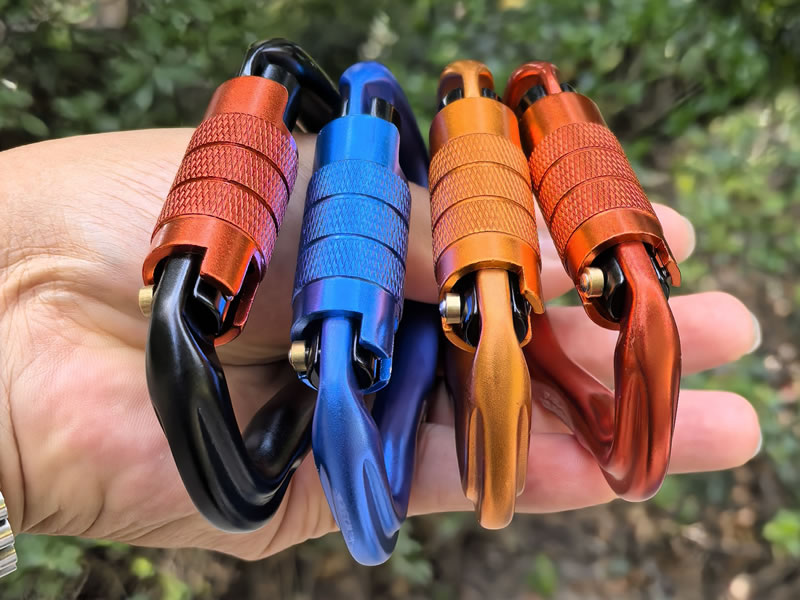
Beyond the Barbell: Key Applications in Strength Training
The versatility of the weightlifting carabiner unlocks a range of training modalities that go beyond standard barbell and dumbbell work:
- Weighted Belt & Vest Attachments: The most common use is securely attaching weight plates to a dip belt, lifting belt, or weighted vest. The carabiner provides a much faster, more secure, and adjustable connection than threading a belt through a plate, allowing for seamless progression in exercises like pull-ups, dips, and belt squats.
- Functional Fitness Rigging: On a power rack or multi-gym station, carabiners are used to attach chains (for accommodating resistance), resistance bands, or specialty handles to barbells or the rig itself. They are the essential link in creating custom-loaded movements like lever arms or landmine attachments.
- Strongman Implements: For events like sled drags, vehicle pulls, or loading carries, heavy-duty carabiners are used to connect tow straps, harnesses, and odd objects (like sandbags or kegs), ensuring the connection point can withstand dynamic, multi-directional forces.
- Kettlebell Modifications: A large, locking carabiner can be used to securely attach additional micro-weights to a kettlebell's handle for precise overload, a technique favored by some strength athletes.
Choosing the Right Tool: Why Your Climbing Carabiner Isn't Enough
A recreational climbing carabiner, while strong, is not optimized for the gym environment. Here’s what defines a proper weightlifting carabiner:
- Material and Durability: Look for 7075-T6 Aluminum Alloy or Carbon/Alloy Steel. These materials offer the optimal blend of high tensile strength and resistance to the abrasion that comes from repeated contact with metal plates and concrete floors. Steel is heavier and more durable for permanent rigging, while aluminum is preferred for personal attachment use due to its lighter weight.
- Load Rating is Everything: This is the most critical specification. You must understand Working Load Limit (WLL) versus breaking strength.Breaking Strength (e.g., 50 kN) is the point of catastrophic failure—a number you should never approach.Working Load Limit (WLL) is the maximum intended load the manufacturer states the carabiner can safely handle repeatedly. A typical WLL for heavy-duty models ranges from 5 kN (~500 kg / 1100 lbs) to 15 kN+.Always select a carabiner with a WLL that significantly exceeds the maximum load you intend to use, including dynamic forces. For instance, a 100-lb plate on a dip belt during the downward motion of a pull-up can generate significantly more than 100 lbs of force.
- Gate Mechanism: Auto-Locking is Non-Negotiable. For any application where a failure would result in a weight falling—especially near your body—an auto-locking (twist-lock) or screw-lock gate is mandatory. This prevents the gate from being accidentally opened by brushing against a rack, plate, or the ground. A standard snap gate is unsafe and unacceptable for weightlifting.
- Size and Shape: A large, pear-shaped (HMS) or wide D-shaped carabiner is ideal. It provides a large gate opening to easily accommodate thick lifting belts, chains, and multiple straps, even when wearing gloves.
The Safety Protocol: Inspection, Use, and Retirement
The high-force, repetitive nature of weightlifting demands a rigorous safety mindset.
- Pre-Use Inspection: Before each session, conduct a visual and tactile check. Look for:Cracks or deformation on the spine or gate.Excessive wear or deep grooves, especially where it contacts the belt or chain.Gate function: The gate should open smoothly and the locking mechanism should engage positively without sticking.
- Proper Use:Ensure Complete Engagement: Always verify that the carabiner is fully closed and the locking sleeve is completely screwed down or twisted into the locked position.Avoid Cross-Loading and 3-Way Loading: Load the carabiner along its major axis (spine to gate). Never let it bear load sideways (minor axis) or from three directions at once, as this drastically reduces its strength.Mind the Sharp Edges: Be cautious of the carabiner’s metal-on-metal contact with weight plate hubs, which can create sharp burrs over time.
- Know When to Retire: Any carabiner that has been dropped from height onto a hard surface, shows any signs of cracking or deformation, or has a malfunctioning gate must be immediately taken out of service. The cost of a new carabiner is trivial compared to the risk of injury.
Conclusion: Building Strength on a Foundation of Safety
Incorporating a properly rated, locking carabiner into your strength training toolkit is a mark of a serious and safety-conscious athlete. It enables advanced loading techniques, increases workout density by facilitating quick weight changes, and most importantly, provides the confidence that your connection to the load is secure. By understanding the specifications—prioritizing a clear Working Load Limit and a foolproof locking mechanism—and adhering to a strict inspection routine, you ensure this small piece of hardware performs its vital role perfectly. In weightlifting, where we systematically stress our bodies to grow stronger, the equipment we trust must be engineered to an even higher standard of reliability.




