




Environmental Impact of Different Carabiner Materials
As outdoor enthusiasts become increasingly conscious of their ecological footprint, the sustainability of gear—including carabiners—comes into focus. The environmental impact of a carabiner is determined not by a single attribute, but by a lifecycle analysis: from raw material extraction and manufacturing to longevity, maintenance, and end-of-life recyclability. The three primary materials—aluminum alloy, steel, and titanium—each present a distinct environmental profile, challenging users to weigh performance against planetary cost.
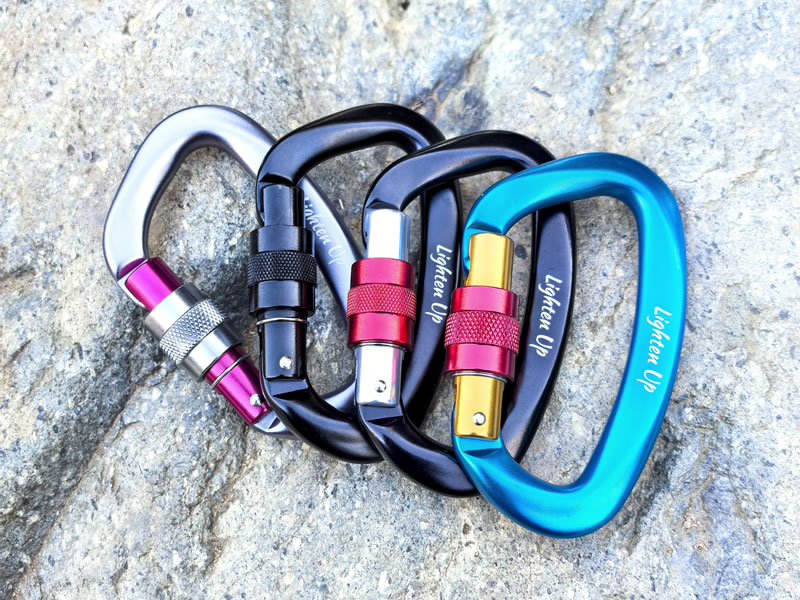
1. Aluminum Alloy (7075-T6): The Energy-Intensive Workhorse
- Extraction & Primary Production: This is the most significant environmental burden. Producing primary aluminum via the Hall-Héroult process is extremely energy-intensive, requiring roughly 13-15 kWh of electricity per kilogram of metal, often sourced from fossil fuels. The process also generates red mud, a toxic byproduct that must be carefully managed.
- Manufacturing: Forging and machining aluminum is relatively efficient due to its lower melting point compared to steel or titanium.
- The Superpower: Recyclability. Aluminum is 100% and infinitely recyclable. Recycling scrap aluminum requires only about 5% of the energy needed for primary production. A carabiner can be made from a high percentage of post-consumer recycled content, drastically lowering its carbon footprint.
- Longevity: While not as tough as steel, a well-maintained aluminum carabiner has a multi-decade service life in recreational use, amortizing its initial impact.
2. Steel (Stainless or Carbon): The Durable Emitter
- Extraction & Primary Production: Iron ore mining is highly disruptive to landscapes. Conventional steel production in blast furnaces is a major global source of CO2 emissions, emitting approximately 1.85 tons of CO2 per ton of steel produced. However, production via Electric Arc Furnaces (EAF) using recycled scrap can cut emissions by over 70%.
- Manufacturing: Forging steel requires high temperatures, again demanding substantial energy.
- Recyclability: Like aluminum, steel is fully recyclable without loss of properties. The global recycling infrastructure for steel is excellent.
- Longevity: Steel carabiners are exceptionally abrasion-resistant and durable, potentially outlasting aluminum versions in harsh professional or marine environments. This extended lifespan can justify a higher initial production impact.
3. Titanium Alloy (Ti-6Al-4V): The Niche, High-Cost Luxury
- Extraction & Primary Production: Titanium's environmental impact is front-loaded and severe. The Kroll process to extract titanium sponge from ore is phenomenally energy-intensive and involves a series of complex, polluting chemical reactions with chlorine and magnesium. It has one of the highest embodied energy costs of any common structural metal.
- Manufacturing: Machining and forging titanium is difficult and wasteful, generating significant scrap.
- Recyclability: Titanium is recyclable, but the specialized supply chain is smaller than for Al or Fe. Recycled content in consumer titanium products is often low.
- Longevity: Titanium's unparalleled corrosion resistance and fatigue life mean a product that could feasibly last a century, potentially offsetting its colossal production footprint if used for generations.
Comparative Summary Table
| Material | Primary Production Impact | Recyclability | Key Environmental Consideration |
|---|---|---|---|
| Aluminum Alloy | Very High (Energy, Toxic Red Mud) | Excellent (Infinite, Low-Energy) | The recycled content percentage is the most critical factor. Choosing brands that use hydroelectric power and recycled stock mitigates impact. |
| Steel | High (CO2 Emissions, Land Disruption) | Excellent (Infinite, Established Infrastructure) | Production method matters. Steel from recycled scrap (EAF) has a far lower footprint than virgin ore-based steel. |
| Titanium | Extremely High (Energy, Complex Chemical Pollution) | Good (But Limited Infrastructure) | The justification for use is paramount. Its extreme longevity in corrosive environments may balance its initial cost over decades. |
The Most Sustainable Choice: A Holistic View
The greenest carabiner is not defined by its material alone, but by a combination of factors:
- Durability & Longevity: The single most important factor. A carabiner that lasts 30 years has a far lower per-year impact than one that fails or is replaced every 5 years due to poor quality. UIAA/CE certification is an indirect indicator of durability, as it ensures a high-performance threshold.
- Recycled Content: Prioritize manufacturers who transparently use a high percentage of post-industrial or post-consumer recycled material in their alloys.
- Brand Commitment: Support companies with verifiable environmental policies, such as using renewable energy in manufacturing, minimizing waste, and participating in product take-back or recycling programs.
- End-of-Life Responsibility: Never discard carabiners in landfills. As metal products, they should be taken to a scrap metal recycling facility. Some manufacturers offer recycling programs for their worn-out gear.
Conclusion: Performance with Perspective
From a strict lifecycle analysis, a carabiner made from recycled aluminum likely represents the best balance of performance and minimized environmental impact for most users. However, for professional or extreme applications where steel's or titanium's longevity is genuinely required, their higher initial footprint can be justified over an extended service life.
As consumers, we drive the market. By demanding greater transparency about material sourcing, recycled content, and corporate sustainability practices from our gear brands, we can encourage an industry-wide shift towards lower-impact manufacturing. Ultimately, the most sustainable practice is to buy less, buy well, maintain meticulously, use for a lifetime, and recycle completely.




