




“I Need a Carabiner for X Specific Task”: Your Definitive Guide to the Perfect Match
The statement “I need a carabiner for X specific task” is the starting point for a journey toward greater efficiency, security, and organization. However, with a vast array of shapes, sizes, materials, and mechanisms available, the choice can be overwhelming. Selecting the right carabiner is not about finding a single universal tool, but about matching engineered features to precise demands. This guide will help you decode your specific need (“X”) and identify the exact carabiner specifications that transform it from a simple clip into a critical, reliable component of your system.
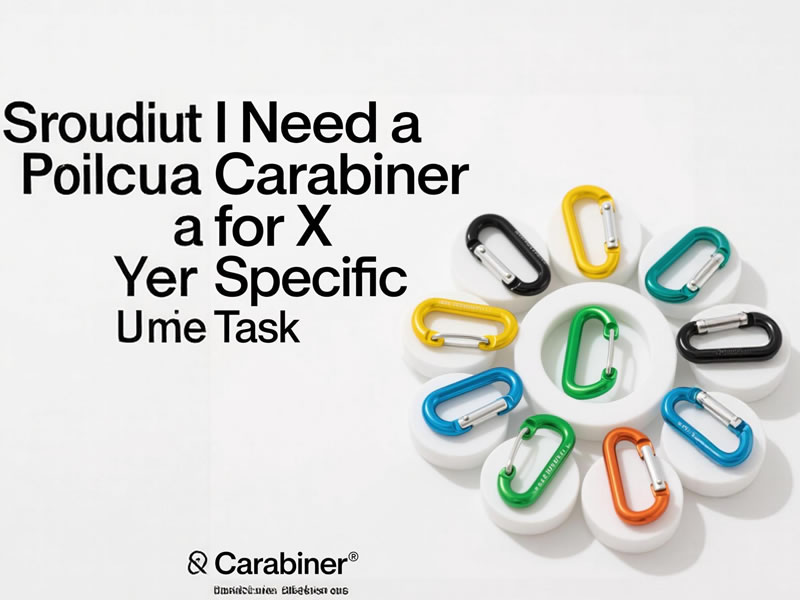
Step 1: Deconstructing Your “X” – The Critical Questions
Before looking at any product, define your task by asking these questions:
- What is the Consequence of Failure? This is the most important question. Is it a Life-Safety application (e.g., climbing, fall arrest, securing a person)? Is it High-Value (e.g., securing expensive camera gear, preventing loss of keys overboard)? Or is it General Utility (e.g., organizing gear, attaching a water bottle)?
- What Are the Environmental & Operational Demands? Will it be used in extreme cold, water, or around abrasive surfaces? Does it need to be operated with gloves? Must it be silent or lightweight?
- What is the Load and Type of Use? Is it for static, steady loads (a heavy bag) or dynamic, shock-loaded situations (a climbing fall)? What is the approximate weight or force involved?
- How Frequent is Access? Does it need to be opened and closed constantly with one hand, or set and forgotten with maximum security?
Step 2: Translating “X” into Technical Specifications
Your answers will point directly to key carabiner features:
- For Life-Safety Tasks (Climbing, Rescue, Work-at-Height):Non-Negotiables: You must use UIAA/CE-certified locking carabiners. A screw-lock or triple-action auto-lock gate is mandatory.Material & Shape: Steel for extreme abrasion (e.g., ice climbing) or aluminum for general use. A pear-shaped (HMS) carabiner is versatile for belaying.Strength: Look for a major axis strength rating of 22 kN or higher.
- For Security-Critical & High-Value Tasks (Keys, Tools, Camera Gear):Mechanism: A secure locking gate (screw-lock or magnetic lock) is essential to prevent accidental detachment.Design: A keylock (notchless) nose prevents snagging. For valuables with a phone, seek a soft-coated model to prevent scratches.Material: Hard-anodized aluminum offers a great blend of strength, light weight, and corrosion resistance.
- For Specialized Environmental Tasks:Water/Marine Use: You need a buoyant, non-corrosive carabiner made of plastic or coated aluminum with a stainless steel spring.Silent Operation (Hiking, Hunting): Look for plastic/polymer carabiners or metal ones with rubberized sleeves and magnetic gates.One-Handed/Disability-Friendly Use: Prioritize large-gate, magnetic-lock carabiners or those with easy-grip levers requiring minimal dexterity.
- For General Organization & Heavy-Duty Utility:Strength: A 5-12 kN rating is often sufficient for bags and gear.Mechanism: A sturdy snap gate is convenient for frequent access. For heavy, awkward loads, a screw-lock adds safety.Durability: Forged aluminum or steel provides longevity for tool belts or heavy duffels.
Step 3: Applying the Framework – Common “X” Tasks Decoded
- “X” = “Securing my kayak gear where I might drop it in water.” → Floating, corrosion-resistant carabiner with a secure snap gate.
- “X” = “Quickly clipping my dog’s leash to my belt while keeping my hands free.” → Medium-sized, auto-locking carabiner with a smooth action.
- “X” = “Replacing the broken plastic clip on my backpack’s sternum strap.” → Compact, oval-shaped aluminum carabiner with a keylock nose.
- “X” = “Organizing my tactical vest without noise or snagging.” → Low-profile, wire-gate carabiner, possibly with a rubberized coating.
Conclusion: From Vague Need to Precise Tool
The journey from “I need a carabiner for X” to holding the perfect model in your hand is a process of targeted analysis. By rigorously defining the consequences of failure, the operating environment, and the performance demands of your specific task, you can cut through the clutter of endless options. Remember, the best carabiner is the one whose engineered features most precisely align with the unique pressures and requirements of your “X.” Invest this forethought, and you will secure more than just gear—you’ll secure confidence, reliability, and peak performance for your specific mission.




