




Lightweight Trekking Poles for Long-Distance Hiking: The Thru-Hiker's Essential Advantage
For the long-distance hiker covering 15+ miles a day, every piece of gear is scrutinized for its weight-to-benefit ratio. Trekking poles are not optional; they are a cornerstone of efficiency, rhythm, and joint preservation. However, on a multi-week trek, the cumulative effect of swinging even a few extra ounces with each step translates into significant fatigue. Therefore, choosing lightweight trekning poles becomes a critical performance decision, where saving grams must not compromise the reliability demanded by remote trails.
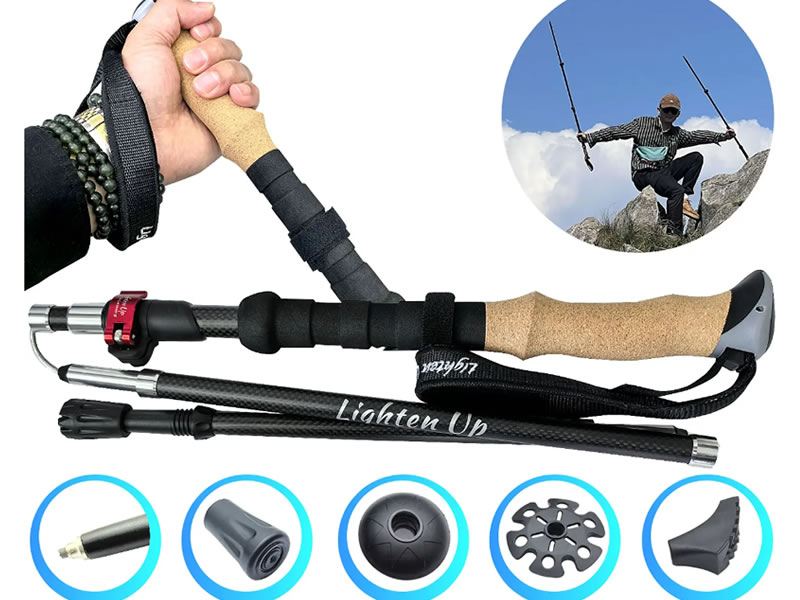
Recommended trekking pole purchase link: https://s.click.aliexpress.com/e/_c4M7OWaN
The Philosophy of Lightweight for Distance
The goal is sustained comfort and reduced metabolic cost. Lighter poles decrease arm and shoulder fatigue, allowing you to maintain a faster, more sustainable pace with less effort. This is less about "ultralight" dogma and more about ergonomic efficiency over hundreds of thousands of steps. The ideal pole disappears in your hands, becoming a natural, weightless extension of your momentum.
Key Features of Elite Lightweight Poles
1. Material: The Carbon Fiber Imperative
For serious long-distance hiking, high-modulus carbon fiber is the preferred material. It offers the best strength-to-weight ratio available, often shaving 2-4 ounces per pole compared to aluminum. This weight saving is directly felt in the shoulders and arms by the end of a long day. While high-end aluminum is durable, carbon's vibration-dampening properties also reduce "trail buzz," further combating fatigue.
2. Locking Mechanism: Reliability is Non-Negotiable
This is the most critical reliability factor on a long trek. You have two primary lightweight options:
- Flick Lock / Lever Lock (on adjustable poles): Look for miniaturized, precision versions (e.g., Black Diamond's FlickLock Pro). They offer secure adjustability for varied terrain, which is crucial for protecting knees on long descents.
- Foldable (Z-Pole) Design: Poles like the Black Diamond Distance Carbon Z use an internal tension cord. They are lighter and pack smaller (often to 15 inches) but offer no length adjustability on the trail. They are supremely convenient but require you to commit to a single, well-chosen length.
3. Grip and Strap: Managing Sweat and Blisters
Mileage breeds moisture and friction.
- Grip: Cork remains the top choice for its moisture-wicking and moldable properties. EVA foam is a close second for cushioning but may degrade slightly over very long periods.
- Strap: A lightweight, soft, and seamless strap is essential to prevent chafing over thousands of repetitions.
4. Packability: Fitting Into a Trail Life
A long-distance hiker's pack is a tightly organized system. Poles that fold small (Z-poles) can be stowed inside or on a pack's side without snagging. Longer adjustable poles that collapse to ~25 inches may need external carry.
Top Contenders for the Long Haul
- Black Diamond Distance Carbon Z: The foldable benchmark. Extremely light, incredibly packable, and proven on countless thru-hikes. Best for hikers confident in their fixed length and who prioritize packability.
- Cascade Mountain Tech Carbon Fiber (Adjustable): The unbeatable value champion. Offers 90% of the performance of premium poles at a fraction of the cost. Perfect for the hiker wanting adjustable, carbon performance without a huge investment.
- Leko Micro Vario Carbon: A superb adjustable carbon option from a pole specialist. Features Leki's reliable speed-lock adjustment and often includes their advanced anti-shock system for superior comfort on descents.
- Gossamer Gear LT5: A favorite in the ultralight community. A simple, strong, and minimally designed carbon pole focused purely on saving weight without gimmicks.
The Trade-Off: Weight vs. Durability & Adjustability
This is the core decision. The lightest poles (foldable carbons) sacrifice on-trail adjustability and some impact resistance. A sharp rock strike might damage carbon where aluminum would dent. Adjustable carbon poles add a slight weight penalty for the versatility of changing length for ascents/descents—a feature many find invaluable for knee protection.
The Thru-Hiker's Verdict
Your choice depends on terrain and hiking style:
- Choose foldable carbon poles (like the Distance Z) if: You hike mostly on-trail, know your ideal fixed length, and value the smallest pack size above all else.
- Choose adjustable carbon poles (like the Cascade Mountain Tech or Leki Varios) if: You encounter significant elevation change, want to fine-tune for river crossings or uneven terrain, and prefer a more versatile, robust system.
For most long-distance hikers embarking on a diverse trail like the Pacific Crest Trail (PCT) or Appalachian Trail (AT), a reliable adjustable carbon pole offers the best balance. It provides crucial joint-protecting adjustability for the mountains, trusted reliability for remote sections, and still achieves the weight savings that make a tangible difference day after day. Invest in the lightest pole you can trust, and let it carry you mile after mile.




