




Best Hiking Poles for Coastal Hiking (Sand, Saltwater Exposure)?
Coastal hiking offers stunning vistas but presents a uniquely harsh environment for gear. The combination of abrasive sand, corrosive saltwater, and constant humidity can rapidly degrade equipment not designed for the challenge. Choosing the right trekking poles for beach walks, coastal trails, and shoreline scrambles requires a focus on corrosion resistance, simple mechanics, and easy maintenance over sheer weight savings or advanced features. This guide outlines the key considerations and top recommendations for poles that can withstand the sea.
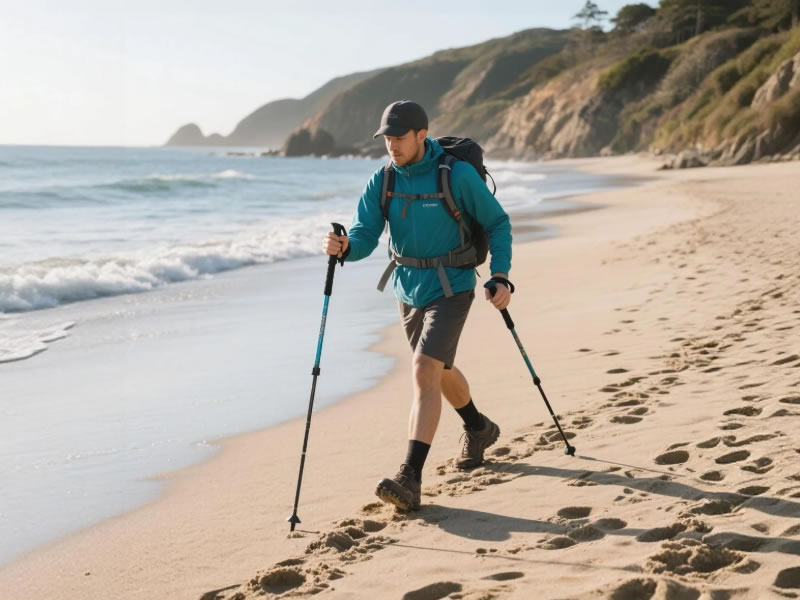
Recommended trekking pole purchase link: https://s.click.aliexpress.com/e/_c4M7OWaN
The Coastal Adversaries: Salt, Sand, and Humidity
- Saltwater Corrosion: Salt is highly corrosive to metals. It can pit aluminum, cause steel components to rust, and potentially degrade the resins in carbon fiber composites over time.
- Abrasive Sand: Fine sand acts like grinding paste. It can scratch shafts, work its way into locking mechanisms, and accelerate wear on tip carbide.
- Humidity & Salt Air: Even when not submerged, salt-laden air can promote corrosion on any exposed metal part.
Critical Features for Coastal Trekking Poles
1. Material: Anodized Aluminum is the Prime Choice
While carbon fiber is popular for its lightness, high-quality, anodized aluminum poles are the superior choice for saltwater environments. The hard anodized coating provides a protective layer that significantly increases corrosion resistance. Aluminum is also less expensive and more resilient to impact against rocks and driftwood. If a scratch penetrates the coating, aluminum will oxidize locally, while carbon fiber’s structural integrity could be compromised by a deep saltwater ingress into a crack.
2. Locking Mechanism: External Flip-Locks (FlickLocks) Are Mandatory
Avoid internal twist locks at all costs for coastal use. Sand and salt crystals will inevitably get inside, causing them to seize, slip, or become impossible to adjust. Robust external flip-locks are far easier to operate with sandy hands, can be rinsed clean easily, and allow you to visually inspect and maintain the mechanism. Their simplicity is their greatest strength here.
3. Grip Material: Non-Absorbent and Easy to Rinse
Rubber or Cork grips are best. Rubber is impervious to saltwater and easy to rinse. Cork is naturally moisture-resistant and dries quickly. Avoid highly textured foam grips that can trap salt and sand particles, becoming gritty and uncomfortable.
4. Design Simplicity: Minimize Entry Points
Choose poles with a clean design. Fewer seams, collars, and adjustable parts mean fewer places for sand and salt to accumulate. Poles that come apart completely (three-section telescoping) are easier to flush clean than complex folding Z-poles with internal tension cords that can trap moisture.
The Non-Negotiable Ritual: Post-Hike Maintenance
Your maintenance routine is as important as your pole selection. A five-minute ritual will exponentially extend your poles' life:
- Rinse Thoroughly: As soon as possible after your hike, rinse the entire pole—especially the locks, tip, and shaft sections—under fresh, clean water. Extend and collapse them while rinsing.
- Dry Completely: Wipe them down and allow them to air-dry fully extended in a shaded, ventilated area. Do not store them collapsed or in a bag while damp.
- Lubricate Sparingly: Occasionally, apply a silicone-based lubricant (not WD-40) to the locking mechanism's moving parts after cleaning and drying to keep them smooth.
Top Pole Recommendations for Coastal Hiking
- Best Overall Coastal Performer: Black Diamond Trail Sport 3These poles feature durable anodized aluminum shafts, the trusted FlickLock Pro mechanism for easy cleaning, and simple rubber grips. They offer excellent durability and serviceability at a mid-range price, making them ideal for harsh saltwater use.
- Premium & Serviceable Choice: LEKI Micro Vario TiLEKI’s Speed Lock 2+ system is robust and easy to maintain. Many of their aluminum models feature high-quality anodizing. A key advantage is LEKI’s excellent availability of replacement parts—tips, baskets, and grip sections—allowing you to refresh worn components damaged by abrasion.
- Excellent Value Pick: Cascade Mountain Tech Aluminum Quick LockThe anodized aluminum version of this popular pole provides exceptional corrosion resistance and flip-lock reliability for a very low cost. If a part does eventually succumb to wear, replacement is financially painless.
- Avoid for Primary Use: High-end carbon fiber poles and any pole relying on internal twist locks. Save these for inland trails.
Conclusion: Resilience Through Design and Care
The best hiking poles for coastal environments are not necessarily the lightest or most technically advanced. They are the most corrosion-resistant, mechanically simple, and easy-to-clean tools. By selecting anodized aluminum poles with external flip-locks and committing to a consistent post-hike freshwater rinse, you equip yourself with reliable support that will endure countless miles of salty breeze, sandy paths, and stunning ocean views. In the battle against the elements, your foresight in gear choice and maintenance is your greatest defense.




