




How to Fix a Stuck Hiking Pole? A Step-by-Step Troubleshooting Guide
Few things are more frustrating on the trail or during pre-hike prep than a hiking pole that refuses to collapse or extend. A stuck section can be caused by dirt, sand, moisture, impact damage, or a malfunctioning locking mechanism. Before resorting to excessive force that could permanently damage your poles, follow this systematic guide to diagnose and resolve the issue safely and effectively.
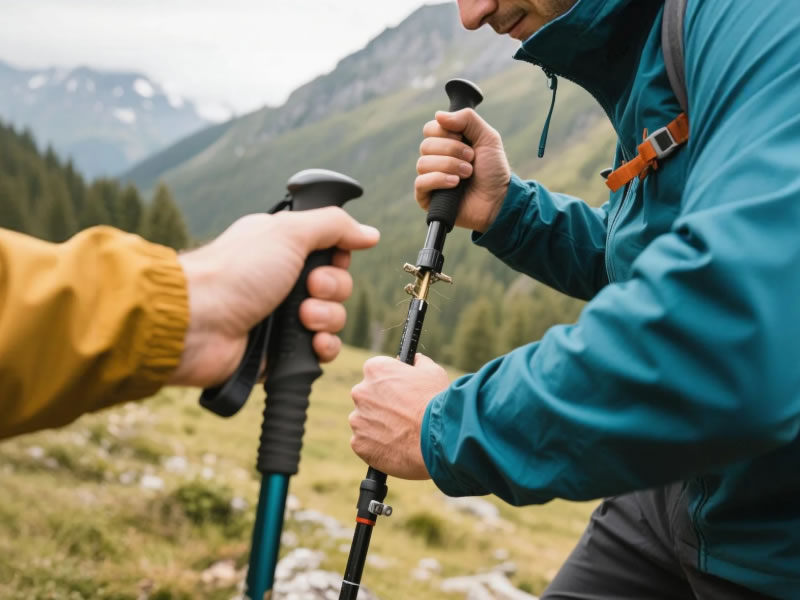
Recommended trekking pole purchase link: https://s.click.aliexpress.com/e/_c4M7OWaN
Step 1: Diagnosis and Initial Precautions
First, identify the likely cause and the type of lock you have.
- Twist-Lock vs. Lever-Lock: Twist locks (internal collars) are more prone to jamming from dirt and over-tightening. Lever locks (external clamps) can be affected by debris in the clasp or a bent mechanism.
- Assess the Scene: Is the pole stuck after a muddy hike (suggesting grit)? Was it stored wet (indicating corrosion)? Did it take a hard fall (potential for a bent shaft)?
Golden Rule: Never use excessive, uncontrolled force. Avoid pulling sections apart with sheer strength, as this can warp the shaft. Do not use tools directly on the carbon fiber, as they can cause cracks.
Step 2: The Universal Cleaning Method
Most stuck poles are jammed by dirt, mud, or fine sand.
- Rinse and Clean: Use warm, soapy water to thoroughly rinse the stuck joint. A soft brush can help dislodge grit from the visible seam.
- Dry Thoroughly: Let the pole air-dry completely, or use a hair dryer on a cool setting. Drying can cause subtle contraction that may loosen the bond.
- Apply Lubricant/Penetrant: Apply a silicone-based lubricant or a dedicated penetrating oil (like WD-40) to the seam. Let it soak for 10-15 minutes, wicking into the microscopic space between sections.
- Gentle Persuasion: With the lubricant applied, gently twist and pull the sections. Use a steady, controlled force. You can also try tapping the joint lightly against a soft surface (like a wooden block) to vibrate debris loose.
Step 3: Targeted Solutions by Cause
If cleaning doesn't work, try these targeted fixes:
For Grit-Corroded or Seized Twist-Lock Poles:
- The Gripping Tool Method: Wrap the lower section of the stuck segment with a rubber jar opener, a strip of inner tube, or a leather belt. Use adjustable pliers or a pipe wrench over the protective material only to get a firm, non-marring grip. Hold the upper section firmly and gently twist counter-clockwise to unscrew the internal mechanism.
- The Cold Contraction Trick: For aluminum poles, carefully apply a cold pack or ice to the outer section of the joint. Metal contracts when cold, potentially breaking the bond. Then attempt to twist apart.
For Lever-Lock (FlickLock) Issues:
- Inspect and Clean the Mechanism: Open the lever fully. Use a small brush or compressed air to clean out any dirt inside the clasp and around the exposed shaft.
- Check for a Bent Cam: If the lever feels loose or won't clamp tightly, the internal cam may be bent. You may need to order a manufacturer-specific replacement part and follow a guide to rebuild the lock head.
For a Bent Shaft (Visible Dent at the Joint):
- Proceed with Extreme Caution. This is the most serious issue. Minor bends can sometimes be carefully straightened. Gently roll the bent section on a hard, flat surface to identify the high point. Apply very gradual pressure opposite the bend. If the bend is severe or on a carbon fiber pole, stop. Forcing it may cause a catastrophic failure. This often requires professional repair or part replacement.
Step 4: Post-Repair Care and Prevention
Once the pole is freed, future problems are easily preventable.
- Deep Clean: Disassemble the pole completely. Wash all sections and the internal locking mechanism with soapy water. For twist locks, clean the internal plastic expander.
- Dry and Lubricate: Let every part dry fully before storage. Apply a dry, silicone-based lubricant to the lower shaft sections. Avoid grease or oil, which attracts dirt.
- Proper Storage: Never store poles tightly collapsed. Extend them slightly or store them fully extended in a cool, dry place. This prevents moisture from being trapped in the joints, which is a primary cause of corrosion and sticking.
When to Seek Professional Help
If all self-repair attempts fail, or if you have a high-end carbon fiber pole with a suspected hairline crack, contact the manufacturer's customer service. Many brands sell replacement sections or lock mechanisms. The cost of a new lower section is often far less than a new pair of poles.
By understanding the cause and applying the right fix, you can rescue your trusted gear, save money, and ensure your poles are ready and reliable for your next adventure. Regular cleaning and proper storage are the simplest guarantees against this common nuisance.




