




Best Telescopic Hiking Poles: The Ultimate Guide to Versatile Performance
Telescopic hiking poles, characterized by their multi-section, adjustable design, represent the most versatile and popular category of trekking poles. Their ability to adapt on the fly makes them the ideal choice for hikers who encounter varied terrain within a single outing. This guide explores what makes a great telescopic pole, breaking down the key features, materials, and considerations to help you select the perfect pair for your adventures.
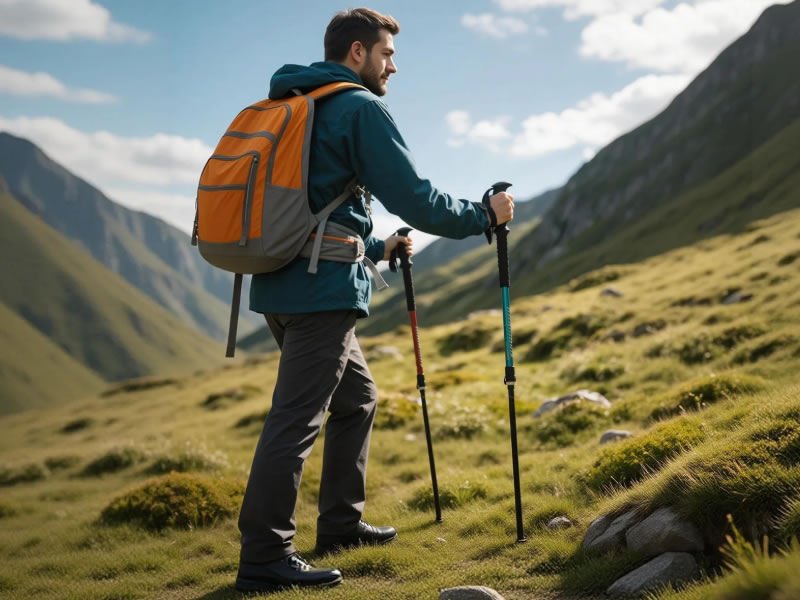
Recommended trekking pole purchase link: https://s.click.aliexpress.com/e/_c4M7OWaN
The Core Advantage: Dynamic Adjustability
The defining benefit of telescopic poles is their on-trail adaptability. Unlike fixed-length poles, they can be quickly modified to match the slope of the terrain:
- Shorten for Uphill Climbs: Provides better leverage and maintains an efficient, upright posture.
- Lengthen for Downhill Descents: Offers increased reach for better bracing and dramatically reduced joint impact.
- Customize for Your Stride: Fine-tune the length for perfect ergonomics on flat sections.
This makes them the undisputed champion for backpacking, trekking with elevation change, and general-purpose hiking where conditions are unpredictable.
Critical Features of Top-Tier Telescopic Poles
- Locking Mechanism: The Heart of ReliabilityThis is the most important feature. A failing lock is a safety hazard.External Lever Locks (FlickLocks): The gold standard for telescopic poles. They are easy to operate with gloves, provide visible confirmation of engagement, and are highly reliable under load. Dirt and moisture are less likely to compromise their function, and they are field-serviceable.Twist Locks: Generally less recommended for serious use. They can become slippery, difficult to tighten sufficiently, and are prone to jamming or slipping when cold, wet, or dirty.
- Material: The Weight vs. Durability Trade-OffAluminum (6061 or 7075 Alloy): The best value and most durable choice. Aluminum poles are tough, resilient (they will bend before snapping), and cost-effective. The higher-grade 7075 aluminum offers superior strength-to-weight ratio. They transmit more vibration but are virtually indestructible under normal use.Carbon Fiber: Offers a premium, lightweight experience with excellent vibration dampening. Ideal for weight-conscious hikers and those covering long distances. High-quality carbon is very strong, but it has a more brittle failure mode (can crack or snap under sharp lateral impact).
- Grip Design and ComfortYour hand is in constant contact, so grip material is crucial.Cork: Conforms to your hand, naturally wicks moisture, and is temperature-neutral. Excellent for long-distance comfort.Foam (EVA): Soft, highly absorbent, and comfortable for most users. Can degrade faster than cork with heavy use.Rubber: Durable and good for insulation in cold weather, but can become slippery with sweat.
- Additional Performance FeaturesShock Absorption: Some models include an internal spring system to further reduce impact on wrists and joints, especially valuable on long descents.Shaft Sections: Most have 3 sections, offering a good balance of packed length and adjustability. 2-section poles are more robust but less packable.Baskets and Tips: Interchangeable carbide tips and small trekking baskets should be standard. Ensure tips are replaceable.
Top Contenders and Recommendations
The "best" pole depends on your primary use case:
- For the Value-Focused All-Rounder: Look to brands like Cascade Mountain Tech or Montem. Their aluminum poles with cork grips and lever locks offer exceptional performance at a budget-friendly price point.
- For the Performance Backpacker: Brands like LEKI and Black Diamond lead here. Models like the LEKI Cressida (women's) or Black Diamond Trail Pro offer refined designs, reliable locks, and a choice of aluminum or carbon, often with excellent warranties.
- For the Weight-Conscious Hiker: Seek out carbon fiber models from the above brands. Komperdell also produces excellent high-performance carbon telescopic poles.
Choosing the Right Pole for You: A Quick Guide
| Priority | Recommended Choice |
|---|---|
| Maximum Durability & Value | Aluminum poles with lever locks. |
| Lightweight Performance | Carbon fiber poles with lever locks. |
| All-Terrain Versatility | 3-section adjustable poles. |
| Beginner-Friendly & Reliable | Aluminum, lever lock, cork or foam grip. |
Final Considerations Before You Buy
- Collapsed Length: Will they fit inside or strap neatly to your backpack?
- Length Range: Ensure the pole's minimum and maximum adjustment will fit your height (using the 90-degree elbow rule).
- Warranty and Service: Reputable brands back their products with strong warranties and often sell replacement parts (tips, baskets, grip sections).
Conclusion: The Adaptable Foundation of Your Kit
The best telescopic hiking poles are those that become a seamless extension of your body, quietly adapting to support you through every climb and descent. By prioritizing a reliable lever-lock mechanism and choosing the shaft material that best matches your need for durability or weight savings, you invest in a tool that will enhance your stability, endurance, and joint health for countless miles. In the world of hiking poles, telescopic models offer the perfect balance of control and flexibility, making them the foundational choice for most hikers ready to elevate their time on the trail.




