




What Is the Best Material for Walking Poles? A Comprehensive Comparison
The question of the best material for walking poles is one of the most fundamental—and most debated—in the outdoor community. It is also, like many gear questions, one that has no single correct answer. The "best" material depends entirely on your priorities: weight, durability, cost, comfort, and the type of walking you do. This guide provides a comprehensive comparison of the materials used in walking poles—aluminum, carbon fiber, and (briefly) steel—to help you make an informed decision based on your specific needs.
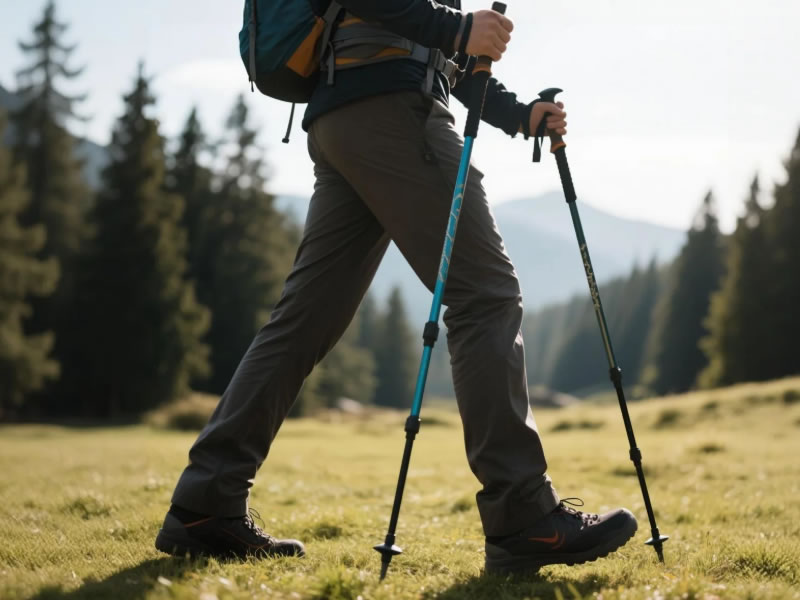
Recommended trekking pole purchase link: https://s.click.aliexpress.com/e/_c4M7OWaN
The Contenders: An Overview
| Material | Weight | Durability | Cost | Vibration Dampening | Best For |
|---|---|---|---|---|---|
| Aluminum | Moderate | Excellent (bends, rarely snaps) | Low-Moderate | Poor | Most hikers, rugged terrain, budget-conscious |
| Carbon Fiber | Lightest | Good (but can snap under lateral impact) | High | Excellent | Weight-conscious, long-distance, joint comfort |
| Steel | Heavy | Very High | Low | Poor | Historical/replica; not recommended for modern walking |
Part I: Aluminum – The Versatile Workhorse
What It Is: Aluminum poles are made from drawn aluminum tubing, typically alloyed with other metals for strength. The two most common alloys are 6061 (standard strength) and 7075 (aerospace grade, ~50% stronger).
✅ Advantages of Aluminum
1. Excellent Durability and Impact Resistance
Aluminum's greatest strength is its ability to bend rather than snap under extreme stress. If you jam a pole between rocks, catch it in a root, or fall on it, aluminum will typically deform—but it will not catastrophically fail. A bent section can often be straightened enough to finish a hike. For rugged, off-trail travel, this is invaluable.
2. Affordability
Aluminum poles are significantly less expensive than carbon fiber. Quality aluminum poles with reliable locks start around $50–$70 per pair. Premium 7075 models rarely exceed $100–$120. This makes aluminum the best value for most hikers.
3. Consistent Performance in All Conditions
Aluminum's mechanical properties do not change with temperature. It performs identically at -20°F and +100°F. It is unaffected by moisture and requires minimal maintenance.
4. Repairability
A bent lower section can often be gently straightened using a smooth, hard surface. Replacement sections are frequently available from manufacturers.
❌ Disadvantages of Aluminum
1. Heavier Than Carbon Fiber
Aluminum poles are typically 25–40% heavier than equivalent carbon models. For long-distance hikers, this weight penalty accumulates into significant arm fatigue over thousands of miles.
2. Vibration Transmission
Aluminum is an efficient conductor of vibration. On rocky, hard-packed trails, it transmits a constant "buzz" to your hands and wrists, which can cause premature fatigue and numbness. Cork grips help, but they do not eliminate the underlying material property.
3. Cold Conductivity
Bare aluminum becomes painfully cold in winter conditions. Gloves are mandatory for comfortable use.
Part II: Carbon Fiber – The Lightweight Performer
What It Is: Carbon fiber poles are constructed from woven carbon strands bonded with epoxy resin. The fibers provide exceptional tensile strength along the shaft axis, while the resin matrix transfers load and maintains shape.
✅ Advantages of Carbon Fiber
1. Significant Weight Savings
A pair of premium carbon poles weighs 340–480 grams. Comparable aluminum poles weigh 500–600+ grams. Over a 20-mile day, this difference represents tons of cumulative lifted mass. For thru-hikers, fastpackers, and anyone who values efficiency, this is the single most compelling advantage.
2. Superior Vibration Dampening
Carbon fiber's internal structure dissipates high-frequency vibration. On rocky, hard-packed trails, carbon poles feel quiet, smooth, and refined. This translates to less hand fatigue and greater comfort over long days—a significant benefit for those with joint concerns.
3. Cold-Weather Comfort
Carbon is thermally neutral; it does not conduct cold like aluminum. In winter conditions, carbon poles are significantly more comfortable to grip without gloves.
4. Stiffness and Precision
High-quality carbon poles offer excellent stiffness, providing immediate, reliable feedback with each plant.
❌ Disadvantages of Carbon Fiber
1. Brittle Failure Mode
This is the critical vulnerability. Carbon fiber is exceptionally strong when force is applied axially (straight down the shaft). However, a sharp lateral impact—jamming the pole between rocks, catching it in a root network, or falling onto it—can cause a catastrophic snap. There is no warning; the pole simply breaks. For this reason, carbon is less suitable for rugged, off-trail use.
2. Higher Cost
Quality carbon poles command a significant premium, typically $150–$220 per pair. Budget carbon options exist (e.g., Cascade Mountain Tech) but use lower-modulus fibers and may be less durable.
3. Abrasion Sensitivity
Grit and dirt trapped in locking mechanisms or rubbed against the shaft can abrade the epoxy finish and, over time, compromise fibers. Carbon poles require more diligent cleaning than aluminum.
4. Difficult to Repair
A bent aluminum pole can often be straightened in the field. A cracked carbon pole is finished. There is no field repair.
Part III: Steel – The Historical Relic
What It Is: Solid or tubular steel poles were common decades ago but have been almost entirely supplanted by aluminum and carbon fiber.
Characteristics
- Very heavy – typically 2–3 times the weight of aluminum
- Extremely durable – virtually indestructible
- Inexpensive – low material cost
- Poor vibration dampening
Verdict: Steel poles are not recommended for recreational walking. The weight penalty is severe, and modern materials offer far better performance at comparable or lower cost. The only exception is for historical reenactment or very specific niche uses.
Head-to-Head: Aluminum vs Carbon Fiber
| Scenario | Aluminum | Carbon Fiber | Verdict |
|---|---|---|---|
| Long-distance thru-hiking (PCT, AT, CDT) | Acceptable but fatiguing | Ideal – weight savings compound | Carbon Fiber |
| Rocky, technical terrain (scrambling, talus) | Ideal – bends, doesn't snap | Risky – lateral impact hazard | Aluminum |
| Backpacking with heavy load (40+ lbs) | Ideal – maximum load security | Acceptable if high-modulus | Aluminum |
| Day hiking, moderate trails | Excellent – durability and value | Excellent – comfort and lightness | Tie |
| Budget-conscious purchase | Best value | Premium cost | Aluminum |
| Senior / joint-sensitive hiker | Acceptable with cork grips | Ideal – vibration dampening | Carbon Fiber |
| Winter / snow travel | Good with gloves | Good – less cold conduction | Tie |
| Ultralight gram-counting | Too heavy | Ideal | Carbon Fiber |
| Off-trail / bushwhacking | Ideal | Risky | Aluminum |
The Nuance: Not All Aluminum or Carbon Is Equal
Aluminum alloys matter:
- 6061 aluminum: Standard strength, excellent durability, affordable.
- 7075 aluminum: ~50% stronger, slightly lighter, more expensive. The preferred choice for rugged terrain and heavy loads.
Carbon fiber grades matter:
- High-modulus (premium) carbon: Stiffer, lighter, more expensive, more brittle.
- Standard-modulus (budget) carbon: Slightly heavier, slightly less stiff, more forgiving, lower cost.
How to Decide: A Decision Framework
Choose Aluminum IF:
- You hike on rugged, off-trail, or technical terrain where poles will be abused.
- You carry a heavy backpack and demand maximum load-bearing security.
- You are on a tight budget but need reliable, durable equipment.
- You prefer field-repairable gear and value long-term serviceability.
- You are a casual hiker who does not need premium weight savings.
- You prioritize durability and value above all else.
Choose Carbon Fiber IF:
- You hike high mileage (thru-hiking, long day hikes) and every gram matters.
- You prioritize comfort and reduced arm fatigue over absolute durability.
- You hike primarily on established trails where severe lateral impacts are rare.
- You are willing to pay a premium and treat your gear with reasonable care.
- You have joint concerns and value vibration dampening.
- You are a senior seeking maximum comfort.
Choose Steel IF:
- You are buying a historical replica or have a very specific niche need. (Otherwise, don't.)
Hybrid and Composite Materials
Some manufacturers experiment with hybrid constructions—for example, carbon fiber shafts with aluminum sections in high-stress areas. These attempt to capture the weight savings of carbon with the impact resistance of aluminum. They can be excellent but are often expensive and niche.
Conclusion: There Is No Single "Best"
The question "What is the best material for walking poles?" has no universal answer—because the "best" material depends entirely on the best for you.
- Aluminum is the rational choice for most hikers: durable, affordable, and reliable. It will serve you well on almost any terrain and last for years.
- Carbon fiber is the performance choice for those who prioritize weight savings and comfort, and who are willing to accept the trade-offs in cost and fragility.
- Steel is a historical footnote, best left in the past.
Consider your typical terrain, your budget, your joint health, and your personal preferences. There is no wrong answer—only the right answer for your walking style. Choose accordingly, and your poles will reward you with miles of comfortable, confident walking.




