




Can you take walking poles on a plane?
For hikers and walkers, few travel questions cause as much anxiety as this one: Can I bring my walking poles on the plane? The answer is nuanced, governed by international security regulations, individual airline policies, and the specific design of your poles. Getting it wrong can mean confiscated gear, missed hikes, and unnecessary expense. This comprehensive guide provides everything you need to know about flying with walking poles—from understanding the rules to step‑by‑step packing instructions and practical alternatives.
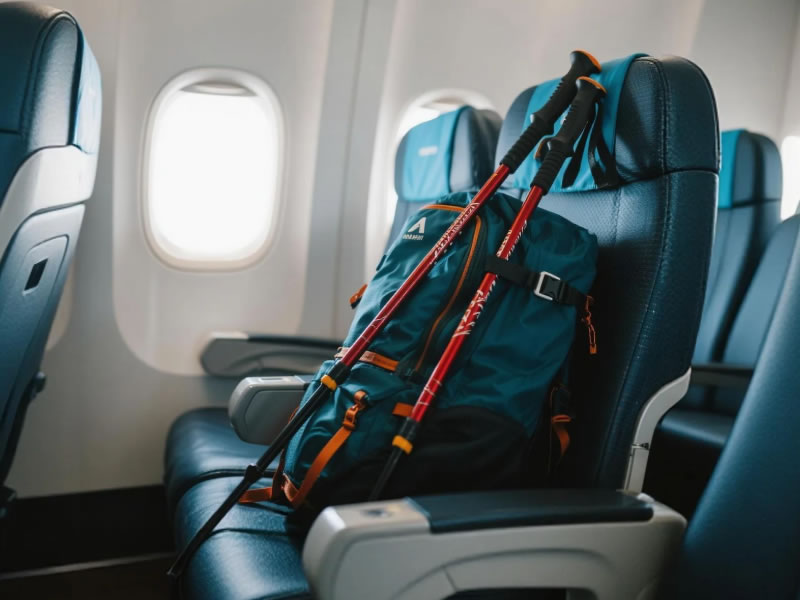
Recommended trekking pole purchase link: https://s.click.aliexpress.com/e/_c4M7OWaN
The Short Answer: Checked Luggage Only
Walking poles are prohibited in carry‑on luggage by virtually all airlines worldwide. International aviation security agencies classify them as potential weapons due to their sharp tips, rigid construction, and potential use as blunt instruments. Attempting to bring them through security will result in confiscation—no exceptions, no appeals.
The only safe, legal way to transport walking poles by air is in checked baggage.
Part I: Why the Rule Exists
Understanding the rationale helps explain why the rule is so strict—and why it's unlikely to change.
- Security classification: Walking poles fall under the category of "items with sharp points or blunt edges that could be used to cause injury."
- Tip design: Carbide tips are exceptionally hard and sharp, designed to bite into rock. They are clearly prohibited.
- Rigidity: Even without sharp tips, a solid aluminum or carbon shaft can be used as a striking weapon.
- Consistency: Security screeners cannot assess intent; they apply rules uniformly. A harmless trekker's pole and a potential weapon look identical on an X‑ray.
Part II: Airline Policies – The Fine Print
While the carry‑on prohibition is universal, airlines may have varying rules for checked poles.
| Policy Aspect | Typical Rule | What to Check |
|---|---|---|
| Checked baggage allowance | Poles count as normal checked items. | Does your ticket include checked bags? Fees apply? |
| Sporting equipment classification | Some airlines classify poles as "sporting equipment" with separate fees. | Check airline's sporting goods policy. |
| Size restrictions | Collapsed poles must fit within size limits (usually 62 linear inches total). | Measure your packed poles. |
| Special handling | Some require poles to be in a rigid container. | Verify packing requirements. |
Always check your airline's website before traveling. Search for "sporting equipment," "special items," or "restricted items."
Part III: The Exception That Proves the Rule – Folding Poles
A common question: Can I carry on my compact folding (Z‑poles) if they collapse very short?
Technically, no. The rules apply to the item, not its collapsed length. However:
- Some travelers report success with very short folding poles (under carry‑on size limits) if they are completely concealed within a non‑descript tube or case.
- This is a gamble, not a strategy. Security has final authority. If they recognize the item, it will be confiscated.
- The safest assumption: check them.
Part IV: Step‑by‑Step Packing for Checked Luggage
Proper packing protects your poles and your other gear.
Step 1: Preparation
- Clean poles thoroughly. Remove all dirt, mud, and debris. This prevents abrasive damage during transit and satisfies agricultural inspections.
- Fully collapse. Shorten telescoping sections; fold Z‑poles.
- Secure all locks. Ensure nothing can extend accidentally.
Step 2: Protect the Tips (Mandatory)
Sharp carbide tips are the primary hazard. Use one of these methods:
- Rubber tip protectors (included with most poles) – best option.
- Heavy‑duty tape – wrap several layers around each tip.
- Wine corks – jab tip into cork.
- Pool noodle sections – cut a short piece and secure.
Step 3: Choose Your Packing Method
| Method | Best For | Instructions |
|---|---|---|
| Protective tube | Carbon fiber poles, maximum protection | Use cardboard mailing tube or PVC pipe. Insert poles, pad with newspaper, seal ends. Place in suitcase. |
| Inside suitcase | Most travelers | Position poles diagonally across suitcase. Pad generously with clothing. Keep away from fragile items. |
| External on backpack | Backpackers checking packs | Secure along side with compression straps. Ensure tips are protected and won't snag. |
Step 4: Additional Protection
- Remove baskets and store in ziplock bag.
- Wrap poles in a towel or clothing to prevent rattling.
- Use a dedicated stuff sack to contain everything.
Step 5: Final Check
- Ensure poles cannot shift during transit.
- Verify all tips are fully covered.
- Confirm suitcase closes without straining zippers.
Part V: International Travel – Biosecurity Considerations
Some countries (New Zealand, Australia, etc.) have strict biosecurity laws. Walking poles that have been used on trails may be confiscated if not properly cleaned.
- Clean poles immaculately before departure. No dirt, no plant material.
- Declare them on customs forms if required.
- Carry a small brush to clean them again before your return flight.
Pro tip: Photograph your clean poles before packing as proof if questioned.
Part VI: Alternatives to Flying with Poles
If packing poles seems too complicated or risky, consider these alternatives:
1. Rent at Your Destination
Many popular hiking destinations have gear shops offering quality pole rentals.
- Pros: No packing hassle; no risk of damage or loss.
- Cons: Added cost; may not have your preferred model.
2. Ship Ahead
Send poles to your hotel or trailhead via postal or courier service.
- Pros: Poles waiting when you arrive.
- Cons: Cost; timing uncertainty; need to ship back.
3. Buy at Destination
Purchase inexpensive poles upon arrival.
- Pros: Simple; you own them.
- Cons: Added expense; may not match your usual quality.
4. Go Without
For short, easy walks, you may manage without poles.
- Pros: Simplest.
- Cons: Lose benefits of pole use.
Part VII: Common Mistakes and How to Avoid Them
| Mistake | Consequence | Prevention |
|---|---|---|
| Packing in carry‑on | Confiscation at security. | Always check poles. |
| Unprotected tips | Punctured luggage; damaged gear. | Use tip protectors. |
| Not collapsing fully | Poles extend, snag, or bend. | Collapse to minimum length. |
| Loose in suitcase | Poles shift, damage other items. | Pad and secure with clothing. |
| No rigid tube for carbon | Carbon fiber poles can snap. | Use protective tube. |
| Forgetting baskets | Lost or crushed baskets. | Remove and store separately. |
| Ignoring airline policies | Unexpected fees or refusal. | Check airline website. |
| Dirty poles internationally | Agricultural inspection issues. | Clean thoroughly before travel. |
Part VIII: Arrival – Unpacking and Inspection
When you reach your destination:
- Inspect poles immediately for any damage. Look for bent sections, loose locks, or cracks.
- Test all mechanisms before heading to the trail.
- Re‑adjust to your preferred length using the 90° elbow rule.
- Re‑install baskets if removed.
- Clean again before your return flight.
Part IX: Quick‑Reference Checklist
Before leaving home:
- Confirm airline policy (checked only).
- Clean poles thoroughly.
- Fully collapse.
- Install tip protectors.
- Remove baskets (optional).
- Secure all locks.
- Choose packing method (tube/suitcase/external).
- Pad generously.
- Verify suitcase closes properly.
Upon arrival:
- Inspect for damage.
- Test mechanisms.
- Re‑adjust length.
- Re‑install baskets.
- Clean before return flight.
Conclusion: A Little Planning Prevents Problems
Flying with walking poles requires more forethought than tossing them in a duffel, but the process is straightforward once you understand the rules. The key principles are simple:
- Checked luggage only. Never carry on.
- Protect the tips. Always.
- Pad and secure. Prevent damage.
- Check airline policies. Avoid surprises.
Follow these guidelines, and your poles will arrive safely, ready for the trails that await. A few minutes of preparation at home saves hours of frustration—and potential loss of gear—at the airport.
Safe travels, and happy hiking.




