




Walking Poles for Treadmill Walking – Do They Work? The Complete Guide to Indoor Fitness
The treadmill is a staple of indoor fitness, offering a reliable way to walk regardless of weather. But for many, it can also feel monotonous—a repetitive motion that engages only the lower body. Enter treadmill walking with poles, a technique that transforms this simple exercise into a full‑body workout. The question is: does it actually work, or is it just a gimmick? This comprehensive guide examines the science, benefits, and practical considerations of using walking poles on a treadmill.
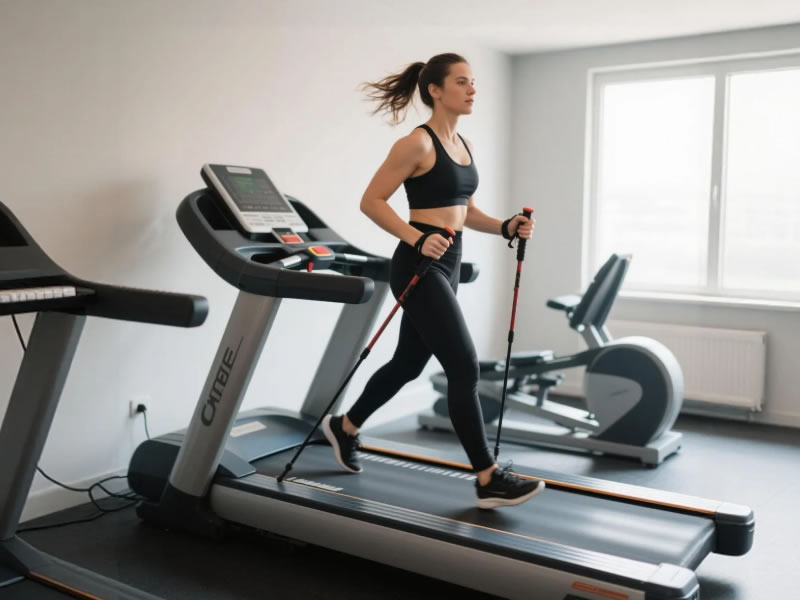
Recommended trekking pole purchase link: https://s.click.aliexpress.com/e/_c4M7OWaN
The Short Answer: Yes, It Works—And It's Highly Effective
Using walking poles on a treadmill is not merely a novelty; it is a scientifically validated method for increasing the intensity and benefits of walking. When performed correctly, it:
- Increases calorie burn by 20–46% compared to walking without poles at the same speed.
- Engages approximately 90% of the body's muscles, transforming a lower‑body activity into a full‑body workout.
- Reduces perceived exertion – you work harder but feel like you're working less.
- Improves posture and core strength.
- Provides a low‑impact cardiovascular workout suitable for all fitness levels.
Part I: The Science – Why Poles Work on a Treadmill
1. Converting Walking to Full‑Body Exercise
Normal treadmill walking primarily engages the legs. Adding poles recruits the upper body muscles—arms, shoulders, back, and core—to propel you forward. This is achieved through the diagonal stride (right pole with left foot), which requires coordinated activation of multiple muscle groups.
2. Increasing Energy Expenditure
Multiple studies have quantified the metabolic effect of pole walking:
- Calorie burn increases by 20–46% at the same walking speed.
- Oxygen consumption (VO2) increases significantly, indicating a higher cardiovascular demand.
- Heart rate rises without a corresponding increase in perceived effort.
3. Reducing Joint Impact
While the treadmill surface is already more forgiving than pavement, poles further reduce the load on knees, hips, and ankles by distributing weight through the upper body. This is particularly beneficial for individuals with joint concerns.
4. Improving Posture and Gait
The need to coordinate poles encourages an upright posture and a more natural gait, counteracting the tendency to slump or hold the treadmill rails—a common mistake that reduces effectiveness and can cause strain.
Part II: Benefits of Treadmill Pole Walking
| Benefit | Description |
|---|---|
| Increased calorie burn | Burn more calories in the same amount of time—ideal for weight management. |
| Full‑body engagement | Work arms, shoulders, back, and core in addition to legs. |
| Low impact | Poles absorb shock, reducing stress on joints. |
| Improved cardiovascular fitness | Higher heart rate and oxygen consumption without extra perceived effort. |
| Better posture | Poles encourage an upright stance, preventing slouching. |
| Reduced boredom | The added coordination and muscle engagement make treadmill time more interesting. |
| Year‑round training | Maintain fitness regardless of weather. |
| Rehabilitation friendly | Low impact and adjustable intensity suit many recovery protocols. |
Part III: Essential Equipment
Poles
- Any walking poles can be used, but rubber tips are mandatory to protect the treadmill belt and ensure quiet operation.
- Adjustable poles are useful for finding the correct length.
- Nordic walking poles with angled grips are ideal but not required.
Tips
- Rubber tip protectors must be used. Carbide tips will damage the treadmill belt.
- Ensure rubber tips are in good condition—worn tips can slip.
Treadmill
- Any standard treadmill works.
- Ensure the belt is long enough for a natural stride (most are).
- Start at a low speed until you master the coordination.
Part IV: Technique – How to Walk with Poles on a Treadmill
1. Set the Correct Pole Length
- Use the 90‑degree rule: standing upright with tip on the treadmill, elbow should be at 90°.
- For treadmills, this baseline works well. No need for terrain adjustments.
2. Master the Diagonal Stride
- Right pole plants as left foot moves forward.
- Left pole plants as right foot moves forward.
- This contralateral rhythm is essential for efficiency and core engagement.
3. Use the Straps Correctly
- Insert hand up through the bottom of the strap.
- Push down and back through the strap, not by gripping the handle.
- Keep grip relaxed—the strap bears the weight.
4. Maintain Upright Posture
- Stand tall, chest open, shoulders back.
- Look ahead, not down at your feet.
- Avoid leaning on the treadmill console.
5. Start Slowly
- Begin at a comfortable walking speed (2–3 mph).
- Focus on rhythm and coordination before increasing speed.
- Once comfortable, gradually increase speed or incline.
6. Add Incline for Intensity
- Increasing the treadmill incline adds resistance, making the workout more challenging without requiring faster arm movement.
- Poles are particularly effective on inclines, as they allow you to push off powerfully.
Part V: Common Mistakes to Avoid
| Mistake | Consequence | Correction |
|---|---|---|
| Using carbide tips | Damages treadmill belt. | Always use rubber tip protectors. |
| Holding the treadmill rails | Negates benefits of poles; poor posture. | Let go; trust the poles. |
| Same‑side rhythm | Awkward, inefficient. | Practice opposite arm/leg. |
| Death grip on handles | Hand fatigue; poor energy transfer. | Use straps correctly; relax grip. |
| Hunched posture | Reduces lung capacity; back strain. | Stand tall, chest open. |
| Starting too fast | Loss of coordination; frustration. | Begin slowly, master rhythm. |
| Ignoring incline | Missed opportunity for progression. | Add incline for greater challenge. |
Part VI: Sample Treadmill Workout with Poles
| Phase | Duration | Speed / Incline | Focus |
|---|---|---|---|
| Warm‑up | 5 minutes | 2.5 mph, 0% incline | Establish rhythm, relaxed grip. |
| Main set | 20 minutes | 3.0–3.5 mph, 2–4% incline | Maintain diagonal stride, push through straps. |
| Interval | 5 minutes | 3.5 mph, 6% incline | Increase intensity; focus on powerful push. |
| Cool down | 5 minutes | 2.5 mph, 0% incline | Gradual return to easy pace. |
Progression: Increase duration, speed, or incline gradually as fitness improves.
Part VII: Who Benefits Most?
| User | Why Treadmill Poles Work |
|---|---|
| Weight management | Higher calorie burn in same time. |
| Seniors | Low impact; improved balance and posture. |
| Rehabilitation patients | Controlled environment; adjustable intensity. |
| Fitness enthusiasts | Adds variety; full‑body engagement. |
| Those with joint issues | Reduces impact on knees, hips, ankles. |
| Anyone avoiding outdoor walking | Maintain fitness regardless of weather. |
Part VIII: Frequently Asked Questions
Q: Will using poles damage my treadmill?
A: Only if you use carbide tips. Always use rubber tip protectors. With rubber tips, there is no damage.
Q: Do I need special "treadmill poles"?
A: No. Any walking poles with rubber tips work. Nordic walking poles are ideal but not required.
Q: Is it harder than regular treadmill walking?
A: Yes, you will burn more calories and engage more muscles. However, the perceived effort may feel lower due to the upper body involvement.
Q: Can I use poles on any treadmill?
A: Yes, as long as you use rubber tips and the belt is long enough for a natural stride.
Q: What speed should I start at?
A: Begin at 2–3 mph to master coordination. Increase gradually.
Q: Should I use the incline?
A: Yes, incline adds resistance and increases intensity without requiring faster arm movement.
Part IX: Conclusion – A Powerful Indoor Training Tool
Walking poles for treadmill walking are not a gimmick—they are a highly effective fitness tool. Backed by research, they transform a simple lower‑body activity into a full‑body workout that burns more calories, engages more muscles, and reduces joint impact. Whether you're looking to lose weight, maintain fitness during inclement weather, rehabilitate an injury, or simply add variety to your routine, treadmill pole walking delivers measurable benefits.
The key takeaways:
- Always use rubber tip protectors.
- Master the diagonal stride (opposite arm/leg).
- Use straps correctly to transfer weight.
- Start slowly, then increase speed and incline.
- Enjoy a more engaging, effective workout.
Give it a try. Your body—and your treadmill—will thank you.




