




How to Store Walking Poles Long-Term: The Complete Guide to Preserving Your Gear
Properly storing your walking poles during the off-season or extended periods of non-use is essential for maintaining their functionality and extending their lifespan. Whether you use trekking poles for hiking, Nordic walking, or daily fitness routines, knowing how to store walking poles long-term will save you money and ensure they perform reliably when you need them again.
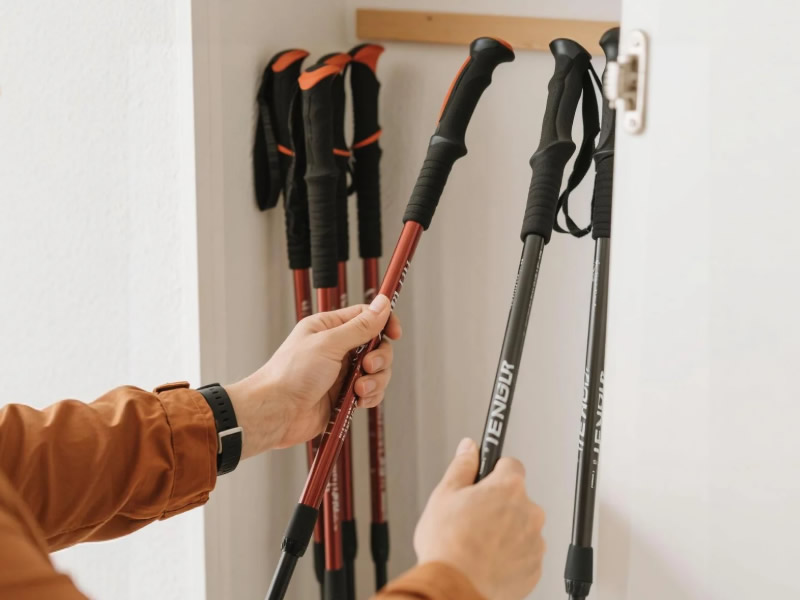
Recommended trekking pole purchase link: https://s.click.aliexpress.com/e/_c4M7OWaN
Why Proper Storage Matters
Walking poles endure significant stress during use, from mud and moisture to salt and abrasion. When you simply toss them in a garage corner for months, you risk corrosion, lock mechanism failure, and material degradation. Learning how to store walking poles long-term correctly protects your investment—quality poles can last for decades with proper care.
Step 1: Thorough Cleaning Before Storage
The most critical step in how to store walking poles long-term begins with cleaning. Salt from sweat, trail dirt, and minerals from puddles can corrode aluminum shafts and damage locking mechanisms.
For dirty poles:
- Wipe down shafts with a damp cloth and mild soap
- Pay special attention to joints and locking mechanisms
- Use a soft brush to remove packed dirt from baskets and tips
- For stubborn grime, isopropyl alcohol on a cloth works well
Saltwater exposure: If you've used poles near the ocean, rinse them immediately with fresh water and dry thoroughly. Salt is highly corrosive and will eat through anodized finishes if left untreated.
Step 2: Complete Drying Process
Moisture is the enemy of long-term storage. When learning how to store walking poles long-term, remember that water trapped inside telescoping sections or locking mechanisms causes rust, corrosion, and freezing damage in cold climates.
- Extend poles fully and wipe every section
- Leave them disassembled or extended overnight in a warm, dry area
- Consider using a hairdryer on low heat to ensure complete drying of internal mechanisms
- Check rubber grips and straps—these can harbor moisture against metal components
Step 3: Adjust Tension Settings
One often-overlooked aspect of how to store walking poles long-term involves relieving tension on internal components.
For twist-lock poles: Completely loosen the locking mechanisms. Leaving them tightened for months compresses internal expanders and can cause permanent deformation, leading to locks that won't tighten properly later.
For flip-lock poles: Open all lever locks to their relaxed position. This prevents spring fatigue and maintains clamping pressure when you need it.
For anti-shock poles: If your poles have internal springs, collapse them slightly to reduce tension on the shock-absorbing mechanism.
Step 4: Choose the Ideal Storage Location
Where you store poles matters tremendously. When considering how to store walking poles long-term, location affects everything from material integrity to mechanism function.
Optimal conditions:
- Cool, consistent temperatures between 50-75°F (10-24°C)
- Low humidity (below 50% relative humidity)
- Away from direct sunlight (UV rays degrade plastics and rubber)
- Protected from temperature fluctuations
Avoid these locations:
- Damp basements or garages—humidity causes corrosion
- Attics—extreme heat damages grip adhesives and plastic components
- Sheds exposed to freezing—moisture expansion can crack mechanisms
- Near water heaters or HVAC equipment—chemical fumes can corrode metals
Step 5: Proper Positioning for Storage
How to store walking poles long-term also involves how you position them. The best method depends on your available space:
Upright storage: Stand poles in a corner with tips up and grips down. This prevents pressure on carbide tips and allows any residual moisture to drain away from grips.
Hanging storage: Mount hooks on a wall and hang poles by their straps. This saves floor space and keeps them organized.
Lying flat: If storing in a closet, lay poles horizontally on shelves. Avoid stacking heavy items on top.
Important: Never store poles fully compressed with tension on locking mechanisms, and never lean heavy objects against them, which can bend shafts over time.
Step 6: Protect Rubber Components
Rubber tips, grip materials, and basket attachments degrade over time. When learning how to store walking poles long-term, consider these protection tips:
- Remove rubber tip covers and store separately to prevent them from fusing to carbide tips
- Keep baskets attached or store in a small bag with the poles
- Apply a tiny amount of silicone lubricant to rubber components to prevent drying and cracking
Step 7: Consider Disassembly
For advanced storage or very long-term storage (multiple years), consider how to store walking poles long-term by fully disassembling sectioned poles:
- Separate telescoping sections completely
- Store sections bundled together with rubber bands
- Keep all components together in a labeled bag or container
- Include spare parts like replacement baskets and tips
Step 8: Periodic Maintenance Checks
Even in storage, walking poles need occasional attention. For truly long-term storage, check poles every 3-6 months:
- Inspect for any signs of rust or corrosion
- Operate locking mechanisms to ensure they move freely
- Check grip adhesion and strap condition
- Wipe down shafts if dust has accumulated
- Re-lubricate if necessary (use appropriate lubricant for your lock type)
Seasonal Storage Considerations
Different seasons present different challenges for how to store walking poles long-term:
Winter storage: If storing during winter months, ensure poles are completely dry before bringing them into a warm house from cold garages—condensation forms quickly and causes rust.
Summer storage: High heat can damage grip glue and soften plastic components. Store in the coolest part of your home.
Humid climate storage: Consider adding silica gel packets to storage containers to absorb excess moisture. For extreme humidity, store poles in breathable fabric bags rather than sealed plastic.
Common Mistakes to Avoid
When researching how to store walking poles long-term, avoid these frequent errors:
- Storing poles wet or damp
- Leaving locks tightened for months
- Exposing poles to extreme temperatures
- Stacking heavy items on stored poles
- Forgetting about them entirely (regular checks matter)
- Using WD-40 as a protectant (it attracts dust and can damage some materials)
When to Use Lubricants
Some storage guides recommend lubricating moving parts before storage. Use discretion:
- Apply a thin coat of silicone spray to metal shafts to prevent oxidation
- Avoid oil-based lubricants that attract dust and dirt
- Never lubricate friction-based locking mechanisms unless specified by manufacturer
- Wipe off excess lubricant completely before storage
Special Considerations for Different Materials
How to store walking poles long-term varies slightly by construction:
Aluminum poles: Most corrosion-resistant but still vulnerable to pitting from salt. Ensure complete dryness.
Carbon fiber poles: Less susceptible to corrosion but UV-sensitive. Store away from windows. Never apply harsh chemicals.
Composite poles: Check for delamination risks. Store at moderate temperatures only.
Final Storage Checklist
Before putting poles away for the season, run through this checklist:
- Poles completely clean and dry
- All locks loosened or opened
- Rubber tip covers removed
- Stored in cool, dry location
- Positioned to avoid pressure on shafts
- Periodic reminders set for maintenance checks
Conclusion
Mastering how to store walking poles long-term is simple but requires attention to detail. Clean them thoroughly, dry them completely, loosen all tension points, and store them in a climate-controlled environment. With proper storage, your walking poles will provide reliable service for many years and countless adventures.
Remember that quality poles are an investment in your outdoor enjoyment. Taking 15 minutes to store them correctly means you'll never face seized locks, corroded shafts, or failed mechanisms when you're ready to hit the trails again. Your future self—eager for that first spring hike—will thank you for learning how to store walking poles long-term the right way.




