




Walking Poles for Bushwhacking – Helpful or Hindrance? Navigating the Untamed Trail
Bushwhacking—the art of traveling through unmaintained, off-trail terrain—represents hiking at its most raw and challenging. Unlike following a groomed path, bushwhacking involves pushing through dense vegetation, scrambling over downed trees, and navigating by compass and contour rather than trail markers. In this environment, every piece of gear faces scrutiny, and few items generate as much debate as walking poles. Are they helpful allies or frustrating hindrances when the trail disappears? The answer, as with many things in the outdoors, depends on context, technique, and terrain.
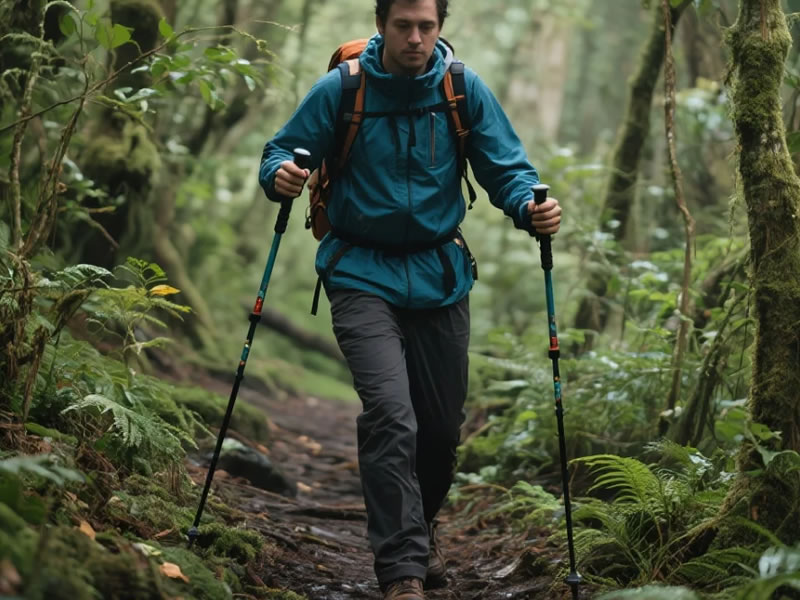
Recommended trekking pole purchase link: https://s.click.aliexpress.com/e/_c4M7OWaN
The Case for Poles: When They Help
In many bushwhacking scenarios, walking poles provide genuine advantages that can make the difference between a controlled, efficient route and a exhausting, unstable struggle.
Stability on Uneven Ground: Off-trail terrain is inherently unstable. You might be stepping over logs, crossing rocks hidden by vegetation, or navigating steep, loose slopes. Poles provide two additional points of ground contact, significantly improving balance and reducing the risk of falls—particularly important when a fall could mean tumbling into unseen hazards or injuring yourself far from help.
Probing Hidden Hazards: Dense vegetation often conceals what lies beneath. A seemingly solid patch of ground might hide a hole, a loose rock, or even a small drop-off. Poles allow you to probe ahead, testing ground stability before committing your weight. This is especially valuable in areas with potentially unstable surfaces like talus fields or marshy ground.
Clearing Spiderwebs and Vegetation: For the lead person in a group, poles become extensions of your arms for brushing aside spiderwebs, pushing through thick brush, and moving branches out of the way. This reduces the amount of vegetation that strikes your face and body, making progress slightly more comfortable.
Reducing Fatigue: Bushwhacking is physically demanding. The constant effort of pushing through vegetation and maintaining balance on uneven terrain exhausts leg muscles quickly. Poles transfer some of this workload to your upper body, distributing effort and potentially extending your effective travel time before fatigue forces a stop.
Stream and Wetland Crossings: Off-trail routes often involve crossing streams, bogs, or wet meadows. Poles provide critical support when stepping on slippery rocks or testing water depth, reducing the risk of an unexpected plunge into cold water.
The Case Against Poles: When They Hinder
Despite these benefits, poles can become significant liabilities in certain bushwhacking conditions.
Constant Snagging: In dense vegetation, poles catch on everything. Branches wrap around them, vines tangle in baskets, and thick brush grabs the shafts with every step. This constant snagging slows progress, forces frequent stops to free poles, and can be intensely frustrating. In the worst vegetation, you may spend more time untangling poles than making forward progress.
Reduced Maneuverability: Bushwhacking often requires ducking under branches, squeezing between tight gaps, and scrambling over obstacles. Poles in your hands reduce your ability to move fluidly through these spaces. You may find yourself constantly shifting poles from hand to hand, tucking them under arms, or wishing you had free hands to grab branches for stability.
Noise and Wildlife Alert: The constant clatter of poles hitting rocks and scraping against brush creates noise that can alert wildlife to your presence. While this might be desirable for avoiding bear encounters, it also means you are less likely to see animals and more likely to disturb the quiet of the backcountry.
Potential for Damage: Carbon fiber poles, in particular, are vulnerable to side impacts. A sharp strike against a rock or a hard twist caught in vegetation can damage the shaft, potentially leading to failure when you need the pole most.
Strategies for Success
Given these competing factors, the key lies in adapting your pole use to conditions rather than adopting a rigid approach.
Choose the Right Poles: For bushwhacking, aluminum poles are generally preferable to carbon fiber. They withstand impacts and twists better and are more likely to bend than snap. Look for poles with secure locking mechanisms that won't slip when you need them. Smaller baskets are actually helpful in dense vegetation—large snow baskets catch on everything.
Use Collapsible or Adjustable Poles: The ability to shorten poles when vegetation thickens reduces snagging. Three-section poles that collapse to around 60cm are easier to manage in tight spaces. Some bushwhackers prefer fixed-length poles for their simplicity but accept that they will occasionally need to be stowed.
Know When to Stow: The most effective bushwhackers develop a sense for when poles transition from helpful to hindrance. In open forest with light undergrowth, poles provide valuable support. When you hit dense,纠缠的 thickets, it is often better to stop, collapse your poles, and attach them to your pack until you clear the worst vegetation. This takes time but saves frustration and energy in the long run.
Use One Pole Instead of Two: In moderately thick vegetation, switching to a single pole can provide some stability while reducing snagging. Use the pole on your downhill side on slopes, or simply for occasional probing while keeping one hand free for branches.
Protect Your Poles: When scrambling over rocks or through tight spaces, be conscious of where your poles are. Avoid using them as levers in ways that could side-load and damage them. If you must use a pole for a critical move, test it gently before committing weight.
Techniques for Bushwhacking with Poles
When you do keep poles in hand, adapt your technique:
- Shorten Your Grip: Choke down on the poles, holding them closer to the basket. This reduces the lever arm and makes them less likely to catch on overhead branches.
- Lead with the Pole Tip: When pushing through vegetation, keep the tip forward to part growth rather than letting the shaft drag through sideways.
- Lift, Don't Drag: Lift poles clear between plants rather than dragging them through vegetation. This requires more energy but reduces snagging.
- Use a Pistol Grip: For short sections, you can hold both poles in one hand like a single staff, freeing the other hand for branches.
When to Leave Poles Behind
In extreme bushwhacking—think dense, scratchy chaparral or impenetrable rhododendron hell—poles become pure hindrance. In these conditions, the best approach is to stow poles completely and use your hands for balance and pushing through vegetation. Accept that you will move slowly and focus on protecting your face and eyes from branches.
The Verdict
Are walking poles helpful or a hindrance for bushwhacking? The honest answer is both, depending on conditions. In moderately open terrain with uneven ground, they are invaluable tools for stability and efficiency. In dense, tangled vegetation, they become frustrating liabilities that slow progress and catch on everything.
The skilled bushwhacker develops the judgment to know when poles help and when they hinder, and the flexibility to adapt—using them when beneficial, stowing them when they become obstacles. This adaptability, combined with choosing durable aluminum poles and mastering techniques to minimize snagging, allows you to gain the benefits of poles without being burdened by their limitations.
Ultimately, bushwhacking is about moving through wild country on its own terms. Your gear should serve that goal, not complicate it. Used wisely, walking poles can be valuable partners in that endeavor. Used thoughtlessly, they become one more thing to fight against. The choice—and the skill—lies with you.
Disclaimer: This article provides general information about gear selection and technique. Bushwhacking involves inherent risks including navigation challenges, injury hazards, and remote travel. Always prepare thoroughly, carry appropriate safety equipment, and travel with companions when possible.




