




Best Walking Poles for Jungle Trekking: Navigating the Green Hell
Jungle trekking represents one of the most demanding environments for walking poles. Unlike alpine trails with predictable surfaces, jungles offer a chaotic mix of mud, tangled roots, slippery rocks, steep ascents, and constant humidity. The vegetation is alive, the ground is unstable, and the conditions are relentlessly wet. Choosing the right poles for this environment can mean the difference between a triumphant expedition and a miserable, exhausting struggle. This guide explores the features that matter most for jungle trekking and recommends the best poles to keep you moving through the green hell.
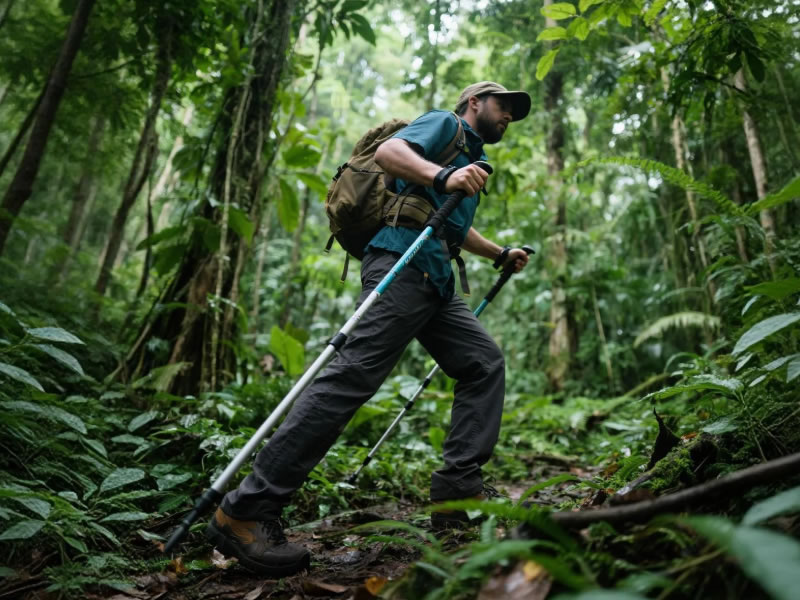
Recommended trekking pole purchase link: https://s.click.aliexpress.com/e/_c4M7OWaN
Why Jungle Trekking Demands Specialized Poles
The jungle is not forgiving. Its challenges include:
Unpredictable Terrain: One step might be on solid ground, the next on a slick root, and the third knee-deep in mud. Poles must adapt instantly to changing conditions and provide reliable support when footing fails.
Constant Moisture: Humidity often exceeds 90 percent. Rain is frequent. Stream crossings are inevitable. Poles must resist corrosion and maintain grip even when soaked.
Aggressive Vegetation: Thorns, spines, and sharp-edged plants line every trail. Poles will be scraped, stabbed, and battered continuously.
Steep, Slippery Slopes: Jungle trails frequently involve punishing ascents and descents on surfaces made treacherous by mud and wet vegetation.
Biological Growth: In the humidity, mold and mildew grow on everything. Poles left damp will develop unpleasant odors and degraded materials.
Critical Features for Jungle Poles
Aluminum Construction: In the jungle, aluminum poles are strongly preferred over carbon fiber. Carbon fiber can become brittle in humid conditions and is more susceptible to cracking from side impacts against rocks and roots. Aluminum bends under stress rather than snapping, and it withstands the constant abrasion of vegetation better. Look for high-grade aluminum like 7075 for the best strength-to-weight ratio.
Large Mud Baskets: Standard trekking baskets are useless in soft jungle mud. You need large baskets—at least 3 inches in diameter—that prevent the pole from plunging deep into muddy ground. Without them, each plant disappears into the muck, providing no support and exhausting your arms. Interchangeable basket systems allow you to swap between trail and mud configurations.
Secure Locking Mechanisms: Mud, grit, and constant moisture are the enemies of locking mechanisms. Flick-lock or lever-lock systems (like Black Diamond's FlickLock) are generally easier to clean and more reliable in dirty conditions than twist-locks, which can seize up when contaminated.
Corrosion-Resistant Components: Look for poles with stainless steel hardware and corrosion-resistant finishes. Aluminum shafts should be anodized, not painted. Cheap coatings will blister and peel in humidity.
Grip Materials That Handle Moisture: In the jungle, your hands will be wet—from rain, sweat, or both. Cork grips excel here, remaining secure even when soaked and providing natural antimicrobial properties that resist mold. Textured foam is a good alternative but may become slippery when saturated. Avoid smooth rubber, which turns treacherous when wet.
Easy-to-Clean Design: After each jungle trek, you will need to rinse mud from every crevice. Poles with simple, open designs are easier to maintain than those with complex joints and hidden recesses.
Recommended Jungle Trekking Poles
Black Diamond Alpine Cork
The Black Diamond Alpine Cork poles are excellent for jungle conditions. The cork grips remain comfortable and secure even when soaked with sweat and rain. The aluminum construction is durable enough to withstand the abuse of roots and rocks. The flick-lock mechanisms are reliable and relatively easy to clean when mud infiltrates. These poles accept large baskets (crucial for mud) and feature interchangeable carbide tips. They are the workhorses of the trekking world for good reason.
LEKI Makalu Lite
LEKI's Makalu Lite poles feature durable aluminum construction and the reliable Speed Lock system. The cork grips handle moisture well, and the large alpine baskets (which work excellently in mud) prevent sinking. LEKI's locking mechanisms are well-sealed against debris, and the poles accept a wide range of interchangeable tips. These are slightly heavier than some competitors but offer exceptional durability for jungle abuse.
Cascade Mountain Tech Aluminum Poles
For budget-conscious jungle trekkers, these aluminum poles offer good value. They feature cork grips and flick-lock adjustments. While not as refined as premium options, they perform adequately and can be replaced more economically if damaged. They accept standard large baskets (sold separately) that improve mud performance.
Komperdell Explorer Powerlock
Komperdell's Explorer series features durable aluminum construction and the reliable Powerlock system. The cork grips are comfortable in humidity, and the poles include large baskets suitable for mud. Komperdell is known for rigorous testing, and these poles hold up well to demanding conditions. The interchangeable tip system adds versatility for varying terrain.
Black Diamond Trail Back
For those preferring foam grips, the Trail Back offers durable aluminum construction and extended foam that allows varied hand positions—useful when you need to choke up on steep climbs. The flick-lock mechanisms are reliable, and the poles accept large baskets. Foam grips perform well when wet, though they may not be as naturally antimicrobial as cork.
How to Use Poles in Jungle Conditions
Proper technique varies with jungle challenges:
On Muddy Slopes: Use large baskets to distribute weight. Plant poles firmly before committing weight, testing for hidden roots or rocks beneath the surface. On steep descents, extend poles longer and plant them ahead to absorb shock.
Crossing Streams: Use poles to probe depth and test current strength before entering. Plant securely on the streambed, keeping three points of contact (two poles and one foot) while moving.
Navigating Roots: Roots become slick when wet. Plant poles on solid ground between roots rather than on the roots themselves. Use poles to maintain balance when stepping over large root systems.
Through Thick Vegetation: Shorten your grip, holding poles closer to the basket to reduce snagging on vines and branches. Lift poles clear between plants rather than dragging through vegetation.
Maintenance for Jungle Poles
Humidity and mud demand rigorous maintenance:
- Rinse Thoroughly: After each jungle trek, rinse poles with fresh water, paying special attention to locking mechanisms and joints where mud accumulates.
- Dry Completely: Extend poles fully and allow them to dry in air before collapsing for storage. Never store wet poles—mold and corrosion will follow.
- Clean Locking Mechanisms: Use an old toothbrush to remove grit from flick-lock mechanisms. Compressed air can help clear debris.
- Inspect for Damage: Check shafts for nicks and dents that could weaken the structure. Pay special attention to areas where poles have struck rocks.
- Lubricate Sparingly: If locks become stiff, use minimal dry lubricant—never oil, which attracts grit.
- Replace Worn Baskets: Mud baskets take abuse. Replace them when they show cracks or excessive wear.
Additional Jungle Trekking Considerations
- Footwear: Poles complement but don't replace appropriate jungle boots with good ankle support and aggressive lug soles.
- Gaiters: Protect your lower legs and keep debris out of boots.
- Hydration: Jungle humidity causes massive fluid loss. Carry more water than you think necessary.
- Navigation: Trails can be faint or overgrown. Carry maps, GPS, and know how to use them.
- Wildlife Awareness: Poles can help probe ahead for snakes and clear spiderwebs, but remain alert.
The Bottom Line
Jungle trekking demands poles that can handle mud, moisture, roots, and relentless abuse. Aluminum construction provides the durability needed for this harsh environment. Large baskets prevent sinking in soft ground. Cork grips remain secure when wet and resist mold. Reliable locking mechanisms withstand contamination. The Black Diamond Alpine Cork leads the category with thoughtful design for challenging conditions, while LEKI and Komperdell offer worthy alternatives. With the right poles and proper maintenance, you can navigate the green hell with greater stability, confidence, and comfort—leaving you free to appreciate the incredible biodiversity and raw beauty of the jungle.
Disclaimer: This article provides general information about gear selection. Jungle trekking involves serious risks including difficult navigation, hazardous wildlife, extreme weather, and remote travel. Always prepare thoroughly, carry appropriate supplies, hire local guides when appropriate, and respect the environment.




