




Best Walking Poles for High-Altitude Expeditions: Essential Gear for the Death Zone
High-altitude expeditions represent the ultimate test of mountaineering equipment. From the frozen flanks of Denali to the oxygen-starved slopes of Everest, these environments push gear to its absolute limits. Walking poles—or more accurately, trekking poles designed for extreme altitude—must perform flawlessly in conditions that would destroy ordinary equipment. The choice of poles can impact not just comfort, but safety and survival. This guide explores the features that matter most for high-altitude expeditions and recommends the best poles for climbing the world's highest peaks.
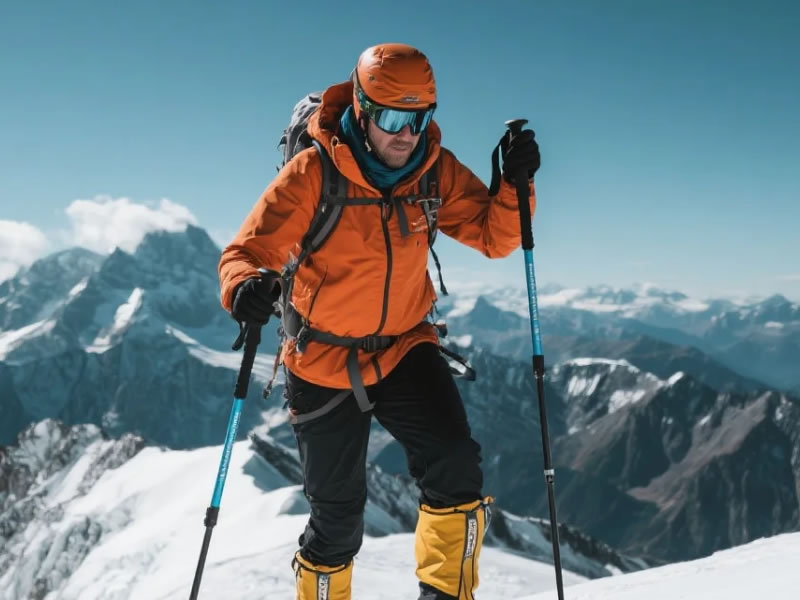
Buy Link: https://www.aliexpress.com/item/1005003136845624.html
Why High-Altitude Demands Specialized Poles
The challenges of high-altitude climbing are unique and unforgiving:
Extreme Cold: Temperatures routinely drop to -40°F and below. Materials become brittle. Locking mechanisms freeze. Metal bonds to skin. Poles must function in cold that stops ordinary gear dead.
Thin Air: At altitude, every gram on your back feels heavier. Oxygen deprivation magnifies fatigue. Poles must be light enough to carry but strong enough to trust with your life.
Variable Snow Conditions: From wind-scoured ice to deep powder, from sun crust to breakable crust, the snowpack changes constantly. Poles must adapt with interchangeable baskets and reliable performance.
Glacier Terrain: Hidden crevasses, fragile snow bridges, and hard ice demand poles that can probe, support, and in emergencies, assist with self-arrest.
Extended Duration: High-altitude expeditions last weeks, not days. Poles must endure continuous use, repeated packing and unpacking, and the abuse of being dropped on rock and ice.
Critical Features for High-Altitude Poles
Durable Construction: Aluminum vs. Carbon Fiber: At extreme altitude, the material debate tilts decisively toward aluminum. While carbon fiber offers weight savings, it becomes brittle in extreme cold and can snap catastrophically when loaded unexpectedly. High-grade aluminum like 7075-T6 maintains ductility at low temperatures—it will bend under extreme stress rather than break, potentially preventing a fall when you need support most. For expeditions, durability trumps the last ounce of weight savings.
Reliable Locking Mechanisms: Locking mechanisms that slip or freeze at 20,000 feet can be deadly. Look for poles with proven, cold-rated locking systems. Flick-lock designs (like Black Diamond's FlickLock) are generally more reliable in cold than twist-locks, as they have fewer internal components that can freeze or bind. Some expedition climbers prefer fixed-length poles precisely because they eliminate locking mechanism failure risk.
Extended Grips for Self-Arrest: On glaciated terrain, the ability to perform a self-arrest with your poles can be lifesaving. Look for poles with extended foam grips that run several inches down the shaft. This allows you to slide your hand down and apply pressure to the shaft, mimicking ice axe technique. Some poles, like the Black Diamond Whippet, actually integrate a removable ice axe pick for serious self-arrest capability.
Large, Interchangeable Baskets: Snow conditions at altitude vary enormously. You need large snow baskets that prevent sinking in powder, but the ability to swap to smaller baskets for packed trails or summit day. Look for tool-free basket changes that can be managed with gloves.
Carbide Tips for Ice: Standard tips skate on hard ice. Look for aggressive carbide tips that bite into frozen surfaces. Some poles offer interchangeable tip systems for different conditions.
Cold-Rated Grips: At extreme cold, grip materials behave differently. Rubber can become rock-hard and slippery. Foam can freeze and crack. Cork remains the most reliable in cold—it maintains some flexibility and provides secure traction even with gloves. Some expedition poles feature insulated grip sections that reduce heat loss through contact.
Compatibility with Gloves: At altitude, you will be wearing heavy expedition gloves or mittens. Grips and locking mechanisms must be operable with thick handwear. Test this before committing.
Recommended High-Altitude Poles
Black Diamond Raven Pro
The Black Diamond Raven Pro is the gold standard for high-altitude expeditions. These poles feature durable 7075 aluminum construction that withstands extreme cold and abuse. The extended foam grip runs several inches down the shaft, enabling self-arrest technique—a critical safety feature on glaciated terrain. The flick-lock mechanisms are reliable and can be operated with gloves. Large snow baskets are included, and the poles accept the Whippet attachment (a removable ice axe pick) for serious self-arrest capability. These are the poles carried on Everest, Denali, and Aconcagua for good reason.
LEKI Makalu Trekking
Named after the world's fifth-highest peak, the LEKI Makalu is built for serious altitude. The aluminum construction is durable, and the Speed Lock system is cold-rated and reliable. The Aergon grip promotes natural hand position and reduces fatigue—critical at altitude where every movement costs oxygen. Large alpine baskets prevent sinking in snow, and the carbide tips bite into hard ice. LEKI's reputation for quality makes these a solid choice for expedition use.
Black Diamond Whippet
For climbers who need integrated self-arrest capability, the Black Diamond Whippet is unique. It combines a trekking pole with a removable ice axe pick, allowing you to perform self-arrest without switching tools. The aluminum shaft is durable, and the extended grip provides multiple hand positions. This is not a replacement for a full ice axe on serious terrain, but it adds a layer of safety for glacier travel and moderate slopes.
Komperdell Carbon Expedition
For those who prioritize weight savings and accept the trade-offs, Komperdell's Carbon Expedition poles use high-modulus carbon reinforced at stress points. They feature the reliable Powerlock system and large snow baskets. While carbon fiber requires more care, these poles have been used successfully on high-altitude expeditions. They are best for experienced climbers who understand carbon's limitations.
CAMP X-All Mountain
CAMP's X-All Mountain poles feature durable aluminum construction and reliable locking mechanisms. They include large snow baskets and offer good value for expedition use. While not as refined as premium options, they perform adequately and can be replaced more economically if damaged.
How to Use Poles at High Altitude
Proper technique maximizes safety and efficiency:
On Glaciers: Use poles to probe for crevasses before committing weight. Maintain three points of contact when crossing snow bridges. Keep poles extended and ready for emergency self-arrest.
On Steep Snow: Shorten poles for climbing to maintain efficient arm angles. For descending, lengthen them to maintain upright posture and absorb shock.
In Extreme Cold: Keep locking mechanisms free of snow and ice. If poles become icy, warm them inside your jacket before attempting adjustments. Consider fixed-length poles for summit day to eliminate mechanism failure risk.
During Self-Arrest: If you fall, slide hands down to the extended grip section, press the shaft against the snow, and apply pressure as you would with an ice axe. Practice this technique before you need it.
Maintenance at Altitude
High-altitude conditions demand constant attention:
- Prevent Ice Buildup: Knock snow from baskets regularly. Ice adds weight and impairs function.
- Protect Locks: Keep locking mechanisms clean and free of ice. If they freeze, warm them with body heat before forcing.
- Inspect Daily: Check shafts for nicks, bends, or stress marks. At altitude, small damage can become catastrophic failure.
- Dry Overnight: In camp, extend poles fully and allow them to dry. Store them in your tent to prevent freezing.
The Ice Axe Question
For serious high-altitude climbing, poles complement but do not replace an ice axe. On steep terrain, a proper ice axe remains essential for self-arrest, step cutting, and anchoring. The Black Diamond Whippet offers a hybrid approach, but most climbers carry both poles and an axe, using poles for the approach and lower-angle terrain, and switching to the axe for steep sections.
The Bottom Line
High-altitude expeditions demand the very best from your equipment. Walking poles for these environments must feature durable aluminum construction, reliable cold-rated locking mechanisms, extended grips for self-arrest capability, large interchangeable baskets, and carbide tips for ice. The Black Diamond Raven Pro leads the category with thoughtful design for extreme conditions, while LEKI and Komperdell offer worthy alternatives. Remember that at altitude, your poles are not just convenience items—they are safety tools that can help prevent falls, probe hidden crevasses, and assist in self-arrest. Choose them carefully, maintain them diligently, and treat them as the essential expedition gear they are.
Disclaimer: This article provides general information about gear selection. High-altitude expeditions involve serious risks including extreme weather, altitude illness, and objective hazards. Always climb with qualified guides or experienced partners, carry appropriate safety equipment, and ensure you have proper training and acclimatization.




