




Best Walking Poles for People with Weak Ankles: A Comprehensive Guide to Stability and Confidence
Living with weak ankles—whether from past injuries, chronic instability, or conditions like Ehlers-Danlos syndrome—can turn a simple walk into a precarious adventure. The fear of rolling an ankle or losing balance can limit activity, leading to deconditioning and further weakness. Walking poles offer a practical solution, providing external support that protects vulnerable joints and restores confidence. However, not all poles are created equal for this purpose. This guide explores how to select the best walking poles for weak ankles and recommends top options for maximizing stability.
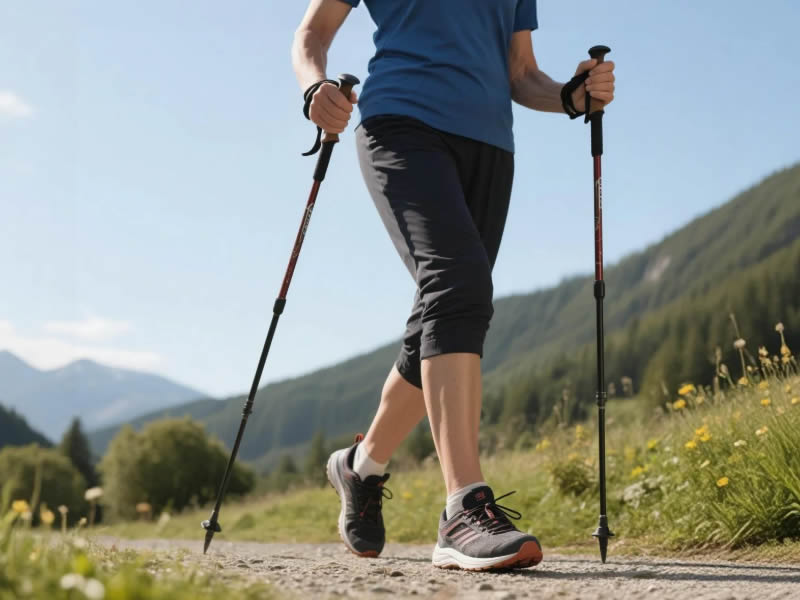
Recommended trekking pole purchase link: https://s.click.aliexpress.com/e/_c4M7OWaN
Why Walking Poles Help Weak Ankles
Walking poles address ankle instability through several biomechanical mechanisms:
Expanded Base of Support: Two poles create four points of ground contact, significantly widening your stability base. This makes it physically harder to lose balance and provides more time to recover if you do feel unsteady.
Load Redistribution: By transferring 20-30 percent of body weight from your legs to your arms, poles reduce the force your ankles must control with each step. Less load means less stress on already vulnerable joints.
Proprioceptive Feedback: Poles provide sensory information through your hands about ground conditions and body position. This feedback enhances your brain's awareness of your ankles' position, allowing for subtle corrections before a misstep becomes a fall.
Emergency Support: During unexpected uneven terrain or sudden instability, poles are already in hand to provide immediate support and prevent ankle rolls.
Reduced Compensatory Gait: When ankles hurt, people often walk abnormally—shifting weight excessively or altering stride. These compensations cause secondary problems. Poles allow more natural gait by reducing pain and instability.
Critical Features for Ankle Support Poles
Sturdy, Durable Construction: For ankle support, aluminum poles are generally preferable to carbon fiber. Aluminum bends under extreme stress rather than snapping, providing a margin of safety if you must suddenly throw weight on a pole. Look for high-grade aluminum like 7075 for the best strength-to-weight ratio.
Secure Locking Mechanisms: Poles that slip or collapse during use can cause exactly the falls you're trying to prevent. Flick-lock or lever-lock systems (like Black Diamond's FlickLock) are more reliable than twist-locks, especially when you depend on poles for sudden support.
Wide, Stable Bases: Standard pole tips are narrow and designed for trails. For ankle support, look for poles with large rubber feet that provide maximum ground contact and traction on various surfaces. Some models offer swivel bases that maintain full contact even when the pole is angled—particularly useful on uneven terrain.
Shock Absorption: While primarily for joint comfort, shock absorption also reduces the jarring forces that can travel through the ankle with each step. For sensitive ankles, this cushioning is valuable.
Comfortable, Non-Slip Grips: When you rely on poles for stability, grip security matters. Cork or foam handles absorb sweat and provide secure traction without requiring a tight, straining grasp that causes hand fatigue.
Adjustable Height: Proper sizing ensures optimal leverage for ankle protection. Too short and you'll hunch; too long and you'll lose mechanical advantage. Adjustability allows fine-tuning for different terrains.
Lightweight Enough for Easy Use: While durability is paramount, poles shouldn't be so heavy they cause fatigue. Lightweight aluminum or well-engineered carbon fiber balances these needs.
Recommended Poles for Weak Ankles
Black Diamond Trail Pro Shock
The Black Diamond Trail Pro Shock poles are excellent for ankle support. They feature durable aluminum construction that withstands the demands of users who rely heavily on their poles. The flick-lock mechanisms are among the most secure available, eliminating worries about sudden collapse. The shock absorption system reduces joint impact, and the foam grips extend below the handle for versatile hand positioning. Most importantly, they accept large rubber feet (sold separately) that provide exceptional stability on pavement and hard surfaces. These poles inspire confidence on uneven terrain.
LEKI Wanderfreund
Designed specifically for therapeutic walking, the LEKI Wanderfreund offers unique features for ankle support. Its wide rolling tip maintains continuous ground contact, providing exceptional stability even on uneven surfaces. The integrated shock absorption reduces joint stress, and the ergonomic grip promotes proper hand position. The wide base enhances balance significantly—making it harder for ankles to roll unexpectedly. Many physical therapists recommend these for patients with balance and ankle concerns.
Black Diamond Trail Ergo Cork
These poles offer comfortable cork grips that mold to the hand over time and provide excellent traction even when hands are sweaty. The aluminum construction is durable, and the flick-lock adjustments are secure and easy to operate. Available with interchangeable tips, you can add wide rubber feet for maximum stability. The ergonomic grip design promotes natural wrist alignment, reducing strain during extended use.
Cascade Mountain Tech Aluminum Poles
For budget-conscious users, these aluminum poles offer good value. They feature cork grips and flick-lock adjustments that are reasonably secure. While not as refined as premium options, they accept standard large rubber feet (sold separately) that improve stability. The aluminum construction is durable enough for regular use. They provide essential features at an accessible price point.
Hugo Mobility Quad Cane
While technically a cane rather than walking poles, the Hugo Mobility Quad Cane deserves mention for those requiring maximum stability on one side. Its four-point base provides exceptional support and makes tipping nearly impossible. For individuals with severe ankle instability who need substantial support, this can be a valuable tool, either alone or in combination with a single pole on the opposite side.
How to Use Poles for Maximum Ankle Protection
Proper Sizing: Stand in your walking shoes with the pole tip beside your foot. Your elbow should form a 90-degree angle. For shock-absorbing poles, account for slight compression under load. When descending, lengthen poles slightly; when climbing, shorten them.
Master Basic Technique: The fundamental pattern is opposite pole to opposite foot—right pole forward with left foot. Plant the pole securely before transferring weight. On uneven terrain, plant where you need support—often slightly ahead and to the side.
Use on Challenging Terrain: On uneven ground, slopes, or when tired, be especially deliberate with pole placement. Let poles probe ahead, testing stability before committing your weight.
Keep Poles Planted When Stationary: When stopping on uneven ground, keep both poles planted until you're ready to move again. This maintains your expanded base of support continuously.
Consider Trekking Baskets: For off-trail use on soft ground, add baskets to prevent poles from sinking—which could destabilize you when you need support most.
Strengthening Complements Support: While poles provide external support, continue ankle-strengthening exercises recommended by your physical therapist. The goal is to build intrinsic stability over time.
The Physical Therapist's Role
A physical therapist can be invaluable in optimizing pole use for ankle support:
- Assess your specific ankle instability patterns
- Recommend appropriate pole type and features
- Teach proper sizing and technique
- Design complementary strengthening exercises
- Monitor progress and adjust recommendations
- Ensure poles are appropriate for your overall condition
Additional Strategies for Ankle Health
Combine pole use with:
- Proper Footwear: Supportive shoes with good ankle coverage and stable soles
- Balance Training: Exercises that challenge and improve proprioception
- Strengthening: Calf raises, resistance band work, and single-leg stands
- Flexibility: Gentle ankle mobility exercises
- Taping or Bracing: For high-risk activities, consider additional support
When Poles May Not Be Enough
Walking poles are supportive tools, not medical devices. If you experience:
- Frequent ankle giving way despite pole use
- Severe pain with weight-bearing
- Significant swelling or instability
- Recent acute injury
Consult a healthcare provider. You may need bracing, physical therapy, or other interventions beyond what poles can provide.
The Bottom Line
For individuals with weak ankles, walking poles are excellent tools that provide crucial support, reduce fall risk, and restore confidence. The key lies in selecting poles with appropriate features—sturdy aluminum construction, secure locking mechanisms, wide stable bases, and comfortable grips—and using them with proper technique. Models like the Black Diamond Trail Pro Shock and LEKI Wanderfreund exemplify the features that best serve those with ankle concerns, offering exceptional stability and reliability.
Remember that poles are part of a comprehensive approach to ankle health that includes strengthening, proper footwear, and professional guidance when needed. With the right equipment and consistent use, you can walk with greater confidence and stability—exploring terrain that might otherwise feel off-limits. Your ankles will thank you for the support, one secure step at a time.
Disclaimer: This article provides general information and does not constitute medical advice. Always consult your healthcare provider for persistent ankle instability or before starting any new exercise program.




