




Walking Poles for Urban Hiking – Practical or Overkill? A Comprehensive Guide
Urban hiking—the practice of exploring cities on foot for extended distances—has gained popularity as a way to combine fitness with sightseeing, commuting, or simply rediscovering one's own city. As more people embrace long-distance urban walks, a question naturally arises: are walking poles practical for city exploration, or are they overkill better left for mountain trails? The answer, as with many things, depends on context, personal needs, and understanding what poles can and cannot offer in an urban environment.
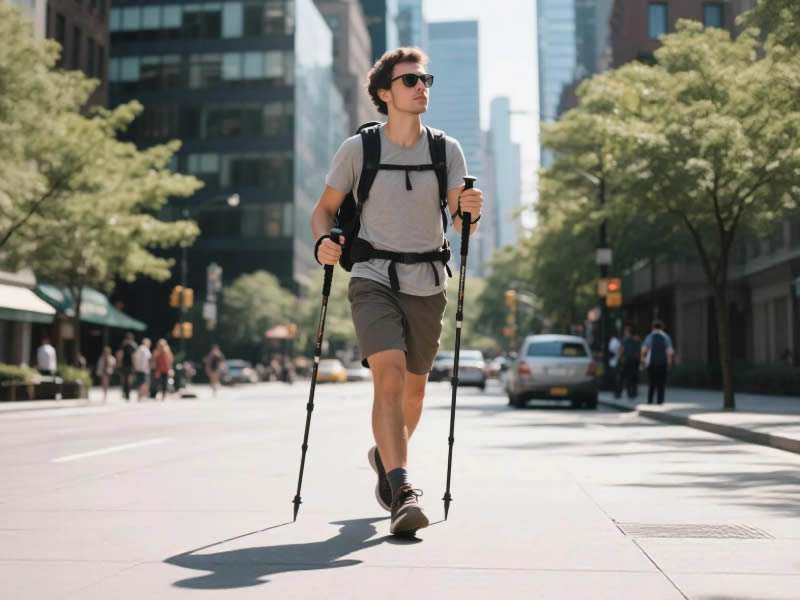
Recommended trekking pole purchase link: https://s.click.aliexpress.com/e/_c4M7OWaN
Understanding Urban Hiking
Urban hiking differs from both rural trail walking and casual city strolling. It typically involves:
- Covering significant distances—often 5 to 15 miles or more
- Navigating varied terrain: sidewalks, cobblestones, park paths, stairs, and pedestrian bridges
- Spending extended hours on hard, unforgiving surfaces
- Dealing with urban obstacles: curbs, crowds, traffic, and construction
- Potentially carrying supplies for the day
In this context, walking poles can be valuable tools—but they also present unique considerations not found on rural trails.
The Case for Poles: Why They're Practical
Joint Protection: This is perhaps the strongest argument for urban poles. Pavement, concrete, and asphalt are among the hardest walking surfaces. Each step sends shock through your ankles, knees, and hips. Over a 10-mile city walk, these impacts accumulate significantly. Poles transfer 20-30 percent of body weight to your arms, reducing cumulative joint stress and making long distances more comfortable.
Posture Improvement: Hours of city walking can lead to fatigue and the characteristic forward hunch. Poles encourage upright posture, keeping shoulders back and chest open. This not only reduces back strain but also promotes better breathing and more efficient walking.
Stability on Uneven Surfaces: Cities are full of tripping hazards: uneven cobblestones, cracked sidewalks, high curbs, and unexpected construction zones. Poles provide two additional points of contact, significantly improving balance and reducing fall risk.
Pacing and Rhythm: Long urban walks require energy management. Poles help establish a steady rhythm, preventing the start-stop pattern that wastes energy and increases fatigue.
Safety and Visibility: In busy areas, poles can increase your visibility to cyclists and drivers. They can also deter aggressive dogs or create a small buffer in crowded spaces.
Navigation Aid: When consulting maps or phones, poles provide stability while you focus on directions, reducing the chance of stumbling.
Weather Adaptability: In rain, snow, or ice, poles provide crucial traction on slippery urban surfaces—metal grates, painted crosswalks, wet tiles—that become treacherous.
The Case Against: When Poles Might Be Overkill
Crowded Spaces: In dense pedestrian traffic, poles can be cumbersome and potentially annoying to others. They require awareness and careful handling to avoid tripping fellow walkers.
Stigma and Attention: Some urban hikers feel self-conscious using poles where they're uncommon. The "hiking gear in the city" look draws attention that not everyone wants.
Storage Challenges: When popping into shops, cafes, or museums, poles become something to manage. They must be collapsed and carried or stowed—an extra hassle.
Surface Considerations: While poles help on many urban surfaces, they can be tricky on others: escalators, moving walkways, and very smooth floors where rubber tips may grab unpredictably.
Learning Curve: Effective urban pole use requires technique adjustments from trail walking. Without practice, poles can feel awkward rather than helpful.
Making the Decision: Practical or Overkill?
The answer depends on several factors:
Consider Using Poles If:
- You're covering 5+ miles on hard surfaces
- You have existing joint concerns (knees, hips, back)
- You're recovering from injury or managing chronic pain
- Weather conditions are challenging (ice, rain, snow)
- You'll be on varied terrain with stairs, cobblestones, or hills
- You value the fitness benefits of upper body engagement
Consider Skipping Poles If:
- Your walk is short (under 2-3 miles)
- You'll be in extremely crowded areas continuously
- You're popping in and out of many shops or venues
- You feel self-conscious and that affects your enjoyment
- You haven't practiced technique and feel awkward
Choosing Poles for Urban Hiking
If you decide poles are practical for your urban adventures, select models with specific features:
Compact Folding Design: Look for 4-section folding poles that collapse to under 35cm. These fit easily in a daypack or tote when not needed. The Black Diamond Distance Carbon Z and LEKI Micro Vario Carbon are excellent options.
Ultralight Construction: Every gram counts when carrying poles in your bag. Carbon fiber models under 10 ounces per pair are ideal.
Quick Deployment: You'll be stowing and deploying poles frequently. Simple folding mechanisms that snap into place instantly are essential.
Pavement-Friendly Tips: Ensure poles come with or accept rubber feet. Carbide tips damage floors and are dangerously slippery on smooth surfaces.
Professional Appearance: Sleek, neutral-colored poles are less conspicuous in urban settings than bright trail models.
Comfortable Grips: Cork or foam remains comfortable hour after hour, even in warm conditions.
Top Urban Hiking Poles
Black Diamond Distance Carbon Z: Ultralight, packs to 34cm, deploys instantly. The gold standard for urban hikers prioritizing minimal weight and pack size.
LEKI Micro Vario Carbon: Adjustable 4-section design collapses to 36cm. Offers length flexibility for different walking conditions. Slightly heavier but more versatile.
Cascade Mountain Tech Carbon Fiber Folding Poles: Budget-friendly option with essential features. Good for occasional urban hikers.
Techniques for Urban Pole Walking
Master Quick Deployment: Practice setting up and collapsing poles until it's automatic. In busy areas, you want to deploy and stow quickly.
Use Rubber Tips Always: Never use carbide tips on pavement. Rubber provides traction, reduces noise, and protects floors.
Adjust Length Appropriately: For flat walking, elbow at 90 degrees. For stairs, shorten poles or use handrail.
Be Aware of Surroundings: In crowds, keep poles close. When stopped, plant vertically or stow to avoid tripping others.
Stow When Appropriate: On packed subway cars, in crowded shops, or during seated breaks, collapse and stow poles.
Consider One Pole in Crowds: A single pole provides some support while reducing the "gear spread" in dense areas.
The Verdict
Walking poles for urban hiking are practical, not overkill—for the right person and the right walk. They offer genuine benefits: joint protection, improved posture, stability, and enhanced endurance. For those covering significant distances on hard surfaces, especially individuals with joint concerns, poles transform urban exploration from a potential source of pain into a comfortable, sustainable activity.
However, they're not for everyone or every situation. Short walks, extremely crowded environments, and personal comfort levels all factor into the decision. The key is choosing poles that adapt to urban needs—compact, lightweight, quick-deploying—and using them thoughtfully, stowing them when they become obstacles rather than aids.
Ultimately, urban hiking is about enjoying cities on foot, discovering hidden details, and covering ground with comfort and confidence. If poles help you achieve that—by reducing pain, increasing stamina, or simply making the miles more enjoyable—they're not overkill. They're the right tool for the journey.
Disclaimer: This article provides general information about gear selection. Individual needs and preferences vary. Always be aware of and respectful toward fellow pedestrians when using poles in urban environments.




