




Walking Poles for Airport Walking – Worth Bringing? A Comprehensive Guide for Travelers
Modern airports are sprawling cities in their own right. From check-in to gate, passengers often walk a mile or more, navigating long corridors, endless terminals, and vast concourses. For travelers with mobility challenges, chronic pain, or simply those facing tight connections, the question arises: are walking poles worth bringing for airport walking? The answer is nuanced, involving security regulations, practical logistics, and personal health considerations. This comprehensive guide explores whether walking poles make sense for airport navigation and how to approach the decision.
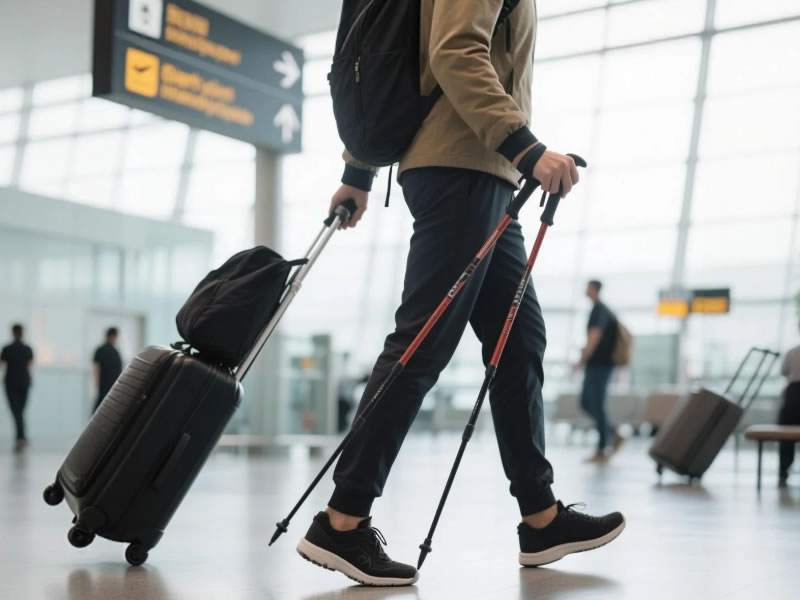
Recommended trekking pole purchase link: https://s.click.aliexpress.com/e/_c4M7OWaN
The Airport Walking Challenge
Before evaluating poles, it's worth understanding what airport walking entails:
Distance: Major airports like Atlanta's Hartsfield-Jackson or Beijing's Daxing involve walks of 1-2 miles between check-in and the farthest gates. For connecting passengers, this distance multiplies.
Surfaces: Airport floors are typically hard—tile, marble, polished concrete—with unforgiving impact on joints.
Pacing: Travel often involves rushing, stopping, starting, and standing in lines, all of which increase fatigue.
Crowds: Navigating through throngs of passengers adds physical and mental stress.
Time Pressure: Tight connections create urgency, increasing the physical demands of movement.
For those with arthritis, joint replacements, back pain, or balance concerns, these factors can turn air travel into an ordeal.
The Core Challenge: Security Restrictions
The most significant barrier to using walking poles in airports is security regulations. As discussed in previous guides, walking poles are prohibited in carry-on luggage by the TSA and most international security agencies. They are classified as potential weapons due to their rigid construction and pointed tips.
This creates a fundamental problem: you cannot bring poles through security to use in the secure terminal unless they qualify as medically necessary mobility aids with proper documentation—and even then, approval is not guaranteed.
Scenarios Where Poles Might Be Worth Bringing
Scenario 1: Medical Necessity with Documentation
For travelers who genuinely need poles for mobility—due to recent surgery, chronic conditions, or significant impairment—poles may be worth the effort. However, this requires:
- Advanced Arrangements: Contact your airline well before travel to request accommodation for mobility aids.
- Documentation: Carry a letter from your healthcare provider explaining your medical need.
- Patience at Security: Be prepared for additional screening and potential questions.
- Alternative Plans: Have a backup plan in case poles are rejected at security.
Even with documentation, the final decision rests with security screeners. This approach is for those who truly cannot walk without support.
Scenario 2: Using Poles Airside After Purchase
If you have a long connection and access to airport shops selling walking poles (rare but possible in some large international airports), you could theoretically purchase poles airside and use them during your connection. This is an expensive and uncertain strategy.
Scenario 3: Pre-Security Use Only
Some travelers use poles for the pre-security portion of their journey—from parking or drop-off through check-in and to the security line. This can be helpful for those with mobility challenges who then transition to a wheelchair or assistance through security. However, you must then check the poles or have someone take them back.
Why Poles Are Usually Not Worth Bringing
For most travelers, walking poles are not worth the hassle for airport walking. Here's why:
Security Uncertainty: Even with the best planning, you risk having poles confiscated at security. Losing expensive gear is frustrating and expensive.
Logistical Burden: Poles become one more thing to manage—through check-in, security (where they must be removed from bags), and throughout your journey.
Airport Alternatives: Most airports offer wheelchair assistance free of charge. Requesting this service eliminates the need to walk at all, poles or not.
Limited Need: For travelers without significant mobility issues, the walking required in airports is manageable without aids. The fatigue of travel is more about overall stress than walking distance.
Stigma and Attention: Using walking poles in an airport when you appear otherwise able-bodied may draw unwanted attention and questions.
Better Alternatives for Airport Walking
Instead of bringing poles, consider these options:
Request Wheelchair Assistance: This is the simplest solution for those with mobility concerns. Most airlines provide complimentary wheelchair service from check-in to gate. Request it when booking or at the airport.
Use Airport Mobility Services: Many large airports offer electric cart services for passengers with mobility needs. Inquire at information desks.
Travel Light: Reduce luggage to minimize the physical demands of walking. Use luggage with wheels and ensure they roll smoothly.
Allow Extra Time: Build buffer time into your connection to reduce rushing and the physical stress of hurried walking.
Wear Supportive Footwear: Proper shoes with good cushioning make a significant difference on hard airport floors.
Use Compression Socks: For those concerned about circulation during long flights combined with walking.
If You Must Bring Poles: Practical Strategies
For travelers who decide poles are necessary:
Check Them: Pack poles in checked luggage. Retrieve them after your flight for use during connections. This avoids security issues but means you won't have them for pre-security walking at departure.
Ship Ahead: For cruises or extended stays, ship poles to your destination. This avoids airport hassles entirely but requires planning.
Use Collapsible Poles: If you must bring poles, choose ultra-compact folding models that pack easily in checked luggage. The Black Diamond Distance Carbon Z or LEKI Micro Vario Carbon are excellent options that take minimal space.
Carry Documentation: If poles are medically necessary, carry a letter from your healthcare provider. Be prepared for screening.
Arrive Early: Allow extra time for potential security discussions and alternative arrangements.
The Medical Device Distinction
It's important to understand the distinction between walking poles as recreational equipment versus medical devices. The TSA makes allowances for mobility aids, but walking poles used for general fitness or convenience do not qualify. If you have a genuine medical need, be prepared to explain and document it.
What Travelers Say
"I have bad knees from years of running," shares Michael, a frequent business traveler. "I thought about bringing my poles for airport walking, but the security hassle wasn't worth it. I just allow extra time, wear good shoes, and request wheelchair assistance for tight connections. Much simpler."
"I traveled with my poles after hip replacement surgery," says Patricia. "I contacted the airline in advance, had my doctor's letter, and made it through security each time. But it was stressful every single time. If I didn't absolutely need them, I wouldn't bother."
The Bottom Line
Are walking poles worth bringing for airport walking? For the vast majority of travelers, no—the security restrictions, logistical burden, and availability of alternatives make them more trouble than they're worth. The risk of confiscation, combined with the need to manage poles through every stage of travel, outweighs the modest benefits for most people.
For those with genuine medical needs who cannot walk without support, poles may be necessary. In these cases, advance planning, documentation, and communication with airlines are essential. Even then, be prepared for challenges and have backup plans.
For everyone else, rely on airport mobility services, supportive footwear, and extra time to manage airport walking comfortably. Your journey will be simpler, your gear safer, and your stress levels lower—leaving you free to focus on the adventure ahead rather than the logistics of getting there.
Disclaimer: This article provides general information and does not constitute medical or travel advice. Security regulations vary by country and change frequently. Always verify current policies with your airline and relevant security agencies before traveling, especially if you have mobility needs.




