




How to Teach Kids to Use Walking Poles: A Parent's Guide to Happy Trails
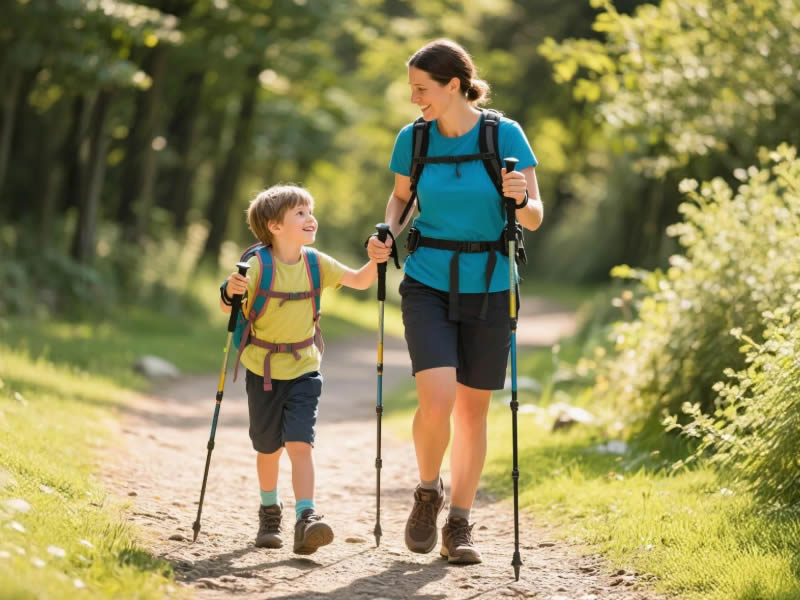
Introducing children to walking poles can transform family hikes from exhausting slogs into exciting adventures. Kids love having their own "grown-up" gear, and properly used poles improve balance, reduce fatigue, and build confidence on the trail. But teaching little ones to use poles effectively requires patience, creativity, and a focus on fun. This comprehensive guide provides everything parents need to know to help their children become confident, capable pole users.
Recommended trekking pole purchase link: https://s.click.aliexpress.com/e/_c4M7OWaN
Why Bother Teaching Kids to Use Poles?
Before diving into techniques, it's worth understanding the benefits:
Improved Balance: Poles provide four points of contact, helping wobbly legs navigate uneven terrain.
Reduced Fatigue: By engaging upper body muscles, poles distribute workload, allowing kids to hike longer with less exhaustion.
Confidence Building: Mastering a new skill boosts self-esteem and makes kids feel like "real hikers."
Safety: On slippery or steep sections, poles provide crucial stability.
Fun Factor: Let's be honest—kids love gadgets. Poles make hiking more engaging and interactive.
When to Start
Every child develops differently, but general guidelines include:
Ages 2-3: Introduction to poles as toys rather than tools. Let them carry, drag, and explore. Focus on positive association, not technique.
Ages 4-5: Many children can begin understanding basic concepts like "plant the pole." Expect lots of enthusiasm and limited coordination.
Ages 6-8: Most kids can grasp fundamental techniques with practice. This is prime teaching territory.
Ages 9-12: With experience, children can use poles effectively on varied terrain and may be ready for more advanced instruction.
Signs of readiness:
- Child shows interest in your poles or hiking gear
- Can follow simple two-step instructions
- Walks confidently on flat ground
- Has enough arm strength to lift and move a lightweight pole
Choosing the Right Poles for Kids
Before teaching technique, ensure your child has appropriate equipment:
Proper Size: Poles should be adjustable, with a minimum length that allows elbow to form 90 degrees when tip is beside foot. For young children, this may be as short as 70cm.
Lightweight: Heavy poles exhaust little arms quickly. Look for aluminum poles under 10-12 ounces per pair.
Small Grips: Adult grips are too large for small hands. Seek poles with smaller-diameter grips designed for children.
Safety Tips: Rubber tips are safer than carbide for beginners. Ensure poles have or accept rubber feet.
Fun Colors: Letting kids choose "their" color increases buy-in and enthusiasm.
Top picks for teaching:
- Komperdell Kids Explorer (ages 4-10)
- Decathlon Forclaz Trek 500 Kids (ages 5-10)
- Cascade Mountain Tech Aluminum (older children with larger hands)
Step-by-Step Teaching Guide
Step 1: Ground School (at home or in the backyard)
Before hitting the trail, let kids get comfortable with their poles in a safe, familiar environment.
Introduce the Poles: Let children examine their poles, figure out how they adjust, and practice extending and collapsing them (with supervision). This builds familiarity and ownership.
Practice Basic Motion: Show them the "opposite arm, opposite leg" movement that's fundamental to proper pole use. March in place, calling out "right pole, left foot" and vice versa. Make it a game—"let's march like soldiers!"
Check Sizing: With child standing tall, adjust poles so elbows form 90 degrees. Explain that this is their "flat ground" setting, and they'll learn to adjust for hills later.
Teach Grip: Show how to put hands up through the straps, then grip the handles. Explain that the strap should do the work, not their hands. This is advanced for little ones but worth introducing.
Step 2: Flat Terrain Practice
Move to a flat, open area like a park or field for initial on-trail practice.
Start Without Poles: Have child walk normally, then add poles while maintaining the same rhythm. The "opposite arm, opposite leg" pattern is key.
Play Follow the Leader: Walk ahead, demonstrating proper pole placement. Let child imitate your movements. Exaggerate your motions to make them clear.
Plant and Push: Show how to plant the pole slightly ahead and push down as they step past it. Use verbal cues: "plant, step, push, step."
Create Obstacles: Set up simple challenges—walk around rocks, step over sticks, follow a winding path. This builds coordination while keeping it fun.
Step 3: Gentle Terrain Introduction
Now it's time for real trail experience on easy, forgiving terrain.
Choose the Right Trail: Pick a short, flat, interesting trail with minimal obstacles. A one-mile loop with things to see works perfectly.
Keep First Hikes Short: Plan for 30-45 minutes maximum. End while everyone is still having fun.
Provide Encouragement: Celebrate every successful pole plant. Use specific praise: "Great job planting that pole before you stepped!"
Take Breaks: Kids tire quickly. Stop often for water, snacks, and to admire views or interesting finds.
Be Patient: Expect poles to be dragged, waved, and occasionally abandoned. This is normal. Gently redirect and keep the experience positive.
Step 4: Introducing Adjustments
Once basic technique is solid (which may take several outings), teach how to adjust for terrain.
Climbing: Show how to shorten poles for uphill sections. Explain that this helps them push more efficiently. Let them practice adjusting (with help as needed).
Descending: Demonstrate lengthening poles for downhill to protect knees and improve stability. This is a favorite because kids love feeling "taller."
Checkpoints: At trail junctions or rest stops, have kids check their pole length and adjust as needed. This builds independence.
Games and Activities to Reinforce Learning
Kids learn best through play. Incorporate these games into your hikes:
Mountain Goat: Pretend to be mountain goats navigating rocky terrain. Kids love the imagery and naturally use poles for balance.
Four-Legged Creature: Imagine being a creature with four legs (two human, two poles). This reinforces the concept of poles as additional limbs.
Follow the Leader with Poles: Take turns being leader, inventing funny ways to use poles—tapping rocks, tracing patterns in dirt, etc.
Pole Dancing (Silly Version): For younger kids, a quick "pole dance" (carefully, with supervision) adds silliness and fun.
Target Practice: On safe, open ground, challenge kids to plant their pole tip in specific spots—a leaf, a patch of dirt, a rock.
Treasure Hunts: Use poles to point out "treasures" along the trail—interesting rocks, flowers, animal signs.
Safety Rules to Teach
Make these non-negotiable from the start:
Poles Point Down: Always, always keep tips pointing toward the ground. Never up near faces.
Look Around: Be aware of other hikers. Poles can trip people if not managed carefully.
No Sword Fighting: Poles are hiking tools, not toys for mock battles. (Good luck with this one—gentle reminders help.)
Check Your Locks: Before each hike, ensure poles are securely locked. Show kids how to check.
Collapse When Not Needed: In crowded areas or on steep sections where hands are needed, collapse and stow poles.
Troubleshooting Common Challenges
"My child keeps using poles backward" (planting tips behind them): Gentle reminders and physical guidance (stand behind and move their arms) help establish proper motion.
"They drag poles constantly": This is normal for beginners. Praise any attempts at lifting and gently demonstrate lifting.
"They lose interest quickly": Keep hikes short, incorporate games, and follow their lead. Sometimes a day off from poles is better than forcing.
"The grips are too big": If adult-sized poles are being used, this is common. Consider youth-specific poles with smaller grips.
"They want to go faster than the poles allow": Explain that poles help them go farther, not faster. Let them lead occasionally within safe boundaries.
Age-Specific Tips
Toddlers (2-4): Focus on fun and familiarity. Let them carry poles (with safety tips). Don't expect proper technique. Celebrate any interest.
Preschoolers (4-5): Introduce basic concepts through play. Demonstrate and let them imitate. Keep expectations low, encouragement high.
Early Elementary (6-8): Most children can grasp fundamentals with practice. Teach basic technique and safety rules. Incorporate games.
Older Elementary (9-12): With experience, kids can use poles effectively on varied terrain. Introduce adjustments and more advanced techniques.
What Success Looks Like
Don't expect perfection. Success looks like:
- Child using poles willingly and enthusiastically
- Occasional correct pole placement
- Growing confidence on varied terrain
- Positive association with hiking
- Willingness to keep trying
Celebrate these wins. Technique will improve with time and practice.
The Bottom Line
Teaching kids to use walking poles is about much more than technique—it's about fostering a love of hiking, building confidence, and creating positive family experiences outdoors. Start with the right equipment, keep instruction playful and patient, and celebrate every small success.
Remember that children learn at their own pace. Some will take to poles immediately; others may need months of gentle exposure. Follow your child's lead, keep hikes short and fun, and let the joy of exploration drive the experience.
With time, practice, and plenty of encouragement, your child will develop skills that serve them for a lifetime of outdoor adventures. One wobbly step at a time, with poles in hand, they'll discover the magic of the trail—and you'll be there to share it.
Disclaimer: This article provides general guidance for parents. Always supervise children during outdoor activities and ensure equipment is appropriate for their size and developmental level. Consult with your pediatrician if you have concerns about your child's readiness for hiking activities.




