




Self-Locking vs Manual Lock Walking Poles – Which Is Better? A Comprehensive Comparison
For hikers and trekkers, few equipment decisions are as personal—or as debated—as the choice between self-locking (often called "folding" or "Z-pole") and manual lock (adjustable) walking poles. Both systems have passionate advocates, and both have distinct advantages and trade-offs. Understanding these differences is essential for choosing poles that match your hiking style, terrain preferences, and priorities. This comprehensive guide compares self-locking and manual lock poles to help you make an informed decision.
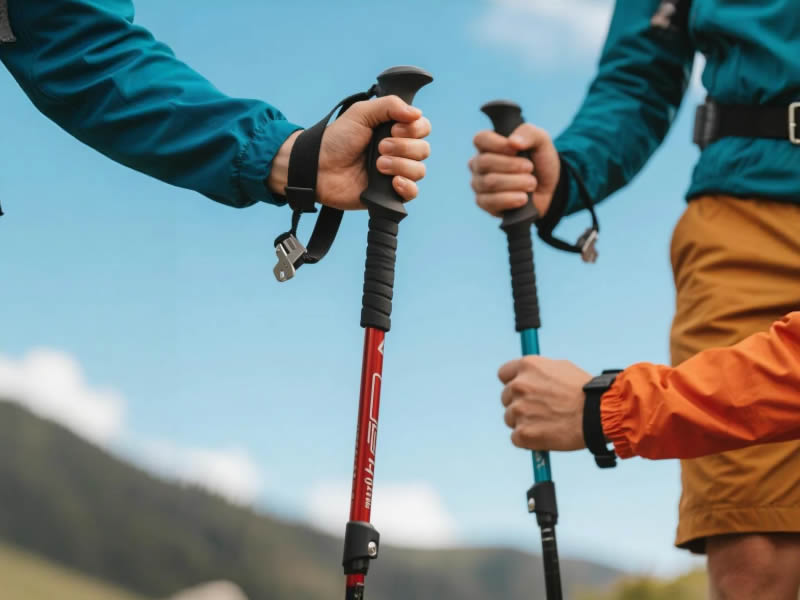
Recommended trekking pole purchase link:https://s.click.aliexpress.com/e/_c4M7OWaN
Understanding the Two Systems
Manual Lock Poles (Adjustable)
Manual lock poles use mechanical clamping systems—typically twist-locks or lever/flick-locks—to secure telescoping sections at your desired length.
- Twist-Locks: Sections are locked by rotating them, which expands internal collars.
- Flick-Locks (Lever-Locks): External levers clamp down on the section junctions.
Most manual lock poles have 2-3 telescoping sections, allowing length adjustment within a significant range (typically 65-140cm).
Self-Locking Poles (Folding/Z-Pole)
Self-locking poles use a cord-and-ferrule system similar to tent poles. Sections fold together when not in use and snap into locked position when extended.
- Design: Typically 3-4 sections connected by internal cord
- Locking: Sections lock when pulled taut; no length adjustment
- Deployment: Folds quickly into compact bundle
These are often called "Z-poles" because the folded shape resembles the letter Z.
Manual Lock Poles: Advantages
Length Adjustability: This is the defining advantage. Manual lock poles can be adjusted to different lengths for:
- Different user heights (essential for shared poles)
- Terrain variations (shorter for climbs, longer for descents)
- Accommodating different hiking styles
- Fine-tuning for personal preference
Reliability and Repairability: Quality manual locks (especially flick-locks) are extremely reliable and can be repaired in the field with basic tools. If a lock fails, you can often tighten or adjust it. Replacement parts are widely available.
Strength and Stability: When properly locked, manual poles offer exceptional rigidity with no flex at the joints. This provides confidence on technical terrain and when bearing significant weight.
Proven Design: Manual lock poles have been refined over decades. Millions of hikers trust them worldwide.
Wider Range of Options: Most pole models use manual locks, offering extensive choices in materials, grips, features, and price points.
Manual Lock Poles: Disadvantages
Weight: The locking mechanisms add weight. Manual poles are generally heavier than comparable self-locking models.
Slower Adjustment: Changing length takes time—you must unlock, adjust, and relock both poles. This can be tedious when terrain changes frequently.
Potential for Slippage: Lower-quality manual locks can slip under load, especially twist-locks. This is less common with quality flick-locks.
Complexity: More moving parts mean more potential failure points, though quality brands minimize this risk.
Packed Size: Manual poles collapse to a length determined by their shortest section, typically 60-70cm—bulkier than self-locking models.
Self-Locking Poles: Advantages
Ultralight Weight: Without heavy locking mechanisms, self-locking poles are significantly lighter. High-end carbon fiber models can weigh under 10 ounces per pair.
Compact Packed Size: When folded, Z-poles are remarkably short—often under 35cm. This makes them ideal for travel, daypacks, and airline luggage.
Instant Deployment: Pull the sections taut, and they lock. No adjustment needed. This speed is valuable for:
- Transitioning from hiking to scrambling
- Popping in and out of vehicles
- Quick setup on variable terrain
Simplicity: With no moving parts to adjust, there's less to go wrong. The cord-and-ferrule system is elegantly simple.
Ideal for Fixed-Height Users: If you know your preferred length and don't need adjustability, self-locking poles offer simplicity and weight savings.
Self-Locking Poles: Disadvantages
No Length Adjustment: This is the most significant limitation. You cannot:
- Adjust for different users
- Change length for terrain variations
- Fine-tune for personal preference
- Accommodate different hiking styles
Fixed Height Commitment: You must choose your length when purchasing. If your needs change or you measured incorrectly, you're stuck.
Less Forgiving Fit: For hikers who like to vary pole length for descents and climbs, self-locking poles require using grip extensions or changing hand position—less efficient than proper length adjustment.
Potential for Cord Failure: The internal cord can stretch or break over time. While replaceable, this requires more involved repair than manual lock adjustments.
Less Stable on Side Hills: On traverses where you need different pole lengths (uphill pole shorter, downhill pole longer), self-locking poles can't adapt.
Which Is Better for Different Scenarios?
Best for Thru-Hiking and Long-Distance Trails: Manual Lock
The ability to adjust length for changing terrain and accommodate evolving preferences over months on trail makes manual locks preferable for thru-hikers. Reliability and repairability are also crucial for long-distance treks.
Best for Ultralight Travel: Self-Locking
If every gram counts and you know your exact preferred length, self-locking carbon fiber poles are unbeatable for weight savings and packability.
Best for Variable Terrain: Manual Lock
On trails with significant elevation changes, the ability to shorten for climbs and lengthen for descents is invaluable for comfort and joint protection.
Best for Family/Shared Use: Manual Lock
Adjustable poles accommodate different family members, making them essential for households with multiple users.
Best for Air Travel: Self-Locking
The compact folded size of Z-poles makes them much easier to pack in luggage and more likely to fit within airline size restrictions.
Best for Technical Scrambling: Manual Lock
The ability to shorten poles dramatically for steep climbs and lock them securely makes manual poles preferable for scrambling.
Best for Beginners: Manual Lock
Adjustability allows beginners to experiment with different lengths and find their optimal fit before committing.
Top Recommendations by Category
Best Manual Lock (Flick-Lock):
- Black Diamond Trail Sport 3: Reliable, affordable, versatile
- LEKI Makalu Lite: Premium quality, excellent locking system
- Cascade Mountain Tech Aluminum: Budget-friendly with cork grips
Best Manual Lock (Twist-Lock):
- Komperdell Explorer: Trusted twist-lock system
- LEKI Twistlock: Proven design (on select models)
Best Self-Locking (Folding):
- Black Diamond Distance Carbon Z: Ultralight gold standard
- LEKI Micro Vario Carbon: Adjustable folding hybrid
- Cascade Mountain Tech Carbon Fiber Folding: Budget option
Hybrid Options: The Best of Both Worlds?
Some manufacturers offer hybrid designs that combine features:
- LEKI Micro Vario Series: Folding poles with limited adjustability in the upper section
- Black Diamond Distance FLZ: Folding poles with flick-lock for fine adjustment
- Komperdell Carbon Folding with Vario: Similar hybrid approach
These offer the packability of folding poles with some length adjustability—a compelling compromise.
The Verdict
For most hikers, manual lock poles (specifically flick-lock/lever-lock) are the better choice. The versatility of length adjustment outweighs the weight penalty for the majority of users. Being able to optimize pole length for different terrain, share poles with family, and fine-tune for personal comfort are significant advantages.
Choose self-locking poles if:
- You're an ultralight enthusiast prioritizing minimal weight
- You travel frequently and need compact packing
- You know your exact preferred length and never need adjustment
- You hike on relatively consistent terrain without extreme elevation changes
- You value instant deployment over adjustability
Choose manual lock poles if:
- You encounter varied terrain with climbs and descents
- You may share poles with others
- You're still dialing in your preferred length
- You prioritize reliability and field repairability
- You want maximum versatility from a single pole
The Bottom Line
The self-locking vs manual lock debate doesn't have a universal winner—the right choice depends on your specific needs. Manual lock poles offer unmatched versatility, proven reliability, and the ability to adapt to any terrain or user. Self-locking poles deliver exceptional weight savings, compact packing, and elegant simplicity for those who don't need adjustability.
For most hikers, investing in quality manual lock poles from trusted brands like Black Diamond or LEKI provides the greatest long-term value and versatility. But for ultralight enthusiasts, frequent travelers, and those with well-established preferences, self-locking poles are an excellent specialized tool.
Consider your typical hikes, your willingness to carry extra ounces for adjustability, and whether you might share poles with others. With these factors in mind, you'll choose the system that best supports your adventures—one step at a time.
Disclaimer: This article provides general information about gear selection. Individual needs and preferences vary; the "best" pole is the one that works for your specific hiking style and priorities.




