




Walking Poles with Built-in Compass and Whistle? Essential Safety Features for the Trail
When you're miles from civilization, the difference between a minor inconvenience and a serious emergency often comes down to having the right tools at hand. Two of the most fundamental safety items—a compass for navigation and a whistle for signaling—are small enough to carry but easy to lose or forget. That's why many walking pole manufacturers now integrate these life-saving features directly into their designs. This comprehensive guide explores walking poles with built-in compasses and whistles, helping you understand their benefits, limitations, and which models best suit your needs.
Recommended trekking pole purchase link:https://s.click.aliexpress.com/e/_c4M7OWaN
The Concept: Safety at Your Fingertips
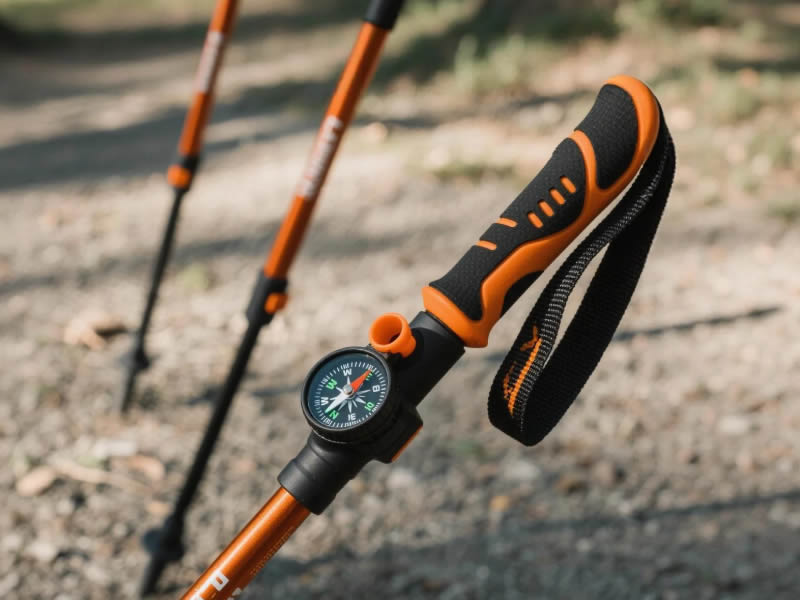
The premise is elegantly simple: embed a compass in the strap or grip, and incorporate a whistle into the handle design. These features are always accessible—no fumbling through packs, no forgotten gear, no searching when every second counts.
The Whistle: Your Voice When You Need It Most
A whistle is arguably the most important emergency signaling device you can carry. It requires far less energy than shouting, carries much farther, and penetrates wind and forest noise effectively.
Why Whistles Matter:
- Signal Distance: A whistle can be heard up to a mile away under good conditions—far beyond shouting range
- Endurance: You can whistle for hours; you cannot shout for hours
- Universal Distress Signal: Three short blasts is the universally recognized distress signal
- Low-Tech Reliability: No batteries, no electronics, nothing to fail
Integrated Whistle Designs:
Most poles with integrated whistles feature them in the grip design:
- Grip-Mounted: The whistle is built into the top of the grip, accessible by mouth without removing the pole from your hand
- Removable: Some designs allow the whistle to be detached for use away from poles
- Dual-Purpose: The whistle may also serve as a grip adjustment tool or access point for storage
The Compass: Direction When You Need It
While not a substitute for a proper map and compass skills, a built-in compass provides basic orientation and can be invaluable in emergencies.
What Built-in Compasses Offer:
- Quick Orientation: Determine general direction without unpacking gear
- Emergency Navigation: If separated from your main compass, you're not completely lost
- Confidence Check: Verify that your intuitive sense of direction matches reality
- Teaching Tool: Helps beginners develop navigation awareness
Limitations to Understand:
- Basic Function: These are simple button compasses, not precision navigation instruments
- Accuracy: They provide general direction (north/south) but aren't suitable for precise bearings
- Interference: Metal poles and nearby gear can affect accuracy
- Durability: Less robust than dedicated compasses
Top Poles with Built-in Safety Features
Komperdell Explorer Series with Integrated Whistle
Komperdell, the Austrian pole manufacturer, is known for thoughtful safety integration:
Key Features:
- Integrated Whistle: Built into the grip design—loud, accessible, and always available
- Quality Construction: Durable aluminum or carbon fiber options
- Comfortable Grips: Ergonomic designs with cork or foam options
- Modular Tips: Interchangeable baskets and tips for terrain adaptability
- Variety: Available across multiple Explorer models
Whistle Design: The whistle is part of the grip cap, easily removed for use away from poles but secure during hiking.
Pros: Thoughtful integration; loud, effective whistle; Komperdell quality
Cons: Premium pricing; whistle may be less accessible with gloves
Best for: Hikers prioritizing safety, scouts, solo adventurers
Black Diamond Poles with Compass Straps
Black Diamond offers models with compass-integrated straps:
Key Features:
- Button Compass: Embedded in the adjustable strap system
- Quality Poles: Black Diamond's renowned construction
- Comfortable Grips: Cork or foam options
- Reliable Locks: FlickLock adjustment system
- Variety: Available on select models
Compass Design: Small button compass sewn into the strap, always visible without removing poles.
Pros: Quality brand; compass always visible; comfortable straps
Cons: Basic compass only; not all models include this feature
Best for: Hikers wanting basic orientation without extra gear
LEKI Poles with Safety Features
LEKI incorporates safety elements across their product line:
Key Features:
- Whistle Grips: Some models include integrated whistles
- Compass Options: Select models feature compass-integrated straps
- Premium Quality: LEKI's renowned engineering
- Modular Systems: Interchangeable components
Availability: Safety features vary by model and region; check specific product details.
Pros: Premium quality; thoughtful design; European engineering
Cons: Features inconsistent across models; premium pricing
Best for: LEKI enthusiasts wanting integrated safety
Decathlon Forclaz with Whistle Grips
Decathlon offers affordable options with safety features:
Key Features:
- Integrated Whistle: Built into grip on select models
- Budget-Friendly: Accessible pricing
- Decent Quality: Good value for casual hikers
- Variety: Available on adult and kids' models
Pros: Affordable; good for families and beginners; accessible
Cons: Basic whistle quality; limited compass options
Best for: Budget-conscious hikers, family outings
Why You Should Consider Safety-Integrated Poles
Always Accessible: Safety gear is worthless if it's buried in your pack. Poles are always in your hands.
No Extra Items: Reduces the number of separate items to carry, remember, and potentially lose.
Intuitive Use: When adrenaline is high, having the whistle right at your mouth eliminates fumbling.
Lightweight Integration: Adds virtually no weight compared to carrying separate items.
Peace of Mind: For solo hikers especially, knowing these tools are always at hand provides confidence.
Limitations and Realistic Expectations
Compasses Are Basic: These are for general orientation, not precision navigation. Always carry a proper map and compass for serious route-finding.
Whistles Can Be Tricky: With gloves or in very cold conditions, accessing a grip-mounted whistle may be challenging.
Durability Concerns: Integrated components may fail over time; check regularly.
Not a Substitute: These features complement—do not replace—proper safety preparation and skills.
Best Practices for Using Safety-Integrated Poles
Learn Basic Navigation: A built-in compass is useless if you don't understand how to use it. Take a map and compass course.
Practice Whistle Signals: Teach everyone in your group the universal distress signal: three short blasts.
Check Before Each Hike: Ensure whistle works and compass functions properly.
Carry Backup: These are supplemental safety features. Still carry a proper compass and consider a dedicated emergency whistle.
Maintain Regularly: Clean whistle mechanism; check compass for accuracy; replace poles if features fail.
Additional Safety Considerations
Emergency Communication: Even with whistle and compass, consider carrying:
- Personal Locator Beacon (PLB): For remote areas
- Satellite Messenger: Garmin inReach or similar
- Fully Charged Phone: With offline maps
- Physical Map: Waterproof and current
Group Safety: Ensure all group members understand whistle signals and basic navigation.
Trip Planning: Leave trip plans with someone reliable. Know your route and estimated return time.
What Experienced Hikers Say
"My Komperdell poles with the built-in whistle have been on dozens of hikes," shares Mark, a solo backpacker. "Never needed it for an emergency, but knowing it's there gives me confidence. And I've used it to signal friends who wandered ahead."
"The button compass on my Black Diamond poles is basic but handy," says Jennifer, a day hiker. "Quick checks to confirm I'm heading the right way. But I still carry a proper compass for real navigation."
The Bottom Line
Yes, walking poles with built-in compasses and whistles are readily available from brands like Komperdell, Black Diamond, LEKI, and Decathlon. These integrated safety features offer genuine benefits: always accessible, no extra gear to carry, and peace of mind on the trail.
However, it's crucial to understand their limitations. Built-in compasses provide general orientation only—they are not substitutes for proper navigation tools and skills. Integrated whistles are effective signaling devices but should be tested and maintained.
For solo hikers, scouts, families with children, and anyone who values safety preparedness, poles with these features are worthwhile investments. They represent the philosophy that safety equipment should be where you need it, when you need it—right in your hands.
Choose quality poles from reputable brands, learn to use the features properly, and always carry backup safety equipment. With these tools at your fingertips, you'll hike with greater confidence, knowing you're prepared for the unexpected.
Disclaimer: This article provides general information about gear selection. Integrated safety features are supplemental tools; they do not replace proper navigation skills, emergency preparedness, or dedicated safety equipment. Always carry appropriate gear and know how to use it before heading into the backcountry.




