




Can Walking Poles Survive Being Run Over by a Car? A Critical Look at Gear Safety
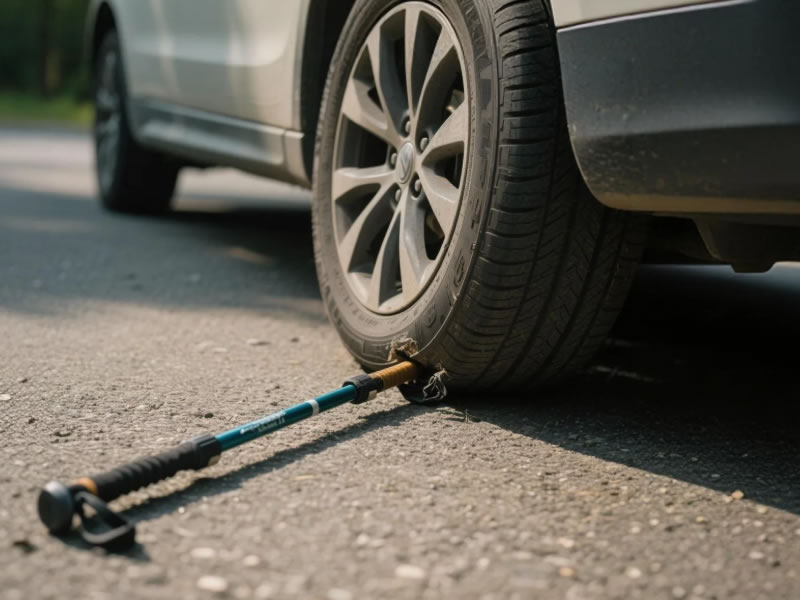
It's the kind of accident that happens in an instant—you set your poles down to load the car, help a fellow hiker, or tie a shoe, and a momentary distraction leads to a sickening crunch as a vehicle rolls over your trusted companions. In that gut-wrenching moment, one question dominates: are they still usable? The answer is more complex than a simple yes or no, involving material science, safety considerations, and the uncomfortable truth that some damage isn't visible to the naked eye. This comprehensive guide explores what happens when walking poles meet vehicles and how to make the right decision afterward.
Recommended trekking pole purchase link:https://s.click.aliexpress.com/e/_c4M7OWaN
The Short Answer
Generally, no—walking poles should not be used after being run over by a car. The forces involved in a vehicle impact far exceed what trekking poles are designed to withstand. Even if they appear undamaged, microscopic fractures or internal stress can compromise their structural integrity. Carbon fiber poles will almost certainly be destroyed. Aluminum poles may bend but can sometimes be straightened—though this is rarely recommended. For safety's sake, any pole that has been under a vehicle should be retired and replaced.
What Happens to Different Materials
Carbon Fiber Poles: Catastrophic Failure
Carbon fiber is exceptionally strong when forces are applied along its designed axis (compression). However, it is brittle when subjected to point impacts or crushing forces—exactly what happens when a tire rolls over it.
- Immediate Damage: Carbon fiber will likely crack, splinter, or shatter completely. These fractures are often obvious.
- Hidden Damage: More insidiously, carbon fiber can develop delamination—internal separation of layers—that isn't visible externally. The pole may look fine but have lost most of its strength.
- Verdict: Replace immediately. Never trust carbon fiber poles after any significant impact.
Aluminum Poles: Deformation and Stress
Aluminum is more ductile than carbon fiber, meaning it bends rather than breaks. This creates different concerns:
- Visible Bending: The pole may be visibly bent or curved. This compromises length adjustment and creates weak points.
- Hidden Stress: Even if straightened, the metal has been work-hardened at the bend point, making it more brittle and prone to future failure.
- Locking Mechanism Damage: The crushing force can deform the pole diameter, making locks ineffective.
- Verdict: Strongly consider replacement. Straightening is possible but risky—the pole will never be as strong as before.
Titanium Poles: Rare but Similar to Aluminum
Titanium offers excellent strength but similar concerns apply:
- May bend under extreme force
- Work-hardening at stress points reduces ductility
- Verdict: Same as aluminum—replacement recommended.
What About the Components?
Even if the shaft survives, other components are at risk:
Locking Mechanisms: Flick-locks and twist-locks can be crushed or deformed, leading to future failure when you need them most.
Grips: May be crushed or detached from the shaft.
Tips: Carbide tips can be snapped off or pushed into the shaft.
Baskets: Usually destroyed or deformed.
The Visual Inspection Trap
Perhaps the most dangerous outcome is when poles look fine. A vehicle rolling over a pole on soft ground or snow might not leave visible marks. But internal damage can still be present:
- Micro-fractures in carbon fiber that will propagate under load
- Stress lines in aluminum that weaken the structure
- Deformed locking mechanisms that won't hold under pressure
The pole might support your weight on flat ground but fail catastrophically on a steep descent or when you need it most.
The Physics of the Impact
Consider the forces involved:
- A typical car weighs 3,000-4,000 pounds
- Even distributed across four tires, each tire exerts tremendous pressure
- The concentrated force on a 16mm pole shaft is enormous
- This exceeds design specifications by orders of magnitude
Walking poles are engineered to handle 200-300 pounds of compressive force along their length. They are not designed to withstand tons of crushing force from the side.
When Straightening Might Be Considered
Some experienced hikers attempt to salvage aluminum poles by straightening them. If you absolutely must try:
- Inspect thoroughly for any cracks or kinks—discard if found
- Use a tube slightly larger than the pole to gently bend back to shape
- Test progressively with increasing weight, never exceeding normal use
- Monitor constantly for signs of failure
- Accept the risk that the pole may fail without warning
Even under the best circumstances, a straightened pole is compromised. Most experts recommend replacement.
The Safety Argument
Consider what's at stake:
- A fall on rough terrain can cause serious injury
- Poles fail when you need them most—on steep descents, stream crossings, or exposed ridges
- The cost of replacement is trivial compared to medical bills or the value of your safety
This is not equipment to gamble with.
What Professional Hikers Say
"I've seen people try to save poles after they've been run over," shares a mountain guide with 20 years experience. "Sometimes they look okay, but I've also seen them snap without warning. Not worth the risk. Buy new ones."
"After a car ran over my aluminum poles, I straightened them and used them for a season," admits a long-distance hiker. "They held, but I never fully trusted them. Eventually I replaced them and wished I'd done it sooner."
Insurance and Warranty Considerations
- Homeowners/Renters Insurance: May cover gear damaged in accidents. Check your policy.
- Car Insurance: If the accident was someone else's fault, their insurance might cover replacement.
- Manufacturer Warranty: Generally does not cover being run over. This is user-inflicted damage.
- Credit Card Protection: Some cards offer purchase protection that might apply.
Prevention: Keeping Poles Safe
The best solution is avoiding the accident entirely:
Loading the Car:
- Place poles in the vehicle first, before other gear
- Use a dedicated pole case that keeps them contained
- Create a routine—poles always go in the same place
At Trailheads:
- Never set poles on the ground near parking areas
- Lean them against the car (visible) or place inside
- Use a bright pole case for visibility
During Breaks:
- Plant poles vertically where they're visible
- Collapse and stow if you'll be distracted
- Develop the habit of always knowing where your poles are
What to Do If It Happens
If your poles are run over:
- Assess immediately—are they in one piece?
- Photograph damage for insurance purposes
- Do not use them for the remainder of your trip
- Consider replacement the only safe option
- Dispose properly—recycle aluminum, trash damaged carbon fiber
The Bottom Line
Can walking poles survive being run over by a car? Technically, some might appear to. But surviving and being safe to use are very different questions. The forces involved in a vehicle impact far exceed what these precision tools are designed to handle. Even poles that look undamaged may have hidden weaknesses that could fail catastrophically.
Carbon fiber poles should be replaced without question. Aluminum poles, even if straightened, are compromised. The small cost of replacement is trivial compared to the value of your safety.
Your poles support you on every step of every hike. They absorb your weight on descents, stabilize you on uneven terrain, and catch you when you stumble. They deserve to be in perfect condition. After an encounter with a vehicle, they're not.
Do yourself a favor: retire them with gratitude for miles past, and invest in new companions for miles to come. Your safety is worth far more than the cost of replacement.
Disclaimer: This article provides general safety information and recommendations. Individual circumstances vary. When in doubt about equipment safety, err on the side of caution and replace. No article can substitute for professional assessment of damaged gear.




