




How Cold Is Too Cold for Carbon Fiber Walking Poles? Understanding Material Limits in Extreme Conditions
Carbon fiber walking poles are beloved for their lightness and vibration-damping properties, but they have a lesser-known vulnerability: extreme cold. Unlike aluminum, which becomes stronger at low temperatures, carbon fiber's epoxy matrix can become brittle, leading to sudden, catastrophic failure. For winter hikers, mountaineers, and cold-climate adventurers, understanding this limit isn't just about equipment longevity—it's about safety. This comprehensive guide explores the science behind carbon fiber's cold tolerance, real-world temperature thresholds, and how to make smart gear choices for frigid conditions.
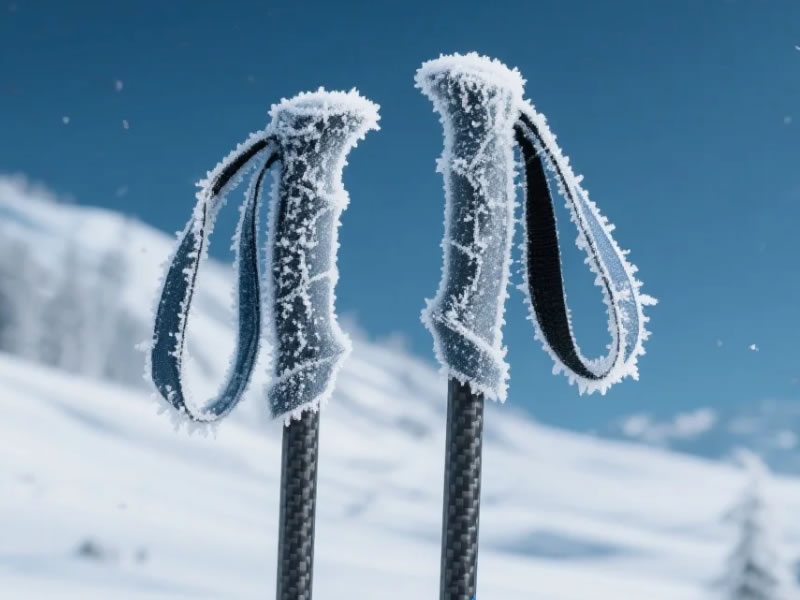
Recommended trekking pole purchase link:https://s.click.aliexpress.com/e/_c4M7OWaN
The Short Answer
Carbon fiber walking poles can become dangerously brittle below approximately -20°F to -30°F (-29°C to -34°C). At these temperatures, the epoxy resin that binds the carbon fibers stiffens and loses its ability to absorb impact, making poles prone to sudden snap—especially if they have pre-existing nicks or stress points. For winter mountaineering and extreme cold, many experts recommend aluminum poles, which become stronger in the cold and bend rather than shatter.
The Science: Why Cold Affects Carbon Fiber
Carbon fiber itself is extraordinarily strong and actually performs better in cold temperatures. The problem lies in the epoxy matrix that holds the fibers together.
How Carbon Fiber Poles Are Made:
- Thousands of microscopic carbon filaments are woven or aligned
- These filaments are embedded in epoxy resin
- The resin transfers loads between fibers and protects them
- The composite gains its strength from this combination
What Happens in Extreme Cold:
- Epoxy resins have a glass transition temperature (Tg) —the point where they change from flexible to brittle
- Below this temperature, the resin becomes glass-like and rigid
- Impact energy that would normally be absorbed and distributed instead causes cracks to propagate
- Small nicks or scratches become fracture points
- Failure can be sudden and complete
The Temperature Threshold
There's no universal "magic number" because different carbon fiber formulations use different epoxies with varying glass transition temperatures. However, industry experience and mountaineering literature suggest:
-20°F to -30°F (-29°C to -34°C): General consensus range where risk becomes significant
-40°F (-40°C): Most carbon fiber composites are at high risk of brittle failure
Above 0°F (-18°C): Generally safe for normal use, though impacts should still be avoided
Critical Factors That Lower the Threshold:
- Pre-existing damage: Any nick, scratch, or stress point concentrates forces
- Impact loading: Dropping the pole or striking rock creates sudden stress
- Age and UV exposure: Older poles may have degraded resin
- Rapid temperature changes: Thermal shock can stress the material
Real-World Examples
Mount Everest Expeditions:
Most commercial Everest expeditions use aluminum poles below Camp 2 (around 21,000 feet), where temperatures can plummet to -40°F. Guides report that carbon fiber poles have snapped unexpectedly in these conditions.
Winter Mountaineering in the Rockies:
Search and rescue reports document incidents where carbon fiber trekking poles shattered during self-arrest attempts in extreme cold, compromising climbers' safety.
Laboratory Testing:
Controlled tests show that carbon fiber samples subjected to -40°F temperatures absorb 50-70% less impact energy before failure compared to room temperature samples.
Aluminum: The Cold-Weather Alternative
Aluminum behaves very differently in cold:
Advantages in Extreme Cold:
- Becomes stronger: Aluminum alloys actually increase in strength as temperature drops
- Ductile failure: Aluminum bends before breaking, giving warning signs
- Predictable: Deformation is visible, unlike hidden carbon fiber cracks
- Repairable: Bent sections can sometimes be straightened in emergency
Disadvantages:
- Heavier than carbon fiber
- Conducts cold to hands (mitigated by good grips)
- Can feel "harsher" in normal use
Why Mountaineers Often Choose Aluminum for Winter:
The combination of predictable failure mode, increased strength in cold, and ability to survive impacts makes aluminum the conservative choice for serious winter expeditions.
When Carbon Fiber Can Still Work in Cold
Carbon fiber isn't automatically dangerous in all cold conditions. It can be appropriate when:
- Temperatures stay above -20°F: For most winter day hiking in temperate regions
- Poles are in excellent condition: No nicks, scratches, or prior damage
- Use is controlled: No aggressive planting, levering, or impact loading
- You inspect frequently: Looking for signs of stress or damage
- You have backup: Another pole or the ability to improvise if one fails
Risk Factors to Consider
Your Activity:
| Activity | Risk Level with Carbon Fiber in Extreme Cold |
|---|---|
| Leisurely winter walking | Moderate |
| Steep ice climbing | High |
| Self-arrest practice | Very High |
| Glacial travel with probing | High |
| Ski touring with pole plants | Moderate-High |
Pole Condition:
- New poles with pristine surfaces = lower risk
- Poles with visible scratches = higher risk
- Poles that have taken impacts = much higher risk
Manufacturer Guidance:
Some manufacturers specify minimum operating temperatures. Check your pole's documentation. Brands like Black Diamond and Leki often note that their carbon fiber poles are tested to certain standards but recommend aluminum for extreme cold.
Prevention and Best Practices
If Using Carbon Fiber in Cold:
- Inspect Thoroughly Before Each Use: Look for any nicks, scratches, or delamination. Run fingers along shafts feeling for irregularities.
- Avoid Impact Loading: Don't use poles for self-arrest unless absolutely necessary. Don't lever them out of cracks.
- Warm Them Gradually: Don't bring freezing poles directly into warm tents—thermal shock can stress the resin.
- Carry Backup: Have a repair splint or alternative support method.
- Know Your Limits: If temperatures approach -20°F, consider switching to aluminum.
Signs of Potential Failure:
- Unusual creaking sounds when flexed
- Visible cracks or "fuzziness" in the surface
- Changes in flexibility or feel
- Any impact event—even if no visible damage
The Aluminum Alternative for Extreme Cold
For serious winter mountaineering or expeditions where temperatures regularly drop below -20°F, consider:
Black Diamond Raven Pro: Durable aluminum, extended foam grips for self-arrest, reliable flick-locks.
Leki Makalu Tour: Proven aluminum construction, trusted by guides worldwide.
Komperdell Explorer Aluminum: Robust and affordable for winter use.
These poles will be heavier but offer peace of mind that carbon fiber cannot provide in extreme cold.
What Experts Say
"In twenty years of guiding on Denali, I've seen carbon fiber poles snap at -40°F," shares a veteran mountain guide. "The climbers were lucky they didn't get hurt. Now I recommend aluminum for anyone going into serious cold."
"Carbon fiber is amazing for three-season use," says a materials engineer who tests outdoor gear. "But the epoxy has limits. Below -30°F, you're gambling. The failure mode is sudden and complete."
The Bottom Line
How cold is too cold for carbon fiber walking poles? The consensus threshold is approximately -20°F to -30°F (-29°C to -34°C) . Below these temperatures, the epoxy matrix becomes brittle, and poles are at risk of sudden, catastrophic failure—especially if they have any pre-existing damage.
For winter day hiking in most temperate regions, carbon fiber poles remain safe and effective. But for serious winter mountaineering, high-altitude expeditions, or any situation where temperatures routinely plunge below -20°F, aluminum poles are the wiser choice. They become stronger in the cold, bend rather than shatter, and provide predictable warning signs before failure.
If you do choose carbon fiber for cold conditions, inspect meticulously, avoid impacts, and carry backup. Your poles are your partners on the trail—in extreme cold, make sure they're partners you can trust.
Disclaimer: This article provides general information about material properties and safety considerations. Individual pole performance varies by manufacturer, age, condition, and specific use. Always consult your pole manufacturer's recommendations and use appropriate caution in extreme conditions.




