




Can Walking Poles Be Used on Icy Trails Without Crampons? A Complete Guide to Winter Stability
Winter hiking offers breathtaking beauty—crisp air, snow-laden trees, and the satisfying crunch of frozen ground beneath your boots. But with winter comes ice, and with ice comes the risk of dangerous slips and falls. For hikers who don't own crampons or microspikes, a common question arises: can walking poles provide enough stability on icy trails? The answer is nuanced, depending on the type of ice, the steepness of the terrain, and the equipment you have. This comprehensive guide explores the capabilities and limitations of walking poles on ice and how to stay safe when conditions turn slick.
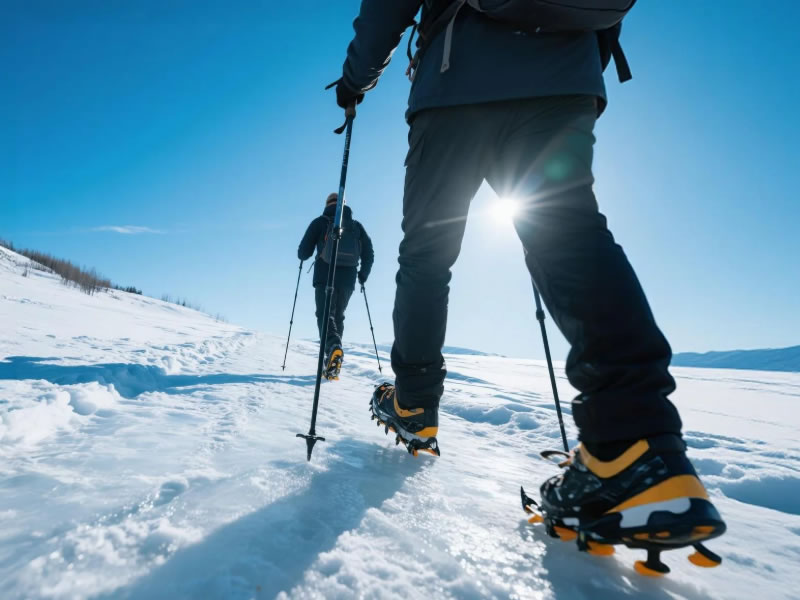
Recommended trekking pole purchase link:https://s.click.aliexpress.com/e/_c4M7OWaN
The Short Answer
Yes, walking poles can be used on icy trails without crampons, but with significant limitations. Standard rubber tips are dangerously slippery on ice. However, carbide tips bite into ice reasonably well on flat or gently sloping terrain. For steeper sections or harder ice, specialized ice tips (like LEKI Ice Tips or Black Diamond Ice Tips) provide better traction. But even with the best tips, poles are no substitute for crampons or microspikes on steep, hard ice. They provide additional points of contact and stability but cannot prevent a slide on significant slopes.
Why Ice Is So Treacherous
Ice presents unique challenges for traction:
Low Friction: Ice has one of the lowest coefficients of friction of any natural surface. Even textured ice can be extremely slick.
Variability: Ice ranges from soft, "styrofoam" ice that offers some purchase to hard, "blue" ice that's as slick as glass.
Hidden Hazards: Ice often lurks under a thin layer of snow, invisible until you step on it.
Slope Angle: The danger increases exponentially with slope steepness. What's manageable on flat ground becomes impossible on a 20-degree incline.
Types of Pole Tips for Ice
Carbide Tips (Standard on Most Quality Poles)
Carbide is extremely hard and can penetrate ice:
- Pros: Bites into softer ice; provides decent traction on flat, icy trails; already on your poles
- Cons: Limited contact area; can skate on hard, polished ice; less effective on steep slopes
- Best for: Flat or gently rolling icy trails, packed snow with icy patches
Rubber Tips (Standard for Pavement)
Rubber tips are designed for hard surfaces but are dangerous on ice:
- Pros: None for ice
- Cons: Zero traction; will slide immediately
- Warning: Never use rubber tips on icy trails
Specialized Ice Tips
Some manufacturers offer tips specifically designed for ice:
- LEKI Ice Tips: Aggressive, pointed tips that bite into hard ice
- Black Diamond Ice Tips: Similar design for their interchangeable system
- Features: Usually have more aggressive points than standard carbide
- Pros: Much better grip on hard ice; can be swapped as conditions demand
- Cons: Additional cost; need compatible poles
Baskets for Snow
While not directly related to ice traction, proper baskets prevent your poles from sinking into soft snow, which can destabilize you:
- Large snow baskets distribute weight, keeping poles on the surface
- Interchangeable baskets allow you to adapt to snow depth
How Poles Help on Ice
Even without crampons, poles provide several benefits on icy terrain:
1. Additional Points of Contact
Two poles create four points of contact with the ground. Even if a foot slips, the poles can provide momentary stability to recover.
2. Probing Ahead
Poles allow you to test the surface before committing your weight. You can feel for ice hidden under snow and adjust your route.
3. Balance and Recovery
If you do start to slip, poles can help you regain balance or at least control the fall.
4. Confidence
Knowing you have support reduces the tense, guarded walking that actually increases fall risk.
The Limitations: When Poles Aren't Enough
It's crucial to understand when poles alone are insufficient:
Steep, Hard Ice:
On a slope of hard ice, even the best ice tips cannot prevent a slide. The coefficient of friction is simply too low. This is where crampons or microspikes are essential.
Glazed Ice (Black Ice):
The slickest form of ice, often invisible, provides almost no purchase for any tip. Poles are nearly useless here.
Traversing Across Slopes:
Side-hilling on ice is particularly dangerous. Poles can't counteract the sideways slip.
Heavy Pack Weight:
A heavy backpack raises your center of gravity and increases the force on each point of contact. Poles are less effective.
Techniques for Icy Trails with Poles
Choose the Right Tips
- Carbide for general winter walking with icy patches
- Ice tips for more serious ice conditions
- Never rubber
Use Proper Baskets
Install large snow baskets to prevent sinking into soft snow covering ice.
Adjust Length for Conditions
- Flat ice: Standard length (elbow at 90 degrees)
- Descending icy slopes: Lengthen poles for better braking
- Ascending: Shorten for better leverage
Plant Deliberately
Don't just stab randomly. Place tips where they'll get the best purchase—often on textured ice or through snow to the ground below.
Test Before Committing
Before transferring full weight, test the tip's grip with light pressure. If it slips, reposition.
Maintain Three Points of Contact
On questionable ice, always have at least three points of contact with the ground (two feet and one pole, or two poles and one foot).
Avoid Sudden Movements
Smooth, deliberate motions reduce the chance of slipping.
The Crampon Question
When should you use crampons or microspikes instead of relying on poles?
| Condition | Poles Enough? | Crampons Needed? |
|---|---|---|
| Flat trail, occasional icy patches | Yes, with carbide tips | Optional |
| Gentle slopes, packed snow | Yes, with ice tips | Optional |
| Steep slopes, hard ice | No | Yes |
| Glazed ice anywhere | No | Yes, but still treacherous |
| Traversing icy side-hills | No | Yes |
| Mixed snow and ice, moderate slopes | Possibly, with caution | Recommended |
Safety Rules for Winter Hiking
Never Hike Alone on Icy Terrain:
If something goes wrong, having help is crucial.
Carry Traction Devices:
Microspikes or crampons weigh little and can save your life. Consider them essential for any winter hike with significant ice risk.
Tell Someone Your Plan:
Routes, expected return time, and backup plans.
Check Conditions Before You Go:
Trail reports often mention ice conditions. Heed warnings.
Turn Back if Unsure:
If the ice looks worse than expected, there's no shame in retreating.
What Experienced Winter Hikers Say
"I've hiked thousands of winter miles with carbide-tipped poles," shares Mike, a New Hampshire White Mountains veteran. "On moderate terrain, they're fine. But on the icy steeps of Mount Washington, I wouldn't go without microspikes. Poles help, but they're not enough."
"Ice tips make a noticeable difference on hard snow and ice," says Jennifer, a Colorado winter hiker. "But I still carry Kahtoolas for the really nasty sections. The poles are my backup, not my primary traction."
The Bottom Line
Can walking poles be used on icy trails without crampons? Yes, on gentle terrain with appropriate tips. Carbide tips provide reasonable traction on flat or rolling icy trails. Specialized ice tips improve performance on harder ice. But poles are tools for balance and stability, not primary traction devices.
On steep slopes, hard ice, or any terrain where a fall would be dangerous, crampons or microspikes are essential safety equipment, not optional accessories. Poles complement them but cannot replace them.
For winter hiking, the smart approach is layered traction:
- Quality boots with good lug soles
- Microspikes or crampons for actual ice
- Poles with appropriate tips for balance and additional points of contact
This combination gives you the best chance of staying upright and enjoying the winter wonderland safely.
Disclaimer: This article provides general information about winter hiking safety. Ice conditions vary enormously, and no equipment guarantees safety. Always assess conditions carefully, carry appropriate gear, and be prepared to turn back if conditions exceed your capabilities.




