




Walking Poles for Loose Gravel – Do They Help with Stability? A Complete Guide to Conquering Crumbly Terrain
Loose gravel, scree, and shifting shale are among the most frustrating and hazardous surfaces a hiker can encounter. With every step, the ground moves beneath you, sapping energy and threatening your balance. It feels like walking on marbles. In these conditions, walking poles transform from a simple aid into an essential piece of "off-road drive system for the mountains" -8. They provide the stability and confidence needed to traverse unstable terrain safely. This comprehensive guide explains exactly how poles help on loose gravel and how to use them effectively.
Recommended trekking pole purchase link:https://s.click.aliexpress.com/e/_c4M7OWaN
The Short Answer: Your Four-Wheel Drive Legs
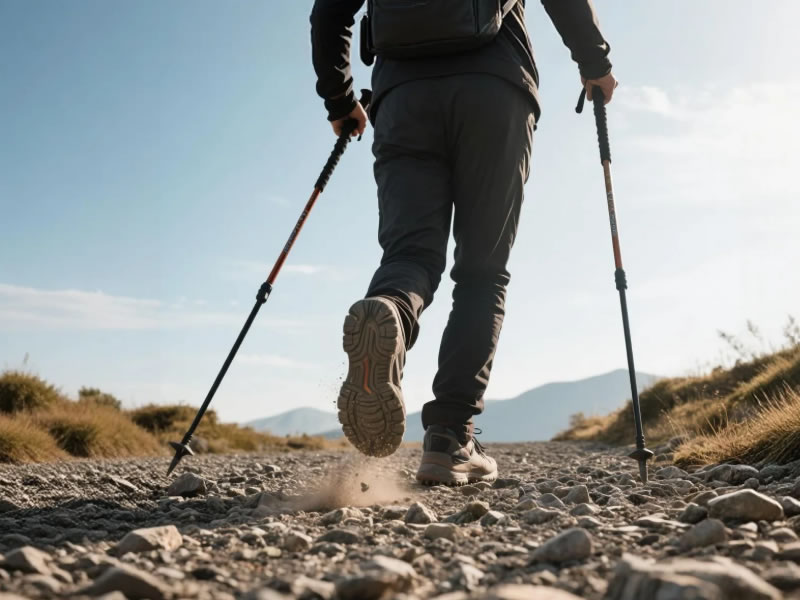
Yes, absolutely. On loose gravel, walking poles provide crucial stability by converting chaos into control -8. They give you two extra points of contact with the ground, acting as a "third and fourth leg" that catches you when the gravel shifts underfoot. They spread your weight across four points of contact, reducing the load on your joints and helping you maintain momentum -8. In short, they turn you from a two-wheel-drive vehicle into a four-wheel-drive one, purpose-built for loose terrain -8.
The Mechanics of Stability on Gravel
Understanding how poles work on gravel helps you appreciate why they are so effective.
Expanding Your Base of Support
On firm ground, you have two points of contact. On loose gravel, that's often not enough. Poles give you four points of contact, significantly widening your stability base -1-8. If a foot slips, the poles can provide momentary stability to recover your balance. They act as "stabilisers, catching you before you lose balance or load up a misstep" -8.
Reducing Joint Impact and Fatigue
Walking on loose gravel is not just unstable; it's exhausting. Each step requires extra effort as the ground gives way. Poles help by distributing your body weight more evenly, transferring some of the load from your legs to your arms and upper body -3-5. Research indicates that during downhill walking, trekking poles can decrease knee joint forces by 12% to 25% -8. This reduction in impact protects your knees and ankles and reduces overall fatigue, allowing you to hike longer with more energy -5.
Providing Propulsion and Braking
Poles are not just for static support; they actively assist your movement.
- On ascents, poles add thrust, helping you push up against the shifting surface and taking pressure off your lower body -6-9.
- On descents, they are even more critical. They prevent that dreaded "scree ski"—an uncontrolled slide that can end in a fall—by acting as brakes to slow your momentum and absorb shock -8-9.
Sensing the Terrain
Your poles become extensions of your senses. You can use them to probe the ground ahead, testing for firm spots on a shifting surface before committing your body weight -8. This "test probe" function allows you to choose a more stable path and avoid hidden hazards -1-6.
Pro Tips: Mastering the Technique on Gravel
Having the poles is only half the battle. Using them correctly on loose ground is key.
Plant with Purpose
- On climbs, place your poles slightly ahead of you and push down to assist your upward movement -8.
- On descents, angle them to slow your momentum. Time your steps so the pole lands just before your foot, using it as a probe for stability -8.
- Avoid "stabbing" the ground aggressively. Plant the pole firmly but gently to find purchase without over-sinking -5.
Master the Micro-Adjustment
- On really dicey ground, shorten your stride and tighten your pole placement. Precision trumps power -8.
- On side slopes, use a shorter pole on the uphill side and a longer one on the downhill side to level your upper body. This "micro-adjustment" provides "big gains in stability" -5-8.
Use the Straps Correctly
- Put your hand through the strap from underneath, so the strap rests at the base of your hand. This allows the strap to bear some of the weight, reducing hand fatigue and ensuring you won't lose the pole if you drop it -1-5-8.
- On technical scrambles where you might need your hands free, be prepared to ditch the straps for quick release -8.
Keep Your Poles in Sync
For the greatest stability, swing your left pole forward in sync with your right foot, and your right pole with your left foot -1. This natural cross-body rhythm enhances your balance and flow.
Choosing the Right Poles for Gravel
To tackle loose gravel effectively, your poles need specific features:
The Right Tips: Carbide is King
For maximum bite into loose rock and gravel, you need carbide tips-6-7. Carbide is an extremely hard metal that digs into the terrain and holds firm, giving you a solid base to push against. The small surface area and sharpness allow it to bed into the path -7. Rubber tips, designed for pavement, will slip and slide on gravel. Look for interchangeable tip systems so you can swap between carbide for the trail and rubber for road approaches -8-10.
Baskets: Preventing Over-Sinking
Attach small baskets to your poles. These prevent the pole from sinking too deep into soft gravel or getting wedged between rocks, which can destabilize you or make it hard to pull the pole out -1-8.
Grips: For a Secure Hold
On long, demanding descents, a comfortable, secure grip is essential. Cork grips are excellent as they absorb sweat, conform to your hand, and don't become slippery -6-10. Foam grips are another good option for moisture absorption -6.
Adjustable Locks
Since you'll want to change your pole length for ascents, descents, and traverses, adjustable poles with secure flick-locks are highly recommended -2-8. They allow for quick, tool-free adjustments on the go.
Final Thoughts: From Intimidation to Intention
Loose gravel and scree slopes don't have to be intimidating. With the right walking poles in your hands and the proper technique, you're not just hiking—you're moving with "intent, control and confidence" -8. Your poles become an extension of your instincts, allowing you to tackle crumbly terrain with the sure-footedness of a mountain guide. By distributing your weight, providing extra points of contact, and giving you the power to probe and push, walking poles are not just helpful on loose gravel—they are transformative.
Recommended Poles for Loose Gravel
Based on the features above, here are some excellent choices for tackling unstable terrain:
- Best Overall: Black Diamond Alpine Carbon Cork – Features comfortable cork grips, reliable flick-locks, and comes with interchangeable carbide and rubber tips, making it a versatile all-rounder for various terrains -2.
- Best Premium/Adjustable: Leki Micro Vario Carbon Folding Poles – Highly packable and adjustable, with a carbon build that's light enough for long days. The foam grips, while comfortable, might get sweaty in warm weather -2.
- Best Value: Silva Aluminium Trekking Poles – An affordable option with cork grips and good flick-locks, making them a solid choice for beginners tackling their first gravel trails -2.
Have you had a terrifying experience on a scree slope, or do you have a favorite pair of poles for loose ground? Share your stories and questions in the comments below!






