




Best Walking Poles for Veterans with PTSD? A Guide to Grounding, Stability, and Healing
For many veterans living with post-traumatic stress disorder (PTSD), the outdoors can be both a sanctuary and a challenge. The desire to reconnect with nature and find peace often clashes with symptoms like hypervigilance, anxiety, and a persistent sense of being on edge. Walking, particularly when done mindfully, has been shown to have therapeutic benefits. Adding walking poles to the practice can deepen this experience, providing physical grounding, rhythmic focus, and a sense of security. This guide explores how veterans with PTSD can choose walking poles that support their healing journey.
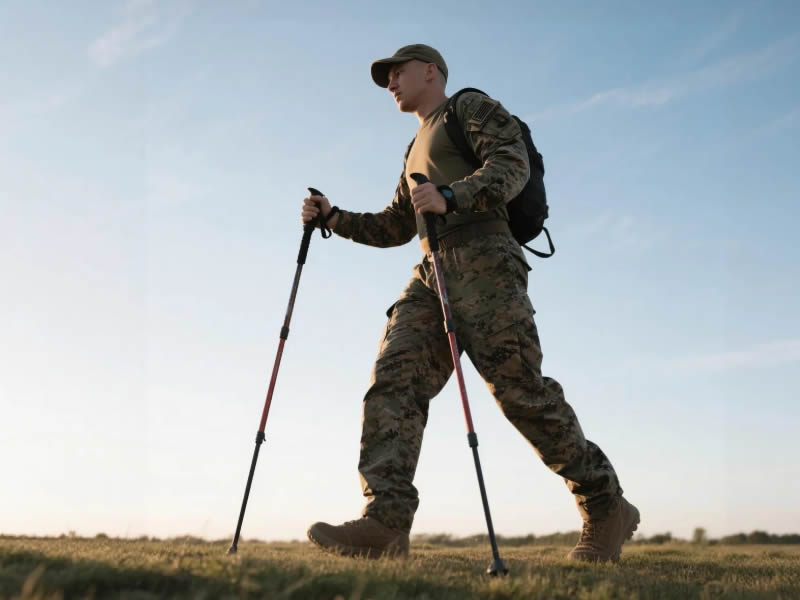
Recommended trekking pole purchase link:https://s.click.aliexpress.com/e/_c4M7OWaN
The Short Answer
Yes, walking poles can offer therapeutic benefits for veterans with PTSD. They promote mindful, grounding walking by providing a rhythmic focus (the repetitive planting of poles) and sensory feedback (the feel of the grip, the sound of the tip on the trail). This can help anchor you in the present moment, reducing intrusive thoughts. The added stability of poles can reduce the physical tension of hypervigilance, allowing for a more relaxed experience. They also encourage outdoor engagement, which has proven mental health benefits. Look for quiet, natural-feeling poles with comfortable cork grips that won't distract from the experience. The Black Diamond Alpine Cork is an excellent choice—quiet, natural, and grounding. Always consult a mental health professional for personalized guidance.
How PTSD Affects the Walking Experience
Understanding the symptoms of PTSD helps explain why poles can be beneficial:
Hypervigilance: A constant state of heightened awareness, scanning for threats. This can make relaxing outdoors difficult. Poles provide a focal point for attention, potentially reducing the need to constantly scan.
Anxiety: Physical symptoms like rapid heartbeat, shallow breathing, and muscle tension. The rhythmic motion of pole walking can help regulate breathing and reduce physical tension.
Intrusive Thoughts: Unwanted memories or worries that intrude on the present. The repetitive, sensory nature of using poles can serve as an anchor, bringing attention back to the here and now.
Startle Response: An exaggerated reaction to unexpected stimuli. The stability provided by poles can reduce the physical startle, and the poles themselves can feel like a grounding presence.
Avoidance: A tendency to avoid places or activities that trigger symptoms. Poles can build confidence, making outdoor spaces feel more manageable and less threatening.
Dissociation: Feeling disconnected from your body or surroundings. The physical feedback from poles—the pressure in your hands, the contact with the ground—can help you feel more embodied and present.
How Walking Poles Can Help
1. Rhythmic Grounding
The repetitive motion of planting poles creates a steady rhythm. This rhythm can:
- Serve as a meditative focus, anchoring your attention
- Regulate your breathing (synchronizing breath with steps)
- Provide a predictable, safe pattern in an unpredictable world
2. Sensory Anchoring
Poles provide constant sensory input:
- The texture and temperature of the grip in your hands
- The slight vibration as the tip meets the ground
- The sound of the pole planting (choose quiet poles to avoid startling)
- The feeling of your arms swinging in a natural rhythm
This sensory feedback can help you stay connected to your body and the present moment.
3. Enhanced Stability and Confidence
Hypervigilance often manifests as physical tension—you're braced for something to happen. Poles:
- Provide literal stability, reducing the fear of falling
- Allow you to move with more confidence, potentially reducing the need for constant visual scanning of the ground
- Create a sense of being "planted" and secure
4. Boundary and Personal Space
For some, having poles extended can create a subtle sense of personal space, which may feel comforting in open environments.
5. Purposeful Movement
Having a task—planting poles, maintaining rhythm—can give the mind a gentle focus, reducing the space for intrusive thoughts.
Critical Features for PTSD-Friendly Poles
Quiet Operation
Sudden noises can trigger startle responses. Your poles should be as quiet as possible:
- Cork grips don't squeak against hands
- Secure locking mechanisms that don't rattle (flick-locks are generally quiet when properly adjusted)
- Rubber tips eliminate the "click" of metal on rock, providing quieter operation
The Black Diamond Alpine Cork excels here—its quality construction minimizes noise.
Natural, Comfortable Grips
Your hands are primary conduits for sensory input. Grips should feel pleasant and grounding:
- Cork grips are ideal—warm to the touch, natural, absorb sweat, and provide a secure, comfortable hold
- Foam grips are a good alternative—soft, warm, and comfortable
Avoid hard rubber or plastic that feels cold or synthetic.
Lightweight Construction
Heavy poles can increase fatigue and frustration. Lightweight poles become nearly unnoticeable, allowing you to focus on your experience:
- Carbon fiber poles are the lightest option (under 10 ounces per pair)
- Lightweight aluminum is a good second choice
Adjustable or Fixed?
- Fixed-length poles are simpler and lighter—one less thing to think about
- Adjustable poles offer flexibility if you hike varied terrain
Simple, Reliable Mechanisms
Complexity can be frustrating. Choose:
- Simple, proven locking systems that don't require frequent adjustment
- Tool-free operation if you need to make changes
Natural Aesthetics
While not essential, poles with natural colors and materials (cork, earth tones) may feel more harmonious and less "clinical" than bright, technical-looking gear.
Recommended Poles for Veterans with PTSD
Best Overall: Black Diamond Alpine Cork
The Alpine Cork embodies qualities that support grounding and mindfulness:
- Grips: Cork—warm, natural, comfortable, sweat-absorbing
- Operation: Quiet—minimal rattling or clicking
- Construction: Durable aluminum—reliable, field-serviceable
- Locks: FlickLock—simple, secure, can be adjusted if needed
- Natural Aesthetic: Earth-tone colors blend with environment
Why They Work: The cork grips become almost organic extensions of your hands. The poles are quiet, so they won't startle. They're reliable, so you can trust them and focus on your experience.
Best Ultralight: Black Diamond Distance Carbon Z
For those who want poles to virtually disappear:
- Weight: Under 10 ounces per pair—barely noticeable
- Grips: Foam—comfortable, warm
- Operation: Quiet—carbon fiber absorbs vibration
- Deployment: Z-pole system folds small
- Fixed Length: Simple, no adjustments needed
Why They Work: At this weight, you'll forget you're carrying poles. They become true extensions rather than equipment you're managing.
Best for Sensory Feedback: Komperdell Cork Grips
For those who want maximum tactile awareness:
- Grips: Premium cork—rich sensory input
- Construction: Quality aluminum or carbon
- Operation: Quiet, reliable
- Feel: The cork provides grounding sensory feedback
Why They Work: The high-quality cork provides excellent tactile feedback—temperature, texture, pressure—that anchors you in the present moment.
Best Adjustable: Leki Micro Vario Carbon
For hikers who want adjustability with premium features:
- Grips: Cork—comfortable, natural
- Weight: Approximately 11 ounces—very light
- Locks: Speed Lock—simple, secure
- Packability: Collapses to 36cm
- Operation: Quality construction minimizes noise
Why They Work: The cork grips provide grounding comfort. The adjustable length lets you optimize for different terrain. The quality construction ensures reliable, quiet operation.
Techniques for Mindful Walking with Poles
Start with Intention
Before beginning, stand quietly with poles planted. Set an intention for your walk—perhaps "I am here, now" or "I open to this moment."
Focus on the Rhythm
Let the poles establish a steady rhythm. Left pole, right foot; right pole, left foot. Let your breath find the same rhythm. When your mind wanders—and it will—gently return attention to the rhythm.
Use the Poles as Anchors
When you notice intrusive thoughts or anxiety, bring attention to:
- The feel of the grip in your hands
- The slight pressure as the pole meets ground
- The sound of the tip (choose quiet tips to avoid startling)
- The movement of your arms
Practice Grounding Through the Poles
Feel the connection from your hand, through the pole, to the earth. Imagine roots extending from the pole into the ground, anchoring you.
Pause and Breathe
When you feel overwhelmed, stop. Plant both poles firmly. Take several deep breaths. Feel the poles supporting you. Then continue when ready.
Choose Your Environment Wisely
Start with quiet, familiar trails where you feel safe. Gradually expand as confidence grows.
Consider Walking with a Companion
If solo walks feel challenging, invite a trusted friend or join a veteran-focused hiking group.
Resources for Veterans
Many organizations support veterans in connecting with the outdoors:
- Warriors and Quiet Waters: Therapeutic fly fishing and outdoor experiences
- Sierra Club Military Outdoors: Veteran-focused outdoor programs
- Veterans Expeditions: Outdoor adventures for veterans
- Local VA Medical Centers: May offer or know of outdoor therapy programs
What Veterans Say
"After two deployments, I struggled with hypervigilance anytime I was outdoors," shares Mike, a Marine Corps veteran. "My therapist suggested walking poles as a grounding tool. The rhythm helps me stay present. The cork grips feel real and solid in my hands. It's not a cure, but it helps."
"I was skeptical at first," says Sarah, an Army veteran. "But using poles on my daily walks has become a meditation. I focus on the rhythm, the feel of the grips, the sound of the tips. It quiets my mind in a way nothing else does."
The Emotional Journey
Returning to the outdoors after trauma is a courageous act. Walking poles can be allies in that journey—not as a cure, but as tools that support grounding, presence, and connection. They offer:
- A focal point when your mind races
- Physical grounding when you feel disconnected
- Stability when the world feels uncertain
- Rhythm when thoughts are chaotic
The Bottom Line
For veterans living with PTSD, walking poles can offer genuine therapeutic benefits. They promote mindful, grounding walking through rhythmic focus and sensory feedback. They provide stability that can reduce the physical tension of hypervigilance. They encourage outdoor engagement, which has proven mental health benefits.
The Black Diamond Alpine Cork is an excellent choice, offering quiet operation, comfortable natural cork grips, and reliable performance. Ultralight options like the Black Diamond Distance Carbon Z provide minimal distraction for those who want poles to fade into the background.
Remember that poles are tools, not treatments. They work best as part of a comprehensive approach to mental health that may include therapy, medication, peer support, and other strategies. Always work with mental health professionals to find what works for you.
The trail is waiting. With the right poles and proper support, you may find that each step brings you closer to peace.
Disclaimer: This article provides general information and does not constitute medical or mental health advice. PTSD is a serious condition that requires professional treatment. Always work with qualified mental health providers to develop a comprehensive treatment plan.




