




Walking Poles for Plein Air Painting Outdoors? A Complete Guide to the Artist's Third Leg
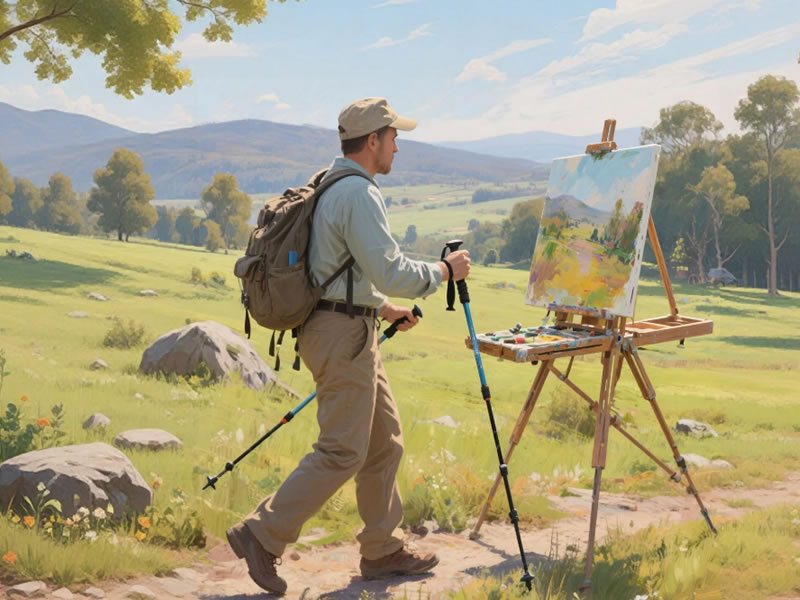
Plein air painting—the act of painting outdoors, directly from nature—is a beautiful, demanding practice. It requires carrying art supplies to remote locations, finding the perfect vantage point, and then standing for hours, completely absorbed in capturing the light and landscape. For artists who hike to their painting spots, walking poles can be invaluable tools. They support the journey in, steady the body during the creative process, and even become part of the artistic toolkit. This comprehensive guide explores how plein air painters can choose poles that enhance both their hike and their art.
Recommended trekking pole purchase link:https://s.click.aliexpress.com/e/_c4M7OWaN
The Short Answer
Yes, walking poles are ideal for plein air painters. They help you carry gear safely to remote locations, providing stability on the trail while your hands are full with an easel and supplies. Once you've found your spot, they steady your stance during hours of standing and painting, reducing fatigue and allowing you to focus on your work. Choose lightweight poles (easy to manage with art supplies), rubber tips (quiet, won't disturb the scene or damage delicate ground), and stable bases for when you're standing and painting. One-pole use leaves a hand free for brushes and mixing. The Black Diamond Distance Carbon Z is a top pick—ultralight, folds small for transport, and steady as a tripod when planted. Pro tip: use your pole as a measuring tool for proportions and perspective!
Why Plein Air Painting Demands Different Pole Features
Painting outdoors adds unique demands that standard hiking doesn't:
Carrying Art Supplies: Easels, canvases, paints, brushes, water, and a stool add significant weight and bulk. Poles help you balance this load on the trail.
Finding the Perfect Spot: You may need to scramble to that perfect viewpoint. Poles provide stability during the final approach.
Standing for Hours: Once you start painting, you'll be on your feet for extended periods. Poles provide support, reducing back and leg fatigue.
Staying Put: Unlike hiking, you're not moving. Your poles need to stay planted and stable for hours.
Quiet Presence: The goal is to blend into the landscape, not disturb it. Noisy poles are a distraction.
Artistic Tools: Your pole can become part of your artistic process—a measuring tool, a sighting device, a steady rest for your brush hand.
Critical Features for Plein Air Poles
Lightweight Construction
You're already carrying art supplies. Your poles should add as little weight as possible:
- Carbon fiber poles are the lightest option (under 10 ounces per pair)
- Ultralight designs reduce fatigue on the approach
- Light enough to hold for hours without tiring
Stable When Planted
Once you're painting, your poles need to stay put:
- Rubber tips provide excellent grip on most surfaces
- Large rubber feet offer even more stability on soft ground
- Secure locks ensure poles don't slowly collapse during your painting session
Quiet Operation
You're there to experience nature, not announce your presence:
- Rubber tips eliminate clicking on rocks
- Cork grips don't squeak
- Secure locks that don't rattle
One-Pole Friendly
Many painters prefer using a single pole:
- Frees one hand for brushes and mixing
- Provides stability while allowing freedom of movement
- Less to manage when you're focused on your painting
Packable Design
When you're set up and painting, you may want to stow your poles:
- Folding designs (Z-poles) collapse small enough to tuck beside your easel
- Light enough to hang from your pack or stool
Adjustable Length
Different painting positions may call for different heights:
- Standing at an easel
- Sitting on a stool
- Crouching for a low-angle composition
Recommended Poles for Plein Air Painters
Best Overall: Black Diamond Distance Carbon Z
The Distance Carbon Z is perfectly suited for artists:
- Weight: Under 10 ounces per pair—barely noticeable on the trail, easy to hold while painting
- Deployment: Z-pole system—folds to 34cm for easy stashing
- Grips: Foam—comfortable, quiet
- Tips: Carbide standard—add rubber tips for stability and quiet
- Stability: When planted, holds steady for hours
- One-pole friendly: Light enough for single-pole use
Why They Work: On the trail, they help you carry gear safely. At your painting spot, a single planted pole steadies your stance for hours. When you're done, they fold tiny and stash beside your easel. Perfect.
Best for Stability: LEKI Wanderfreund
For artists who need maximum support while painting:
- Grips: Ergonomic Aergon—reduces hand fatigue during long sessions
- Tips: Rolling tips with rubber option—maintain continuous contact
- Shock Absorption: Built-in—cushions each step on the approach
- Stability: Excellent when planted for hours
- Construction: Durable aluminum
Why They Work: The rolling tips provide exceptional stability when you're standing in one spot for extended periods. The ergonomic grips keep you comfortable while you work.
Best Adjustable: LEKI Micro Vario Carbon
For artists who need length flexibility:
- Weight: Approximately 11 ounces per pair—very light
- Grips: Cork—comfortable, quiet
- Locks: Speed Lock—simple, secure
- Adjustability: Fine-tune for different painting positions
- Packability: Collapses to 36cm
- Tips: Carbide—add rubber tips
Why They Work: Adjustability lets you optimize for standing at an easel versus sitting on a stool. The cork grips are comfortable during long sessions.
Best Budget: Cascade Mountain Tech Carbon Fiber with Cork Grips
For budget-conscious artists:
- Grips: Cork—comfortable, quiet
- Construction: Carbon fiber—reasonably light
- Locks: Flick-lock style—functional
- Tips: Carbide—add rubber tips
- Value: Affordable
Pros: Cork grips at budget prices, decent weight savings
Cons: Locks less refined than premium options
Essential Accessories for Plein Air Painting
Rubber Tips (Essential)
Buy several pairs. They provide stability and quiet operation. Carry spares.
Large Rubber Feet
For maximum stability on soft ground, consider larger rubber tips that provide a wider base.
Small Stool
A lightweight stool combined with a planted pole creates a stable painting position.
Easel with Pole Holder
Some easels have loops or clips that can hold a collapsed pole.
Measuring Cord
Attach a marked cord to your pole for quick proportional measurements.
Artistic Techniques with Poles
Using Your Pole as a Measuring Tool
This is a classic artist's trick. Your pole can become a sighting tool:
- Hold it at arm's length to measure proportions in your scene
- Mark intervals on the pole with tape or notches for consistent measuring
- Compare angles by aligning the pole with landscape features
- Check horizontals and verticals by using the pole as a reference
Creating a Steady Rest
When painting fine details, a planted pole can steady your brush hand:
- Rest your painting arm against the planted pole
- Creates a stable platform for precise work
- Reduces fatigue during long sessions
Marking Your Spot
If you need to step back to assess your work:
- Plant your pole where you were standing
- It marks your exact position and viewing angle
- Return to the same spot easily
Composition Tool
Use your pole to frame potential compositions:
- Hold it up to create a makeshift viewfinder
- Move it around to explore different crops
- Find the perfect arrangement before you set up
Techniques for the Artist's Approach
Carrying Gear
On the trail to your painting spot:
- Use both poles for maximum stability while carrying art supplies
- Balance your load—easel on one side, supply pack on the other
- Take frequent breaks to adjust and rest
Scouting Locations
When searching for the perfect view:
- Use your pole to probe access points
- Test stability of potential painting spots
- Check sightlines by holding your pole as a reference
Setting Up
Once you've chosen your spot:
- Plant one pole firmly where you'll stand
- Use it as a reference point for positioning your easel
- The planted pole marks "your spot" for the duration
Painting Position
While you work:
- Stand with your planted pole slightly to one side
- Lean into it occasionally to rest your legs
- Keep it accessible for quick measurements
What Plein Air Painters Say
"I hike to my painting spots with a full easel and supplies," shares Michael, an accomplished plein air artist. "My Black Diamond poles are essential on the trail. But the real magic happens when I plant one next to my easel. It steadies me for hours and becomes my measuring tool. I couldn't paint without it."
"The LEKI Wanderfreund is my favorite for painting," says Sarah, who teaches plein air workshops. "The rolling tip means it stays planted even when I shift my weight. I use it to steady my brush hand for fine details. It's like a third leg."
The Artist's Third Leg
For plein air painters, a walking pole becomes more than hiking gear. It's:
- A porter on the trail, helping carry precious supplies
- A surveyor's rod, measuring the landscape
- A mason's plumb, checking verticals and horizontals
- A draftsman's tool, framing compositions
- A studio assistant, steadying your hand
- A companion, keeping you company during solitary创作 hours
The Bottom Line
For plein air painters who hike to their subjects, walking poles are invaluable tools. They support the journey in, steady the body during hours of creative work, and become part of the artistic process. The Black Diamond Distance Carbon Z leads the way with ultralight construction, instant deployment, and rock-solid stability when planted. The LEKI Wanderfreund offers exceptional steadiness for artists who need maximum support. The LEKI Micro Vario Carbon provides adjustability for different painting positions.
Add rubber tips for quiet, stable planting. Use a single pole to keep one hand free for brushes. And most importantly, let your pole become part of your artistic practice—a measuring tool, a steady rest, a constant companion in your quest to capture the light.
Disclaimer: This article provides general information about gear selection for plein air painting. Always respect private property, follow Leave No Trace principles, and be mindful of other visitors when painting in popular locations.




