




MSR DynaLock vs Evo walking poles– which lock system is better?
When you are shopping for MSR trekking poles, you will encounter two distinct locking technologies: the DynaLock and the Evo system. Both are designed to keep your poles securely extended, but they approach the task from completely different engineering perspectives. Understanding the difference between these lock systems is crucial because it直接影响s how you use the poles, how reliable they are in various conditions, and how much maintenance you will need to perform. Let's dive deep into the mechanics, strengths, and weaknesses of each system to determine which one truly deserves a place on your next adventure.
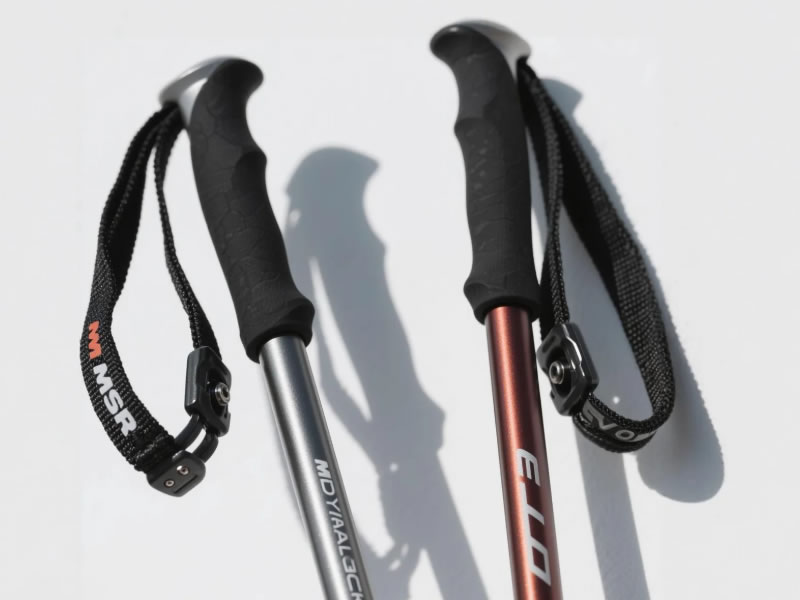
Recommended trekking pole purchase link:https://s.click.aliexpress.com/e/_c4M7OWaN
The Philosophy Behind Each Lock
MSR DynaLock: This system represents modern convenience and ergonomic design. It features an external lever lock with a unique angled shape that is contoured to fit the natural position of your hand during adjustment. The DynaLock is designed for gloved hands, cold weather, and quick on-trail adjustments. It prioritizes ease of use and tool-free operation.
MSR Evo: The Evo system takes a minimalist approach. It is an internal expansion lock—essentially a twist-lock mechanism that uses friction to hold the sections in place. There are no external levers, no protruding parts, just clean, smooth shafts. The Evo is designed for simplicity, weight savings, and reliability in environments where external mechanisms might snag or freeze.
DynaLock: The Ergonomic Performer
How It Works:
The DynaLock uses a cam-action lever mounted externally on the pole shaft. When you flip the lever open, it releases tension on an internal expander, allowing the lower section to slide freely. Close the lever, and it compresses the expander, locking the sections firmly in place. The lever itself is shaped with an ergonomic curve that fits your thumb and fingers.
Advantages:
- Glove-Friendly: The angled lever is easy to operate even with thick winter gloves or mittens. This makes DynaLock the clear choice for cold-weather adventurers.
- Adjustability: You can fine-tune the tension using a simple Phillips head screwdriver. If the lock loosens over time, a quick turn restores full holding power.
- Speed: Flipping a lever is faster than twisting. On rolling terrain where you constantly change pole length, the DynaLock saves time and frustration.
- Visual Confirmation: You can see at a glance whether the lock is fully engaged—no guessing.
Disadvantages:
- Weight: The external lever adds a few grams compared to the streamlined Evo.
- Snag Potential: External levers can catch on brush, pack straps, or gear when poles are strapped to a pack.
- Complexity: More moving parts means more that can potentially break (though MSR's reputation for durability is strong).
Evo: The Minimalist's Choice
How It Works:
The Evo system relies on an internal expanding wedge. You twist the lower section clockwise, which forces a conical expander against the inner wall of the upper section, creating friction. To release, you twist counter-clockwise. That's it—no levers, no cams, no external hardware.
Advantages:
- Weight Savings: Without external levers, the Evo poles are lighter. Every gram counts for ultralight enthusiasts.
- Streamlined Profile: Smooth shafts with no protrusions mean nothing to snag on brush or gear. They slide easily into pack pockets and through dense vegetation.
- Simplicity: Fewer parts mean fewer failure points. There is nothing to break or lose.
- Water/Dirt Resistance: Internal mechanisms are less exposed to the elements, reducing the risk of jammed locks in muddy or sandy conditions.
Disadvantages:
- Glove Difficulty: Twisting a pole shaft with thick gloves is awkward. The grip can slip, and fine adjustment is harder.
- Tension Creep: Over time, internal expanders can wear or compress, requiring you to tighten the sections more aggressively. Some users find Evo locks need periodic re-tightening.
- No Visual Indicator: You rely on feel to know if the lock is secure. A partially twisted lock can slip under load.
Durability and Maintenance
DynaLock Maintenance:
The external lever is field-serviceable. If the cam wears out or the tension needs adjustment, you can access the mechanism with a screwdriver. The lever itself is robust but can be damaged if you fall directly onto it or overtighten aggressively.
Evo Maintenance:
Internal expanders eventually wear and may need replacement, but this is a rare occurrence. The system is largely maintenance-free until it isn't—and then it requires disassembly to replace the internal components, which is more involved than adjusting a lever.
Which Lock System is Better?
The answer depends entirely on your terrain and preferences.
Choose MSR DynaLock if:
- You hike in cold climates where gloves are essential.
- You frequently adjust pole length for varied terrain.
- You prefer the convenience of lever-action locks.
- You want tool-adjustable tension control.
Choose MSR Evo if:
- You prioritize minimum weight and streamlined design.
- You hike in brushy areas where snagging is a concern.
- You set your pole length once and rarely change it.
- You appreciate mechanical simplicity.
The Verdict
There is no universally "better" lock—only the right tool for your adventure. The DynaLock excels in alpine environments where gloves and frequent adjustments are the norm. The Evo shines on long-distance trails where every gram matters and simplicity reigns.
Ask yourself: Will you be adjusting your poles often, or setting them and forgetting them? The answer leads you to the right MSR lock.




