




Pacerpole vs Nordic walking poles – what's the difference?
At first glance, Pacerpoles and Nordic walking poles look remarkably similar—both are lightweight, both feature straps, and both involve planting poles while walking. However, these two categories of poles are designed for fundamentally different activities. Confusing them could lead to discomfort, inefficient technique, or even injury. Understanding the difference between Pacerpoles and Nordic walking poles ensures you choose the right tool for your chosen pursuit, whether that is long-distance trekking or fitness walking on paved paths.
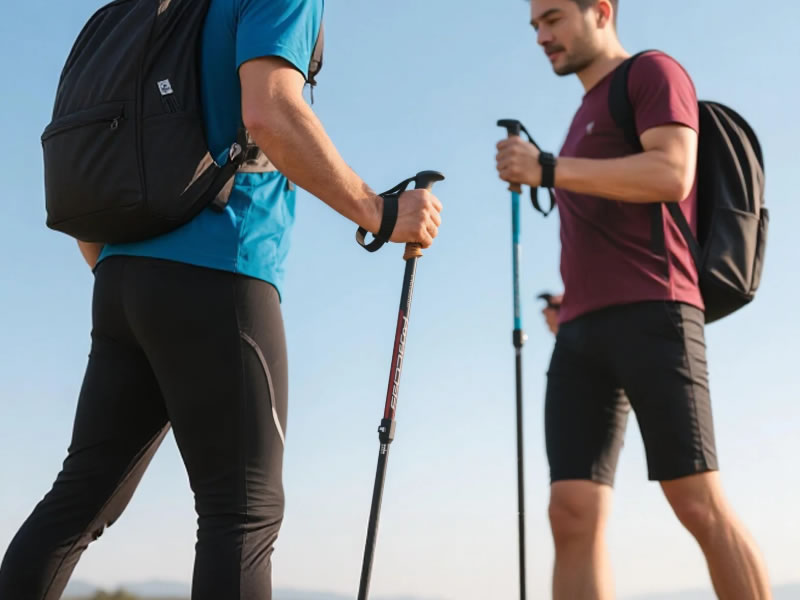
Recommended trekking pole purchase link:https://s.click.aliexpress.com/e/_c4M7OWaN
The Origins and Intentions
Pacerpoles: Invented by a long-distance walker in the United Kingdom, Pacerpoles were designed specifically for extended trekking and backpacking. The creator noticed that traditional straight-shaft poles forced his wrists into awkward angles during long days, leading to fatigue. Pacerpoles feature a unique angled grip that aligns the pole with the natural forward motion of the arm, promoting a more efficient and comfortable walking posture over many miles.
Nordic walking poles: These originated as a summer training tool for cross-country skiers. Nordic walking was developed to mimic the upper-body engagement of skiing while walking on pavement or trails. The poles are designed for fitness walking, urban strolling, and high-intensity cardio workouts. They encourage a powerful push-off that engages the core, arms, and shoulders, elevating heart rate and calorie burn.
Grip and Strap Technology: The Defining Difference
The most significant distinction lies in how your hands connect to the poles.
Pacerpole Grips:
Pacerpoles feature a pistol-grip angle (approximately 15 degrees) that points the pole backward as you swing your arm forward. This keeps your wrist in a neutral, relaxed position and allows the pole to plant naturally without conscious effort. The straps are simple, comfortable, and designed to transfer weight from your hand to the pole during load-bearing. They are not intended to assist in a "push-off" motion.
Nordic Walking Pole Grips:
Nordic poles use a specialized "glove" or "trigger" strap system. Your hand goes through the strap and grips a molded handle, but the strap wraps around your wrist like a half-glove. This allows you to release the grip entirely during the forward swing and then catch the pole with the strap as you push backward. This technique—opening the hand and pushing through the strap—is essential for engaging the upper body. You cannot perform proper Nordic walking technique with standard trekking poles.
Technique: Walking vs. Pushing
With Pacerpoles:
You walk naturally. The angled grip encourages a longer, more relaxed stride. You plant the pole, transfer weight through your arm, and push off gently. The emphasis is on reducing fatigue and improving posture over long distances. It is walking with assistance, not a workout.
With Nordic walking poles:
You actively push off with every stride. The pole plants behind you, and you drive through the strap, engaging your triceps, shoulders, and core. Your opposite arm and leg move in sync, and the motion is exaggerated compared to normal walking. It is a full-body workout that can increase calorie burn by up to 40% compared to walking without poles.
Shaft and Tip Design
Pacerpoles:
Typically feature carbide tips for dirt and trail use. They may include baskets for mud or snow. The shafts are often made from aluminum or carbon fiber, similar to standard trekking poles, but with the distinctive angled grip.
Nordic walking poles:
Almost always include interchangeable rubber feet (pads) for use on pavement and hard surfaces. The carbide tip is removable, and the rubber foot provides traction without damaging concrete. The shafts are often lightweight aluminum or carbon and may feature a slight reverse angle (less common than Pacerpole's pronounced angle).
Who Should Use Which?
Choose Pacerpoles if:
- You are a long-distance hiker or backpacker.
- You suffer from wrist or hand fatigue with traditional poles.
- You walk on trails, dirt paths, and uneven terrain.
- You want to improve posture and reduce joint impact over many miles.
Choose Nordic walking poles if:
- You are fitness walking on pavement, sidewalks, or park paths.
- You want a low-impact, high-intensity cardio workout.
- You enjoy the technique and rhythm of Nordic walking.
- You are cross-training for skiing or other sports.
The Verdict
| Feature | Pacerpoles | Nordic Walking Poles |
|---|---|---|
| Primary Use | Trekking, backpacking | Fitness walking, cardio |
| Grip Angle | Angled (pistol grip) | Usually straight with glove strap |
| Strap Type | Standard strap | Glove/trigger strap |
| Technique | Natural walking | Active push-off |
| Tips | Carbide for trails | Rubber feet for pavement |
Pacerpoles and Nordic walking poles serve different masters. If you are hitting the trails for hours or days, the ergonomic design of Pacerpoles will save your joints and enhance your endurance. If you are power-walking around the neighborhood or park, Nordic walking poles will turn your stroll into a serious workout.
Know your activity, choose your poles, and enjoy the journey—whether it leads to a mountain summit or just around the block.




