




7075 aluminum vs 6061 aluminum for walking poles?
When you are shopping for aluminum trekking poles, you will inevitably encounter two numbers: 7075 and 6061. These are not random digits—they are specific alloy designations that describe the chemical composition and mechanical properties of the aluminum used. Understanding the difference between 7075 aluminum and 6061 aluminum is crucial because it directly impacts the weight, strength, durability, and cost of your walking poles. This deep dive will help you decode those numbers and choose the right material for your adventures.
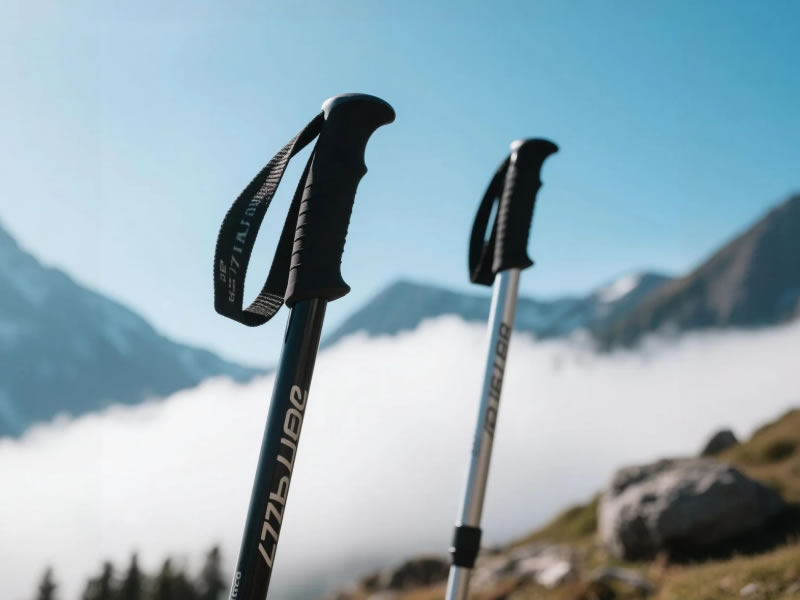
Recommended trekking pole purchase link:https://s.click.aliexpress.com/e/_c4M7OWaN
The Basics: What Do the Numbers Mean?
Both 7075 and 6061 are wrought aluminum alloys, meaning they are mechanically worked (rolled, extruded, forged) into shape. The numbers refer to specific recipes of aluminum mixed with other elements like zinc, magnesium, copper, and silicon. These recipes determine how the material behaves under stress, how much it weighs, and how it resists corrosion.
6061 Aluminum: This is a magnesium-silicon alloy. It is one of the most common and versatile aluminum alloys, used in everything from bicycle frames to truck bodies. It offers a good balance of strength, weldability, and corrosion resistance.
7075 Aluminum: This is a zinc-magnesium-copper alloy. It is often called "aerospace grade" aluminum because it is used in aircraft structures and high-stress components. It prioritizes strength above all else, offering significantly higher tensile strength than 6061.
Strength and Weight: The Core Trade-Off
The most significant difference lies in strength-to-weight ratio.
7075 Aluminum:
- Tensile Strength: Approximately 83,000 psi (pounds per square inch).
- Yield Strength: Around 73,000 psi.
- Density: Similar to 6061 (about 2.81 g/cm³), but its higher strength allows manufacturers to use thinner walls for the same load-bearing capacity. This means a 7075 pole can be lighter than a 6061 pole of equal strength, or stronger at the same weight.
6061 Aluminum:
- Tensile Strength: Approximately 45,000 psi.
- Yield Strength: Around 40,000 psi.
- Density: 2.70 g/cm³ (slightly lower than 7075, but the strength difference dwarfs this).
Winner for strength: 7075 by a wide margin.
Durability and Failure Mode
Strength is not the only consideration. How a material fails matters just as much.
6061 Aluminum:
6061 is more ductile than 7075. This means it will bend and deform under extreme stress rather than snapping suddenly. If you overload a 6061 pole, it will gradually bend, giving you warning signs (wobbling, visible curve) before catastrophic failure. For many hikers, this is a safety feature—you can often straighten a bent 6061 pole enough to finish a hike.
7075 Aluminum:
7075 is much stronger but also more brittle. It has lower fracture toughness, meaning it can crack or snap suddenly if subjected to sharp impacts or overloading beyond its limits. There is less warning before failure. However, in normal use, the higher strength means it is less likely to reach that failure point in the first place.
Winner for toughness: 6061 bends; 7075 is stronger but can snap.
Corrosion Resistance
6061 Aluminum: Excellent corrosion resistance. It forms a protective oxide layer and performs well in humid or wet environments.
7075 Aluminum: Less corrosion-resistant due to its copper content. It is more susceptible to galvanic corrosion if not properly coated or treated. Quality 7075 poles will have good anodizing or paint to protect against this.
Winner for corrosion: 6061.
Cost and Availability
6061 Aluminum: Cheaper and more widely available. Easier to extrude into complex shapes, which keeps manufacturing costs down.
7075 Aluminum: More expensive. The alloying elements (especially zinc and copper) cost more, and the material is harder to work with, requiring more precise heat treatment and handling.
Winner for cost: 6061.
Which Should You Choose for Walking Poles?
| Factor | 6061 Aluminum | 7075 Aluminum |
|---|---|---|
| Strength | Moderate | High (approx. 80% stronger) |
| Weight | Standard | Can be lighter for same strength |
| Failure Mode | Bends gradually | Can snap suddenly |
| Corrosion Resistance | Excellent | Good (with coating) |
| Cost | Affordable | Premium |
| Best For | Budget, family, rugged use | Ultralight, high-performance |
Choose 6061 Aluminum if:
- You are on a budget.
- You hike in wet or coastal environments.
- You prefer a pole that bends rather than snaps.
- You are buying for occasional use or for family members.
Choose 7075 Aluminum if:
- You prioritize minimum weight and maximum strength.
- You are a frequent hiker or backpacker carrying heavy loads.
- You understand and accept the different failure characteristics.
- You want the best performance your money can buy.
The Verdict
The choice between 7075 and 6061 aluminum is not about "better" vs. "worse"—it is about matching material properties to your needs.
7075 aluminum offers superior strength-to-weight, allowing lighter poles that can handle heavy loads. It is the choice of serious backpackers who count grams and demand performance. However, it commands a premium price and requires respect for its failure mode.
6061 aluminum delivers reliable, predictable performance at an accessible price. It is forgiving, corrosion-resistant, and more than strong enough for most hikers. It represents the best value for casual to moderate use.
When you see those numbers on a pole, you now know the story behind them. Choose wisely, and enjoy the trail.




