




Cork grips vs EVA foam – which lasts longer?
When selecting trekking poles, the grip material might seem like a minor detail, but it profoundly impacts comfort, control, and long-term satisfaction. Two materials dominate the market: natural cork and synthetic EVA foam. Both have passionate advocates, and both claim advantages in durability. But when we ask "which lasts longer?" the answer is more nuanced than a simple material comparison. It depends on how you use your poles, where you hike, and how you define "lasting."
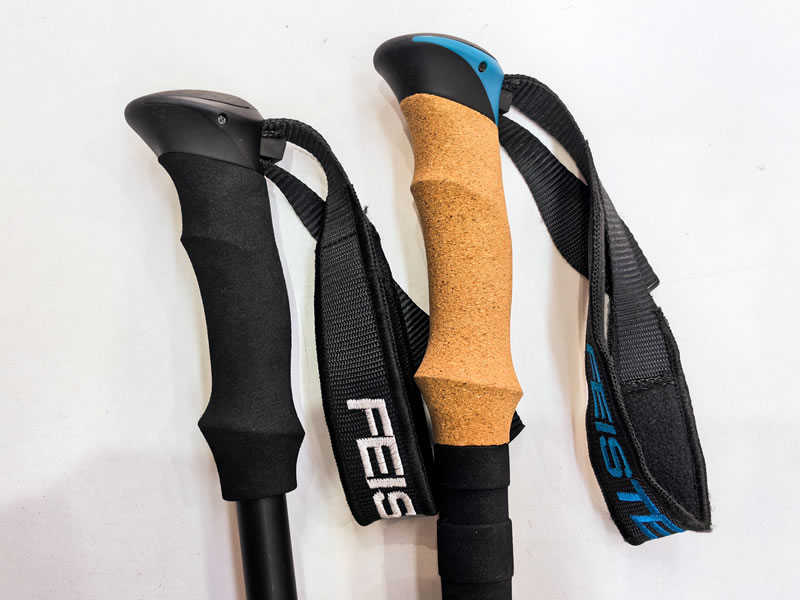
Recommended trekking pole purchase link:https://s.click.aliexpress.com/e/_c4M7OWaN
The Materials: Origins and Properties
Cork Grips:
Cork is harvested from the bark of cork oak trees, primarily in Portugal and Spain. It is a renewable, sustainable material with unique cellular structure—millions of tiny air-filled chambers per cubic centimeter. This structure gives cork its characteristic springiness, compressibility, and insulating properties.
EVA Foam:
EVA (ethylene-vinyl acetate) is a synthetic copolymer. It is the same material used in many shoe midsoles, yoga mats, and children's play mats. It is lightweight, waterproof, and can be molded into ergonomic shapes at low cost.
Durability Factors: What Causes Grip Failure?
Grips "fail" in several ways:
- Compression and packing out (losing original shape)
- Surface wear and smoothness (becoming slick)
- Environmental degradation (UV, moisture, temperature)
- Structural breakdown (cracking, crumbling, tearing)
Different materials respond differently to these stressors.
Cork Grip Longevity
Compression and Molding:
Cork has a remarkable property: it compresses under pressure but slowly rebounds. Over time, cork grips actually mold to your hand, creating a personalized fit. This is not failure—it is adaptation. Many hikers consider this a feature, not a bug. The grip becomes more comfortable the more you use it.
Surface Wear:
Cork naturally provides excellent grip, even when wet. As the surface wears, it may become slightly smoother, but it rarely becomes dangerously slick. The open cell structure maintains traction.
Environmental Resistance:
- Moisture: Cork is naturally water-resistant due to suberin (a waxy substance in the cell walls). However, prolonged soaking can lead to water absorption and swelling. In consistently wet climates, cork may eventually degrade faster than synthetic alternatives.
- Dryness: In arid environments, cork can dry out and become brittle. Extremely dry cork may crack or crumble if abused.
- UV: Cork is relatively UV-resistant. Sunlight causes gradual fading but minimal structural damage.
Typical Lifespan:
With moderate use (20-30 trail days per year), quality cork grips can last 3-5 years before showing significant wear. Heavy users may replace grips after 2-3 years, but cork is often replaceable on higher-end poles.
EVA Foam Longevity
Compression:
EVA foam compresses permanently over time. Unlike cork, it does not rebound. After many miles, you may notice "divots" forming where your fingers rest. This is actual material fatigue—the foam has packed out and will not recover.
Surface Wear:
EVA foam can become smooth and slick with use, especially if it gets wet. Some formulations include textured patterns to maintain grip, but these wear away over time.
Environmental Resistance:
- Moisture: EVA is completely waterproof. It does not absorb water, swell, or degrade in wet conditions. For hikers in rainforests, coastal areas, or consistently damp environments, EVA has a clear advantage.
- UV: EVA is susceptible to UV degradation. Prolonged sun exposure can cause the foam to become brittle, fade, and eventually crack. Poles stored in direct sunlight will age faster.
- Temperature: EVA remains flexible in a wide temperature range, though extreme cold can make it stiffer.
Typical Lifespan:
EVA foam grips often outlast cork in purely structural terms—they rarely crumble or fall apart. However, they may become uncomfortable due to permanent compression after 2-4 years of regular use.
The Durability Comparison
| Factor | Cork | EVA Foam |
|---|---|---|
| Compression Resistance | Rebounds, molds to hand | Permanently compresses |
| Wet Condition Performance | Good (natural grip) | Can become slick |
| Dry/Arid Performance | Can dry out, crack | Excellent |
| UV Resistance | Good | Fair (degrades over time) |
| Moisture Absorption | Minimal (but possible) | None |
| Replaceability | Often replaceable | Usually molded, non-replaceable |
| Typical Lifespan | 3-5 years (moderate use) | 4-6 years (structure intact) |
The Comfort Factor
Durability is not just about physical integrity—it is also about maintaining comfort. A grip that is structurally intact but uncomfortable has effectively "failed" for the user.
Cork becomes more comfortable with use as it conforms to your hand. Many hikers report that 5-year-old cork grips feel better than new ones.
EVA starts comfortable but may become less so as compression divots form. The foam does not adapt—it degrades.
Which Should You Choose?
Choose Cork if:
- You hike in moderate climates (not consistently wet or extremely arid).
- You value the personalized fit that develops over time.
- You prefer natural, sustainable materials.
- You are willing to maintain grips (occasional cleaning, conditioning in dry climates).
Choose EVA Foam if:
- You hike in consistently wet or humid environments.
- You store poles in sunny locations (or use UV-protective covers).
- You want a set-it-and-forget-it material with no maintenance.
- You prioritize waterproof performance over natural feel.
The Verdict
Which lasts longer? EVA foam technically wins on pure structural longevity—it will not crack, crumble, or biologically degrade. A foam grip from a quality manufacturer can look and feel (structurally) the same for many years, though comfort may decline due to compression.
However, cork offers a different kind of longevity—it ages gracefully, adapting to your hand rather than deteriorating. Many hikers consider a well-worn cork grip the epitome of comfort and are happy to replace them every few years for that experience.
The ultimate answer: In wet climates, EVA lasts longer. In moderate climates, cork offers longer-lasting comfort. Choose based on where you hike, not just which material "wins" on paper.




