




Twist lock vs flick lock – which is more durable?
When you invest in a pair of trekking poles, the locking mechanism is the heart of the system. It is the component that holds your pole at the correct length, supports your weight on steep descents, and endures countless adjustments over years of use. Two designs dominate the market: twist lock (internal expansion) and flick lock (external lever). While both can perform admirably when new, their long-term durability differs dramatically. Understanding these differences will help you choose poles that remain reliable hike after hike, year after year.
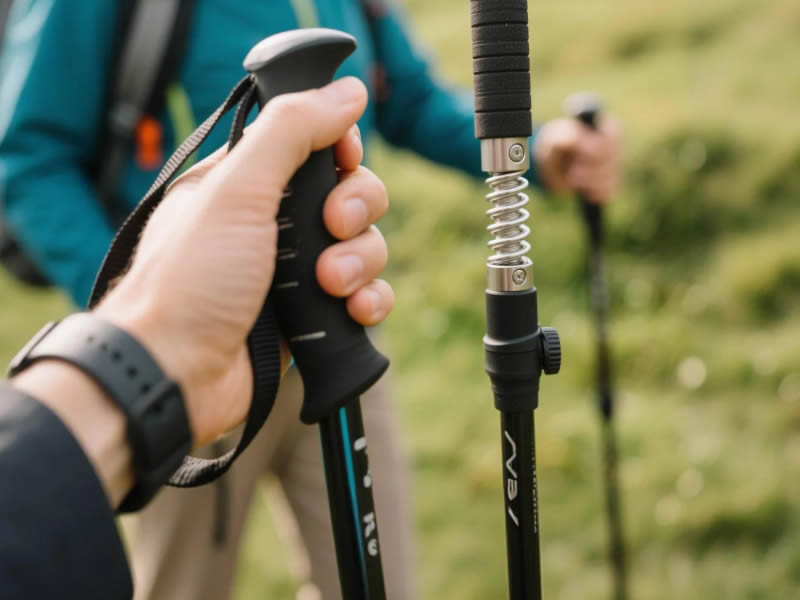
Recommended trekking pole purchase link:https://s.click.aliexpress.com/e/_c4M7OWaN
How Each System Works
Twist Lock (Internal Expansion):
The twist lock mechanism lives entirely inside the pole shaft. When you rotate the lower section clockwise, an internal expander—typically a threaded wedge or cam—presses outward against the inner wall of the upper section. This friction locks the sections in place. Twist the opposite direction to release. Because no parts protrude from the pole, the design is sleek, lightweight, and snag-free.
Flick Lock (External Lever):
The flick lock—popularized by brands like Black Diamond with their FlickLock system—uses an external lever mounted on the outside of the pole. When you close the lever, it activates a cam that tightens a clamp around the inner shaft. Opening the lever releases the clamp, allowing instant length adjustment. The mechanism is fully visible and accessible.
Long-Term Durability Factors
Wear and Tear:
Twist Locks: These mechanisms rely on precise friction between the expander and the inner wall. Over hundreds or thousands of adjustments, two things happen: the expander itself wears down, and the inner wall becomes polished smooth. As friction decreases, you must twist tighter and tighter to maintain grip. Eventually, you reach the end of the thread, and the pole simply will not stay locked. At this point, repair is difficult or impossible—you typically need to replace the lower section or the entire pole.
Flick Locks: External levers use a cam and bolt system that experiences less internal friction. The clamping surface is the inner shaft, but the mechanism does not rely on that surface wearing against an expander. If a flick lock loosens over time (rare, but possible), you can tighten it with a simple screwdriver or Allen wrench. If a lever breaks, replacement parts are often available from the manufacturer. The system is designed for serviceability.
Contamination and Maintenance:
Twist Locks: Dirt, sand, and grit are the enemies of twist locks. Because the mechanism resides inside the shaft, contaminants can become trapped between the expander and the inner wall. Once grit enters, the lock may become gritty, difficult to twist, or unable to secure. Cleaning requires partial disassembly, which can be fiddly and time-consuming.
Flick Locks: External levers are exposed, which makes them easy to clean. A quick rinse under water or a wipe with a cloth removes mud and debris. The clamping surface is visible and accessible, so you can easily inspect and maintain it. No hidden crevices trap contaminants.
Cold Weather Performance:
Twist Locks: Cold temperatures can cause materials to contract, reducing the friction that twist locks depend on. Ice or moisture inside the shaft can also interfere with operation. Many hikers report twist locks slipping in winter conditions, requiring constant re-tightening.
Flick Locks: Lever mechanisms perform reliably in cold weather. There is no internal friction surface affected by temperature contraction. While small levers can be fiddly with thick gloves, the mechanism itself remains consistent and dependable.
Failure Modes and Repairability
| Failure Type | Twist Lock | Flick Lock |
|---|---|---|
| Gradual wear | Expander wears; becomes impossible to tighten; usually replace pole | Cam or bolt loosens; can be re-tightened with simple tools |
| Contamination | Grit trapped inside; difficult to clean effectively | Easy to rinse; mechanism stays clean |
| Part breakage | Cannot repair; replace section or entire pole | Lever or bolt replaceable; parts often available |
| Field repair | Extremely difficult; usually not possible | Possible with multi-tool or even by hand |
| Warning signs | None—may suddenly slip without notice | Gradual loosening provides warning |
Weight and Simplicity
Twist Locks: Twist locks are lighter because they add no external hardware. For ultralight hikers who prioritize every gram and accept shorter pole lifespans, this is a meaningful advantage.
Flick Locks: Flick locks add weight—typically 0.5 to 1 ounce per pole. They also create a slightly bulkier profile that can snag on brush or pack straps. However, many hikers consider this a small price for reliability and repairability.
The Durability Verdict
Flick locks are objectively more durable over the long term. Here is why:
- Repairability: A flick lock that loosens can be tightened. A flick lock lever that breaks can be replaced. A worn twist lock is terminal.
- Contamination resistance: Flick locks handle mud, sand, and grit far better because the mechanism is external and cleanable.
- Predictable failure: Flick locks give warning (gradual loosening) before failure. Twist locks can lose grip suddenly without notice.
- Lifespan: A quality flick lock can last the life of the poles—a decade or more. Twist locks have a finite lifespan determined by wear on the internal expander.
Quality Matters
Not all twist locks are equal. High-end systems from brands like Leki or Komperdell use precision engineering and durable materials that extend lifespan significantly. Budget twist locks are where durability problems are most acute.
Similarly, cheap flick locks may use plastic levers that crack or poorly designed cams that slip. Quality flick locks from reputable brands use metal cams, reinforced levers, and robust clamping mechanisms.
Which Should You Choose?
Choose Twist Locks if:
- You prioritize minimal weight above all else.
- You hike primarily on clean, dry trails where contamination is minimal.
- You are willing to replace poles every few years.
- You prefer a sleek, snag-free profile.
Choose Flick Locks if:
- You demand maximum long-term durability.
- You hike in varied conditions (mud, sand, snow, rain).
- You want a mechanism you can repair in the field.
- You prefer to invest once and use poles for years or decades.
Final Thought
For most hikers—especially those who venture into varied terrain or want gear that lasts—flick locks are the more durable, reliable choice. The small weight penalty is a worthwhile trade for a mechanism you can trust and, if needed, fix, season after season.




