




External lock vs internal lock walking poles?
When shopping for trekking poles, you will encounter two fundamentally different locking systems: external locks (often called flick locks or lever locks) and internal locks (commonly known as twist locks). Each design reflects a distinct engineering philosophy with significant implications for durability, repairability, weight, and on-trail performance. Understanding these differences is essential for choosing poles that match your hiking style and long-term expectations.
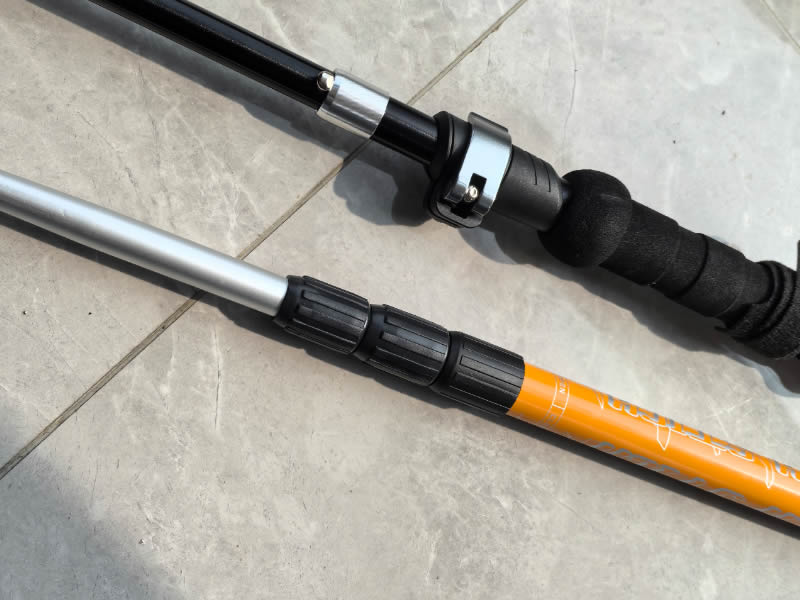
Recommended trekking pole purchase link:https://s.click.aliexpress.com/e/_c4M7OWaN
How Each System Works
Internal Locks (Twist Locks):
Internal locking mechanisms reside completely inside the pole shaft. When you rotate the lower section clockwise, an internal expander—typically a threaded wedge or cam—presses outward against the inner wall of the upper section. This friction holds the sections securely. Twisting counter-clockwise releases the tension. Because no parts protrude, the pole maintains a clean, sleek profile with no snag points.
External Locks (Flick Locks):
External locks use a lever mechanism mounted on the outside of the pole. Closing the lever activates a cam that tightens a clamp around the inner shaft. Opening the lever releases the clamp, allowing instant length adjustment. The mechanism is fully visible, accessible, and typically field-serviceable with basic tools.
Durability and Longevity
Internal Locks: These mechanisms rely on precise friction between moving internal parts. Over hundreds of adjustments, the expander wears down and the inner wall becomes polished smooth. Friction decreases, requiring tighter twisting. Eventually, you reach the end of the thread, and the pole will no longer stay locked. Contamination is a major vulnerability—dirt and grit trapped inside accelerate wear and are difficult to remove. When internal locks fail, repair is rarely possible; you typically replace the entire pole.
External Locks: External mechanisms experience less internal friction and are not prone to the same gradual wear. If an external lock loosens over time, you can tighten it with a simple screwdriver or Allen wrench. If a lever breaks, replacement parts are often available from manufacturers. The design is inherently serviceable and can last the life of the poles—often a decade or more.
Contamination and Maintenance
Internal Locks: The sealed nature of internal locks becomes a liability when contaminants enter. Muddy water, sand, or grit can infiltrate the mechanism, causing gritty operation, seizing, or complete failure. Cleaning requires partial disassembly, which is fiddly and not always successful in the field.
External Locks: External mechanisms are exposed but easily cleaned. A quick rinse under water or wipe with a cloth removes mud and debris. The clamping surfaces are visible, allowing easy inspection. No hidden crevices trap contaminants long-term.
Weight and Profile
Internal Locks: These are the lighter option. With no external hardware, internal locks add minimal weight—often saving 0.5 to 1 ounce per pole compared to external systems. The smooth shaft also slides easily through pack pockets and dense brush without snagging.
External Locks: External mechanisms add weight and create a slightly bulkier profile. The lever can catch on pack straps, brush, or branches. However, many hikers consider this small weight penalty acceptable for the reliability and repairability benefits.
Cold Weather Performance
Internal Locks: Cold temperatures cause materials to contract, reducing the friction internal locks depend upon. Ice or moisture inside the shaft can interfere with operation. Many users report twist locks slipping in winter conditions, requiring constant re-tightening.
External Locks: Lever mechanisms perform reliably in cold weather. There is no internal friction surface affected by temperature contraction. While small levers can be fiddly with thick gloves, the mechanism itself remains consistent.
Which Should You Choose?
| Factor | Internal Lock (Twist) | External Lock (Flick) |
|---|---|---|
| Weight | Lighter | Heavier by 0.5-1 oz per pole |
| Profile | Sleek, snag-free | Lever can snag |
| Repairability | Poor; usually replace | Excellent; field-serviceable |
| Contamination handling | Poor | Good |
| Cold weather | Slippage common | Reliable |
| Long-term durability | Limited lifespan | Can last decades |
Choose Internal Locks if:
- You prioritize minimal weight above all else.
- You hike primarily on clean, dry trails.
- You are willing to replace poles every few years.
- You prefer a sleek, snag-free profile.
Choose External Locks if:
- You demand maximum long-term durability.
- You hike in varied conditions (mud, sand, snow).
- You want a mechanism you can repair in the field.
- You prefer to invest once and use poles for years.
The Verdict
For most hikers—especially those who venture into diverse terrain or want gear that lasts—external locks are the superior choice. The small weight penalty is a worthwhile trade for a mechanism you can trust, maintain, and repair across countless adventures. Internal locks remain a viable option for ultralight enthusiasts and casual hikers on clean, predictable trails, but their limited lifespan and vulnerability to contamination make them less suitable for serious, long-term use.




