




walking poles Push-button locking vs screw lock – reliability?
When it comes to trekking pole locking mechanisms, push-button and screw locks represent two approaches that prioritize simplicity over the complexity of external levers. Both are found primarily on folding or lightweight poles, and both have passionate defenders. But when reliability is your primary concern—the confidence that your pole will hold firm mile after mile—how do these two systems compare? This deep dive examines the real-world durability, failure modes, and repairability of push-button and screw locks.
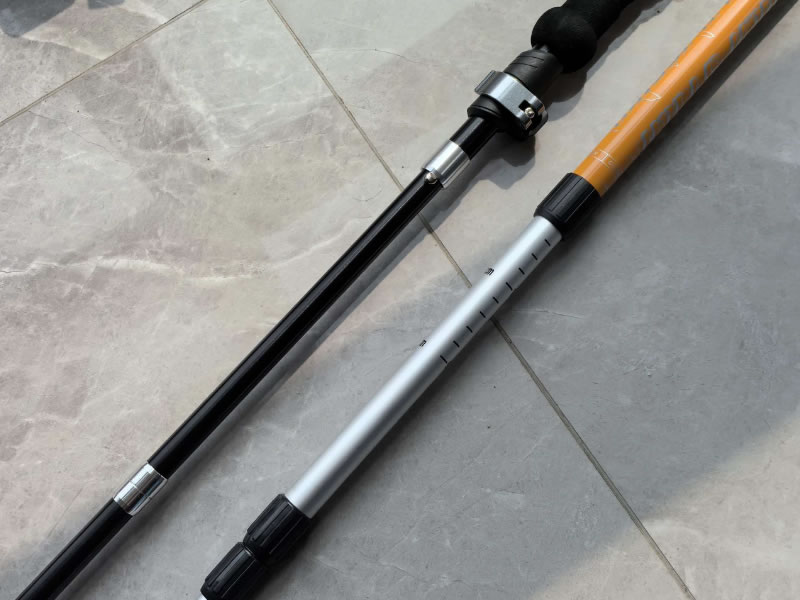
Recommended trekking pole purchase link: https://s.click.aliexpress.com/e/_c4M7OWaN
How Each System Works
Push-Button Locking:
Push-button systems are most commonly found on folding trekking poles. Each section contains a small spring-loaded button that snaps into a corresponding hole in the outer tube. To collapse the pole, you press the button inward and slide the sections together. To extend, you pull the sections apart until the button clicks into place. This design is identical to tent pole or folding tent frame mechanisms.
Screw Lock (Twist Lock):
Screw locks use an internal expanding mechanism. When you rotate the lower section clockwise, an internal wedge or cam presses against the inner wall of the upper section, creating friction that locks the sections together. Rotating counter-clockwise releases the tension. The mechanism is entirely internal with no external moving parts.
Reliability Factors
Mechanical Complexity and Failure Points:
Push-Button Locks: These systems have few moving parts—typically a spring, a metal or plastic button, and a retaining mechanism. The simplicity is appealing, but the components are small and subject to stress. Common failure points include:
- Spring fatigue or breakage over time
- Button jamming due to dirt or grit
- Plastic button cracking (in cheaper poles)
- The hole in the outer tube wearing or deforming
When a push-button fails, the pole may not lock at all (button stuck in) or may release unexpectedly under load (button not fully engaging).
Screw Locks: These systems have even fewer discrete parts—essentially a threaded expander and sometimes a washer. The primary failure mode is gradual wear. Over hundreds of adjustments, the expander wears down and the inner wall becomes polished smooth, reducing friction. Grit and contamination accelerate this process. When screw locks fail, they slip progressively until they can no longer hold.
Contamination Vulnerability:
Push-Button: Dirt, sand, and grit can enter the button mechanism, causing it to stick. A stuck button may not fully engage, leading to sudden collapse. Cleaning requires accessing the internal mechanism, which is difficult in the field. Water infiltration can cause rust on metal springs over time.
Screw Lock: Contamination is a major vulnerability. Grit trapped between the expander and inner wall accelerates wear and can make the mechanism gritty or impossible to twist. Because the mechanism is internal, cleaning is challenging without partial disassembly.
Predictability of Failure:
Push-Button: Failure can be sudden and without warning. A button that appears engaged may release under a heavy load. However, the positive click provides some feedback—you know when it is fully engaged. The risk is that engagement may appear correct but not be fully secure due to wear or contamination.
Screw Lock: Failure is typically gradual. You will notice the pole slipping or requiring tighter twisting over time. This provides warning, though the final point where no amount of tightening works can still be abrupt.
Repairability
| Factor | Push-Button Lock | Screw Lock |
|---|---|---|
| Field repair | Difficult; requires disassembly | Usually not possible |
| Parts availability | Limited; rarely sold separately | Limited; sometimes available |
| Common fix | Replace entire section | Replace expander or whole section |
| Tool requirement | May require small tools | Usually none |
Both systems have poor repairability compared to external lever locks. When a push-button or screw lock fails in the field, your options are typically limited to finishing the hike with a compromised pole or using it at a fixed length.
Weight and Profile Advantages
Both systems earn their place by offering benefits external levers cannot match:
Push-Button:
- Extremely lightweight—no external hardware
- Clean, snag-free profile
- Ideal for folding poles that pack tiny
Screw Lock:
- Sleek, no protruding parts
- Generally lighter than external levers
- Simple, few moving parts
For ultralight hikers and travelers who prioritize weight and packability over maximum durability, these trade-offs can be worthwhile.
Which Is More Reliable?
| Reliability Factor | Push-Button Lock | Screw Lock |
|---|---|---|
| Mechanical complexity | Simple | Very simple |
| Contamination vulnerability | Moderate (button jamming) | High (internal grit) |
| Gradual wear | Spring fatigue | Surface polishing |
| Sudden failure risk | Higher (button release) | Lower (gradual slip) |
| Field repairability | Poor | Poor |
| Quality variation | Wide (plastic vs metal buttons) | Wide (precision vs cheap) |
Screw locks are generally more reliable in terms of predictable, gradual failure and fewer catastrophic surprises. A quality screw lock from a reputable brand can last years with proper care. However, both systems trail external lever locks significantly in overall reliability and repairability.
Quality Matters Immensely
A high-end screw lock from Leki or Komperdell—using precision-machined expanders and durable materials—can be quite reliable. Cheap push-button locks with plastic buttons are prone to early failure. Conversely, well-made push-button systems (like those from Gossamer Gear or high-end folding poles) can perform admirably for years.
The Verdict
| Push-Button Lock | Screw Lock | |
|---|---|---|
| Best for | Folding, ultralight poles | Simple telescoping poles |
| Failure mode | Sudden possible | Gradual wear |
| Contamination risk | Button jamming | Internal grit |
| Overall reliability | Fair | Good (with quality) |
| Repairability | Poor | Poor |
For maximum reliability, external lever locks remain the gold standard. But if you must choose between push-button and screw locks:
- Choose push-button if you prioritize folding design and packability, and are willing to inspect the mechanism regularly.
- Choose screw lock if you prefer a simpler mechanism with more predictable, gradual failure—and you hike in relatively clean, dry conditions.
Neither system offers the repairability or long-term durability of external levers. If reliability is your absolute priority, look beyond both to flick locks.




