




Trekking Pole Heated grips for winter walking – available?
Winter hiking presents a unique challenge: keeping your hands warm while maintaining dexterity and control over your trekking poles. For those who suffer from Raynaud's syndrome, poor circulation, or simply hate cold fingers, the idea of heated grips is deeply appealing. But do such products actually exist? This deep dive explores the reality of heated trekking pole grips, their availability, performance, and whether they are a worthwhile investment for winter walkers.
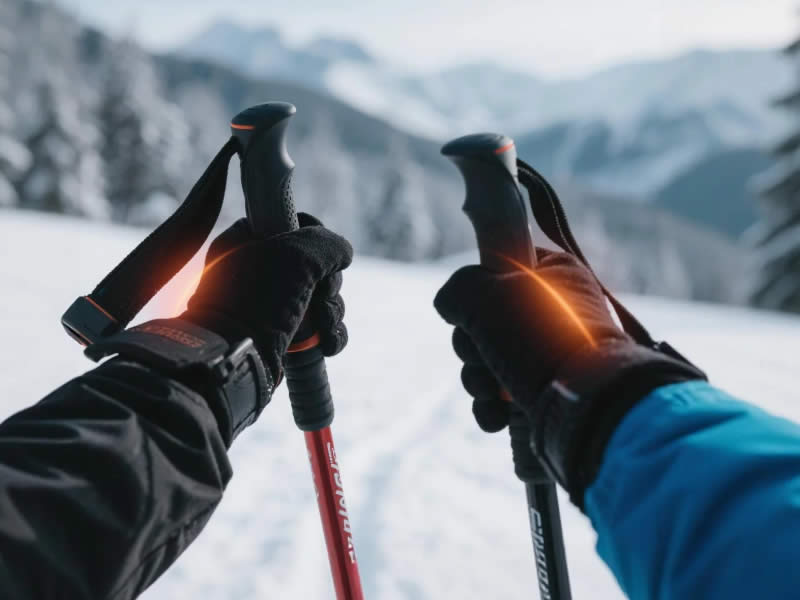
Recommended trekking pole purchase link: https://s.click.aliexpress.com/e/_c4M7OWaN
The Niche Existence of Heated Grips
Yes, heated trekking pole grips exist—but they are a niche product with limited availability.
The most notable example is Leki's heated grip system, which has been offered on select models over the years. These poles feature integrated heating elements within the grips, powered by rechargeable battery packs that typically attach to the pole shaft or your pack. Other brands have experimented with aftermarket heated grip wraps or conversion kits, but these remain uncommon.
Current availability: As of recent seasons, Leki continues to offer heated models in their lineup, though availability varies by region and season. They are generally considered specialty items rather than core product lines.
How Heated Grip Systems Work
Components:
- Heating elements: Thin, flexible heating wires embedded in the grip material (usually foam or rubber)
- Battery pack: Rechargeable lithium-ion battery, typically 2,000–5,000 mAh, mounted on the pole or carried in a pack with a cable to the grip
- Control module: Often a small button on the grip or battery pack with multiple heat settings (low, medium, high)
- Connectors: Water-resistant plugs that link the battery to the heating element
Operation:
The battery powers the heating elements, which warm the grip surface to temperatures typically ranging from 40°C to 60°C (104°F to 140°F), depending on the setting. Heat is concentrated in the palm and finger contact areas.
Performance Realities
Battery Life:
This is the primary limitation. Typical battery life ranges from:
- High setting: 2–3 hours
- Medium setting: 4–5 hours
- Low setting: 6–8 hours
Cold temperatures significantly reduce lithium-ion battery performance—expect 20-30% less runtime in freezing conditions. For a full winter day, you may need to carry spare batteries or use the poles sparingly.
Weight Penalty:
Heated poles are substantially heavier than standard models. The battery pack alone adds 150–250 grams (5–9 ounces) per pair, and the heating elements add additional weight. A standard Leki pole weighs around 200–250 grams per pole; a heated version can weigh 300–350 grams per pole.
Warmth Distribution:
Heated grips warm your palms and the inside of your fingers, but they do not heat the back of your hands or your fingertips. You still need quality insulated gloves; the heated grips supplement rather than replace hand insulation.
Reliability Considerations:
Heated grips introduce complexity—batteries that can fail, connectors that can corrode, heating elements that can break. In wet winter conditions, moisture ingress is a genuine concern. These systems are not as bombproof as mechanical poles.
Alternatives to Heated Grips
For most winter hikers, alternative approaches offer better value and reliability:
Insulated Grips:
Cork and high-density foam grips provide natural insulation. They remain warmer to the touch than rubber or aluminum and do not conduct cold from the shaft as readily.
Proper Glove Systems:
A quality layering system—thin liner gloves, insulated mid-layer, and waterproof shell—keeps hands warm and dry more effectively than heated grips alone. Mittens provide greater warmth than gloves for extreme cold.
Chemical Hand Warmers:
Disposable or reusable hand warmers placed in glove liners or pockets offer reliable warmth without the weight and complexity of battery systems.
Pogies (Bar Mitts):
For extreme cold, neoprene pogies that attach to the pole grip allow you to keep hands inside a windproof, insulated chamber while maintaining pole control. These are common among winter cyclists and increasingly used by winter hikers.
Who Are Heated Grips For?
Heated grips make sense for a specific user profile:
- Hikers with Raynaud's syndrome or circulation issues where standard insulation is insufficient
- Those who hike in extreme cold (below -20°C / -4°F) for extended periods
- Individuals who dislike bulky gloves and prefer lighter handwear supplemented by grip heat
For the vast majority of winter walkers, heated grips are overkill. The combination of quality insulated grips, proper glove layering, and occasional hand warmers provides reliable warmth with less weight, complexity, and cost.
Cost Consideration
Heated trekking poles typically retail for $250–$400 per pair—roughly double to triple the price of premium non-heated poles. Replacement batteries cost $50–$100. This is a significant investment for a seasonal use product.
The Verdict
Heated grips for trekking poles are available, but they remain a niche solution for specific needs. They work as intended, providing targeted warmth to the palms and fingers, but come with substantial trade-offs: weight, battery dependency, complexity, and cost.
For most winter hikers, investing in high-quality insulated grips (cork or foam) and a proper glove system will deliver greater overall warmth and reliability at a fraction of the cost. Heated grips are best reserved for those with medical needs or those facing extreme winter conditions where every advantage matters.
Warm hands come from smart layering, not just technology. Choose the solution that matches your winter reality.




