




Best walking poles for group hiking events?
Group hiking events bring together people of varying fitness levels, heights, and experience. Whether you’re leading a community outdoor club, organizing a corporate wellness hike, or simply gathering friends for a weekend adventure, choosing the right walking poles for group use requires thoughtful consideration. Unlike personal poles tailored to one individual, group‑friendly poles must accommodate multiple users, withstand shared wear, and keep the group moving efficiently. Here’s what to look for when selecting poles for group hiking events.
Recommended trekking pole purchase link: https://s.click.aliexpress.com/e/_c4M7OWaN
The Unique Demands of Group Hiking
In a group setting, gear needs to be versatile, durable, and user‑friendly. You’ll likely have participants of different heights, some with no prior pole experience, and a need to keep the group together without delays. Poles that work well for solo hikers can become bottlenecks in group settings if they are fussy, fragile, or difficult to adjust.
Key Features to Prioritize
1. Quick and Reliable Adjustment Mechanisms
Group participants come in all heights. Poles with lever‑lock or flip‑lock mechanisms are superior for group use over twist‑lock systems. Levers are intuitive—even for first‑time users—and allow for rapid height changes. Look for locks that can withstand repeated adjustments without loosening over time. Avoid poles that require tools or excessive force to adjust.
2. Lightweight Yet Durable Construction
Group poles get passed around, dropped, and used across varied terrain. Aluminum shafts are generally more forgiving than carbon fiber when subjected to rough handling or accidental bending. While carbon fiber is lighter, it can splinter under impact. For group events where gear is shared, aluminum offers better durability at a reasonable weight.
3. Foldable or Collapsible Design for Transport
If you’re managing poles for a group—whether distributing them at a trailhead or packing them into vehicles—foldable (Z‑style) or three‑section telescoping poles are ideal. They pack down to compact sizes, making storage and transport simple. Some foldable models even come with carrying bags that keep sets organized.
4. Rubber Tips as Standard
Carbide tips provide excellent grip on rocky trails but can be hazardous in close quarters or when users are inexperienced. For group events, equipping poles with rubber “paws” or boots reduces the risk of accidental injury to other hikers and protects trail surfaces. Rubber tips also perform well on paved paths, which many group hikes include. Bonus: they are quieter, keeping the group experience peaceful.
5. Comfortable, Multi‑Material Grips
Group participants have varying preferences—and hand sizes. Poles with cork or EVA foam grips offer the most universal comfort. Cork molds slightly to the hand and wicks moisture, while foam provides cushioning. Avoid rubber grips for group use, as they can become sticky or cause blisters during long hikes.
6. Visual Differentiation
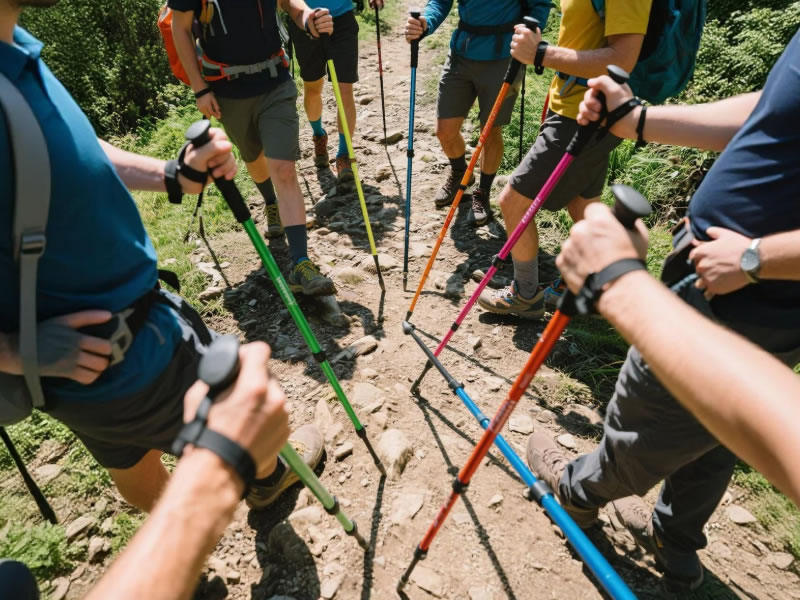
In a group setting, poles get mixed up. Choosing poles in bright colors (orange, red, blue) makes them easy to spot against forest floors and helps participants quickly identify their borrowed pair. Some brands offer custom color‑coding options, which can be a practical advantage for organizations managing larger inventories.
Safety Considerations for Groups
- Wrist straps: While wrist straps improve efficiency, they can confuse first‑time users. Consider demonstrating proper strap use or, for casual groups, encourage participants to hold poles without strapping in to avoid entanglement.
- Number of poles: Decide whether to offer pairs or single poles. For groups with mixed mobility needs, having both options available allows participants to choose what feels most stable.
- Pre‑hike orientation: Budget 10–15 minutes at the start of any group event to demonstrate pole adjustment, proper height (elbow at 90 degrees when tip is planted), and safe walking techniques. This small investment prevents mid‑hike confusion and reduces injury risk.
Recommended Pole Types for Groups
| Use Case | Recommended Features |
|---|---|
| Large community events | Aluminum telescoping poles, lever locks, rubber tips, foam grips |
| Corporate or team‑building | Foldable Z‑poles, bright colors, included carrying bags |
| Mixed‑ability outings | Lightweight with cork grips, extra rubber tip sets, easy adjustment |
| Youth or beginner groups | Durable aluminum, simple lever locks, no wrist straps required |
Maintenance for Longevity
Group poles endure more wear than personal poles. After each event:
- Wipe down shafts to remove dirt that can abrade locks.
- Inspect rubber tips for wear and replace as needed.
- Check lever locks for tightness and adjust with a screwdriver if they loosen.
- Store poles extended or partially collapsed—never fully tightened during storage to preserve mechanism life.
Final Thoughts
The best walking poles for group hiking events are those that balance adjustability, durability, safety, and ease of use. They should be intuitive enough for a first‑time hiker yet reliable enough for seasoned participants. By choosing poles with lever locks, aluminum shafts, rubber tips, and comfortable grips—and by taking time for a brief orientation—you’ll ensure that your group hike is defined by camaraderie and scenery, not gear frustrations. Whether you’re leading ten or a hundred, the right poles keep everyone steady and moving together.




