




Trekking Poles with integrated heart rate monitors?
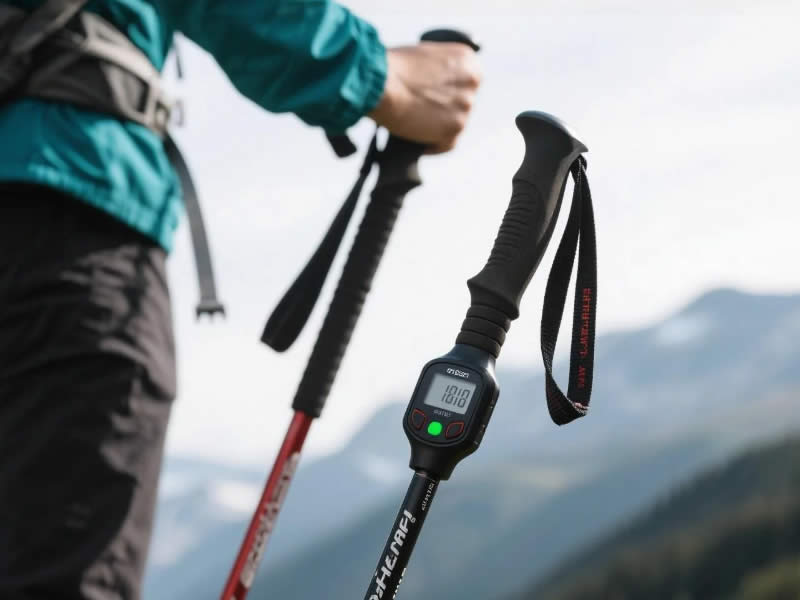
Wearable technology has revolutionized fitness tracking, from wrist-based heart rate monitors to chest straps and smart rings. For outdoor enthusiasts who use trekking poles—whether for Nordic walking, hiking, or trail running—the next logical question is: why not put the heart rate sensor directly into the poles? After all, your hands are already gripping the poles. Could integrated sensors provide seamless, accurate heart rate data without the need for an extra device? The short answer is that such poles are extremely rare and not yet mature, but the concept holds promise. This article explores the current state, technical challenges, available products, and whether you should consider them.
Recommended trekking pole purchase link: https://s.click.aliexpress.com/e/_c4M7OWaN
How Would Integrated Heart Rate Monitors Work?
The most plausible design involves optical heart rate sensors embedded in the grip area. These sensors use photoplethysmography (PPG): LEDs shine light into the skin, and photodiodes measure blood volume changes, calculating heart rate. Similar technology is found in smartwatches and fitness bands.
In a trekking pole, the sensor would need to maintain consistent contact with the palm or fingers. Unlike a watch that sits snugly on the wrist, a pole grip is held with variable pressure. As you walk, your grip may shift, loosen, or tighten. The sensor would also need to reject motion artifacts caused by the swinging and planting of the pole—a significant challenge.
Current Availability (2026)
As of this writing, no major trekking pole brand (Leki, Black Diamond, Komperdell, REI, Cascade Mountain Tech) offers a production model with an integrated heart rate monitor. A few small startups and concept products have appeared at trade shows, but none have reached widespread retail. You may find:
- Prototypes from university labs or niche fitness tech companies.
- Kickstarter campaigns that often fail to deliver durability or accuracy.
- Hybrid designs where a detachable sensor pod fits into the grip and communicates with a phone.
The closest available alternative is not a pole at all, but smartwatch + standard poles or chest strap + standard poles.
Technical Challenges
Why haven’t major brands embraced this?
- Motion artifacts – Poles move dynamically. Each plant creates an impact shock. Optical sensors require stable skin contact; otherwise, noise overwhelms the signal. Current algorithms are not robust enough for pole sports.
- Grip variability – Users wear gloves, mittens, or bare hands. Gloves block optical sensors. Sweat, dirt, and sunscreen interfere. Different grip styles (full palm, fingertip, loose hold) change sensor contact.
- Battery and electronics – Adding a heart rate sensor, battery, Bluetooth chip, and waterproofing increases weight, cost, and complexity. Pole shafts are already slender; fitting electronics without compromising strength is difficult.
- Durability – Poles endure impacts, rain, mud, and temperature extremes. Electronics must survive being dropped, submerged, and frozen. IP ratings help, but consumer expectations for longevity are high.
- Cost vs. benefit – A quality chest strap (e.g., Polar H10) costs ~$80 and provides medical‑grade accuracy. A heart‑rate‑enabled pole would likely cost $200–300 more than standard poles. Many users would rather buy a separate monitor and use any poles.
Why Heart Rate Data Matters for Pole Users
Heart rate monitoring is valuable for:
- Zone training – Staying in aerobic or fat‑burn zones.
- Avoiding overexertion – Especially for cardiac rehabilitation or seniors.
- Calorie estimation – More accurate than step counts alone.
- Progress tracking – Seeing resting heart rate trends.
For Nordic walking, which engages upper and lower body, heart rate response differs from regular walking. A pole‑integrated sensor could theoretically give more accurate effort data than a wrist device that may lose signal due to arm swing changes.
Better Alternatives Available Today
Until integrated poles mature, use these reliable options:
| Method | Accuracy | Convenience | Cost | Best for |
|---|---|---|---|---|
| Chest strap (Polar, Garmin) | Excellent | Moderate (needs pairing) | $50–100 | Serious fitness walkers |
| Optical arm band (Scoche, Wahoo) | Very good | Good | $80–130 | Comfort, no chest strap |
| Smartwatch (Apple, Garmin, Suunto) | Good (wrist) | High (all‑in‑one) | $200–600 | Multisport users |
| Standard poles only | N/A | High | $40–100 | Casual walkers |
All of these pair with a phone or watch. You can use any trekking poles while wearing a chest strap or arm band—no integration needed.
What to Look for If You Want Integrated Poles
If you are determined to experiment, seek:
- Replaceable sensor pod – Allows you to remove the electronics for charging or when not needed.
- IPX7 or higher waterproofing – Resists rain and immersion.
- Comfortable grip with sensor placement – Should not create a bulge that causes blisters.
- Bluetooth 5.0+ – For reliable connection to phone or watch.
- Long battery life – At least 10 hours of continuous monitoring.
Warning: Be skeptical of crowdfunding campaigns. Wait for independent reviews that test accuracy against a medical‑grade ECG chest strap.
The Future Outlook
As sensor miniaturization continues, integrated heart rate monitors in poles may become viable within 3–5 years. Key advancements needed:
- Improved motion‑resistant algorithms using machine learning.
- Low‑power optical sensors that last 20+ hours.
- Modular designs where the sensor is a removable, rechargeable pod.
Nordic walking’s growing popularity may drive demand. However, the market is small compared to running or cycling, so innovation may come slowly.
Final Thoughts
Trekking poles with integrated heart rate monitors are an intriguing concept but not yet a practical reality. No major brand offers a reliable production model as of 2026. The technical hurdles—motion artifacts, grip variability, durability, and cost—remain significant. For now, the smartest approach is to pair standard trekking poles with a chest strap or arm‑band heart rate monitor. This combination provides excellent accuracy, uses proven technology, and costs less than a hypothetical smart pole. If you love gadgets, watch the space—but don’t hold your breath. Your heart rate is best measured by devices designed for the job, not strapped to your walking sticks.




