




Trekking Poles for search and rescue operations?
Search and rescue (SAR) teams operate in some of the most demanding environments imaginable: steep, unstable slopes; dense, wet forests; deep snow; and debris‑filled canyons. Every piece of gear must be tough, reliable, and versatile. Trekking poles are no exception. In fact, for many SAR volunteers and professionals, a good pair of poles is as essential as a headlamp or a first aid kit. But the poles that work for a weekend hiker are not necessarily the best for search and rescue. This article outlines the unique demands of SAR work, the features that matter most, and which poles are up to the task.
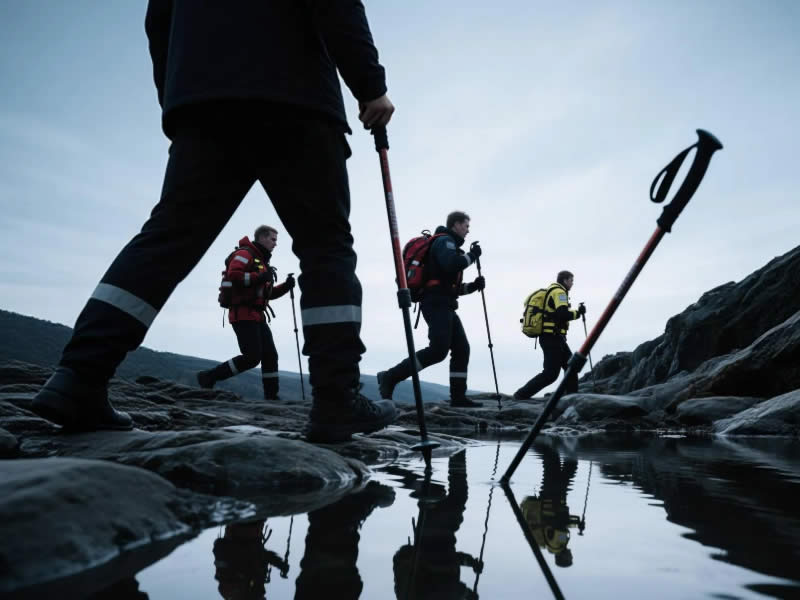
Recommended trekking pole purchase link: https://s.click.aliexpress.com/e/_c4M7OWaN
Why SAR Teams Need Specialized Poles
Standard trekking poles are designed for walking – providing balance, reducing joint impact, and aiding rhythm. SAR personnel use poles for much more:
- Probing – Checking snow depth, feeling for hidden voids or buried subjects in avalanche debris or mud.
- Stability on uneven terrain – While carrying heavy packs (medical kits, litters, ropes) on loose scree or wet logs.
- Self‑belay – On steep snow or icy trails, poles can be used as an emergency anchor (though an ice axe is better).
- Leverage – Moving small rocks or debris, or assisting a subject in standing.
- Marking – Planting brightly colored poles to mark a search area or a found item.
- Shelter support – Quickly rigging a tarp or emergency bivy.
These tasks subject poles to lateral loads, impacts, and abrasion that would destroy lightweight or poorly made models. SAR poles must be overbuilt.
Critical Features for SAR Trekking Poles
1. Aluminum Shafts – No Carbon Fiber
Carbon fiber is light and stiff, but it fails catastrophically under side loads or impact. A carbon pole can snap when wedged between rocks or used to pry. Aluminum bends before breaking – and a bent aluminum pole can often be straightened in the field to finish a mission. For SAR, 7000‑series aluminum (e.g., 7075) is the gold standard.
2. Flip Locks (Lever Locks) – Not Twist Locks
Twist locks are prone to slipping when wet, muddy, or cold. They are also harder to adjust with gloves on. Flip locks provide a positive, visual lock and can be tightened with a simple screwdriver if they loosen. In SAR, you need locks that will not fail when you lean your full weight on the pole while pulling a subject.
3. Replaceable Carbide Tips
Probing through gravel, asphalt, or snow quickly wears down tips. Poles with replaceable carbide tips (screw‑in or press‑fit) allow you to swap worn tips in minutes. Non‑replaceable tips mean the entire pole is trash once the tip rounds. Most quality SAR‑oriented poles have replaceable tips.
4. Large, Interchangeable Baskets
Standard small baskets are fine for hardpack, but SAR often works in mud, snow, or loose soil. Mud baskets (also called power baskets) prevent the pole from sinking deeply, saving energy and time. Snow baskets (larger yet) are essential for winter missions. Interchangeable baskets allow you to adapt to conditions.
5. Durable, Comfortable Grips
SAR missions can last 12+ hours. Grips must be comfortable, non‑slippery when wet or sweaty, and resistant to abrasion. Cork grips are excellent – they mold to your hand, wick moisture, and are reasonably durable. Some SAR personnel prefer ribbed rubber grips (e.g., Leki’s Aergon) for maximum durability and grip with gloves. Avoid foam – it tears too easily.
6. Extended Grip Length (Choke Grip)
Many SAR poles have a foam or rubber extension below the main grip, allowing you to choke down for steep traverses or when using the pole for balance on sidehills. This feature is very useful.
7. Wrist Straps That Are Strong and Quick‑Release
Straps must be wide, padded, and adjustable to fit over gloves. Quick‑release systems (like Leki’s Trigger) allow you to detach the pole instantly if you need free hands for a rope or a patient. Traditional fixed straps can be dangerous if you fall and the pole gets caught.
Top Trekking Poles for SAR Operations
1. Leki Makalu (Aluminum, Cork Grip)
- Shaft: 7075 aluminum
- Locks: Flip locks with metal levers
- Grip: Cork with extended foam choke grip
- Tips: Replaceable carbide (Leki spare parts widely available)
- Baskets: Interchangeable (mud and snow baskets sold separately)
- Weight: ~260g per pole
- Price: $120–160
- Why it’s great: Bombproof. Used by mountain guides and SAR teams worldwide. The cork grip is comfortable for all‑day use. The extended grip is perfect for steep terrain. Parts are easy to find.
2. Black Diamond Trail Ergo Cork
- Shaft: Aluminum (Black Diamond’s own alloy)
- Locks: FlickLock (proven flip lock)
- Grip: Cork with ergonomic shape
- Tips: Replaceable carbide
- Baskets: Interchangeable (mud baskets available)
- Weight: ~270g per pole
- Price: $130–150
- Why it’s great: The FlickLock is legendary for reliability. The ergonomic cork grip reduces wrist strain. Durable and easy to clean.
3. Komperdell Expedition Cork
- Shaft: 7075 aluminum
- Locks: Power Lock 2.0 (flip lock)
- Grip: Cork with extended foam section
- Tips: Replaceable Vario tips
- Baskets: Interchangeable power baskets (large diameter)
- Weight: ~280g per pole
- Price: $140–180
- Why it’s great: European quality. The power baskets are larger than standard, ideal for soft terrain. Very robust.
4. Cascade Mountain Tech Aluminum (Budget SAR Option)
- Shaft: 6061 aluminum (less strong, but still adequate for many SAR roles)
- Locks: Flip locks
- Grip: Cork
- Tips: Replaceable (Cascade sells replacement tips)
- Baskets: Interchangeable (aftermarket mud baskets available)
- Weight: ~240g per pole
- Price: $50–70
- Why it’s great: Excellent value for volunteer SAR teams on a tight budget. Not as durable as Leki or BD, but cheap enough to replace every couple of years. Many SAR teams buy these as loaners for new members.
What to Avoid for SAR
- Carbon fiber poles – Too brittle for probing and prying.
- Twist locks – Unreliable in wet/cold conditions.
- Non‑replaceable tips – Once worn, the pole is useless.
- Ultralight models – They sacrifice durability for weight.
- Folding (Z‑style) poles – The joints are weaker than telescoping sections and can fail under lateral stress.
Additional Considerations for SAR Teams
- Color: Bright colors (red, orange, yellow) are easier to spot if dropped in the woods or snow. They also serve as visual markers.
- Reflective elements: Useful for night operations when illuminated by headlamps.
- Noise: Rubber tips can be removed for stealth approaches, but for general use, rubber tips reduce noise – important in wilderness search to avoid startling a subject or wildlife.
- Spare parts kit: Carry extra tips, a small screwdriver, and a few zip ties. In the field, a broken lock can sometimes be temporarily fixed with a zip tie.
Maintenance for SAR Poles
After a mission, especially in mud or saltwater, rinse poles thoroughly. Disassemble sections and clean locks. Apply a light silicone lubricant to the shaft (not the lock). Tighten flip lock screws periodically. Inspect tips – replace if worn. Store poles extended or partially collapsed, never fully tightened, to preserve lock springs.
Final Thoughts
Search and rescue is physically and mentally demanding. Your gear must be an asset, not a liability. Trekking poles for SAR operations need to be rugged, reliable, and versatile – aluminum shafts, flip locks, replaceable carbide tips, and comfortable cork grips. Models like the Leki Makalu, Black Diamond Trail Ergo, and Komperdell Expedition are proven choices. While they cost more than budget poles, they will last through years of hard use and may even help save a life. Invest wisely, maintain them well, and thank you for your service.




