




Military-grade walking poles – available?
The term “military‑grade” is often used to suggest extreme durability, but when it comes to trekking poles, there is no official military standard or specification. No branch of the armed forces issues a standard‑issue walking pole, and no manufacturer can legitimately claim a “military‑grade” certification. However, that does not mean there are no poles rugged enough for tactical, survival, or field‑use scenarios. This article explains what “military‑grade” implies, which real‑world poles come closest, and what features to look for if you need a bombproof pair for demanding environments.
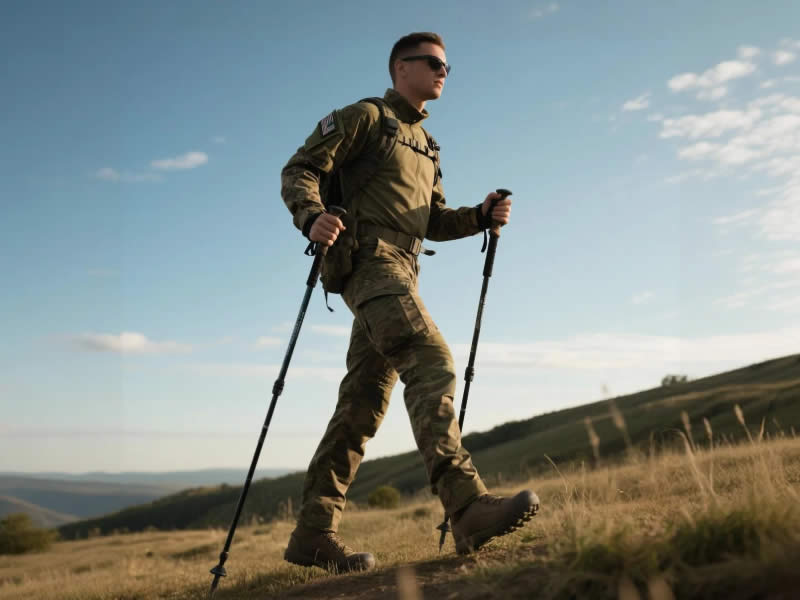
Recommended trekking pole purchase link: https://s.click.aliexpress.com/e/_c4M7OWaN
What Does “Military‑Grade” Actually Mean?
In common marketing language, “military‑grade” typically refers to products that meet or exceed certain MIL‑STD (military standard) requirements for durability, temperature resistance, or impact tolerance. For example, MIL‑STD‑810G covers environmental testing (vibration, humidity, salt fog, etc.). However, no trekking pole manufacturer has publicly claimed compliance with such standards, and no independent testing verifies it.
Therefore, when someone asks for “military‑grade walking poles,” they usually mean poles that are:
- Extremely durable (able to withstand heavy lateral loads, impacts, and abrasion)
- Reliable in extreme temperatures and wet conditions
- Easy to maintain and repair in the field
- Non‑reflective or subdued in color (for tactical use)
- Compatible with gloves and other gear
Why No “Official” Military Walking Poles?
The military does not issue trekking poles as standard equipment. Soldiers carry rifles, packs, and other mission‑specific gear. Walking poles are seen as optional, not essential. Some special forces or mountain warfare units may purchase commercial poles privately, but there is no centralized procurement. Thus, no manufacturer invests in MIL‑STD certification for a niche product.
Closest Real‑World Options: Heavy‑Duty Commercial Poles
Several brands produce poles that are robust enough for military‑adjacent use (search and rescue, wilderness survival, law enforcement patrols, etc.). These are the models you should consider:
1. Leki Makalu (Aluminum, Cork Grip)
- Why it’s tough: 7075 aluminum shaft, metal flip locks, replaceable carbide tips, extended grip for choking down.
- Used by: Mountain guides, SAR teams, and some military mountain units.
- Weight: ~260g per pole.
- Price: $120–160.
- Notes: Not “military‑grade” by label, but proven in extreme conditions.
2. Black Diamond Trail Ergo Cork
- Why it’s tough: Black Diamond’s FlickLock is legendary for reliability. Aluminum shaft, comfortable cork grip.
- Used by: Backcountry rangers, SAR volunteers.
- Weight: ~270g.
- Price: $130–150.
- Notes: The locking mechanism is simple and field‑repairable.
3. Komperdell Expedition Cork
- Why it’s tough: 7075 aluminum, Power Lock 2.0 metal levers, large power baskets.
- Used by: European mountain guides and alpine rescue.
- Weight: ~280g.
- Price: $140–180.
- Notes: Overbuilt; one of the strongest poles on the market.
4. Pacerpole (Aluminum version)
- Why it’s tough: Unique ergonomic grip, but the shaft is standard aluminum. Not necessarily stronger than others, but the grip reduces wrist fatigue during long patrols.
- Used by: Some military rehabilitation programs.
- Weight: ~280g.
- Price: $150–200.
Features to Look For in a “Military‑Grade” Pole
If you are shopping for a pole that can survive hard use, ignore marketing fluff and focus on these characteristics:
- Material: 7075 aluminum (not carbon fiber). Carbon snaps under lateral stress; aluminum bends and can sometimes be straightened.
- Locking mechanism: Flip locks (lever locks) with metal cams – plastic levers break. Avoid twist locks.
- Tip: Replaceable carbide tip (screw‑on or press‑fit). Non‑replaceable tips are a deal‑breaker.
- Grip: Cork or high‑density rubber with an extended section for choking down. Foam tears too easily.
- Baskets: Interchangeable, with large mud/snow baskets available.
- Color: Matte black, olive drab, or coyote brown for low visibility. Bright colors are easier to find if dropped, but not tactical.
- Wrist straps: Padded, adjustable, and quick‑release (e.g., Leki Trigger) for safety and convenience.
What to Avoid
- Carbon fiber poles – Too brittle for any lateral force.
- Twist locks – Unreliable when wet or muddy.
- Folding (Z‑style) poles – The joints are weak points.
- Ultralight models – They sacrifice durability for weight savings.
- Non‑replaceable tips – Once worn, the pole is trash.
Do Any Brands Claim “Military‑Grade”?
A few lesser‑known brands (often on Amazon) use the term “military‑grade” in their listings, but this is almost always marketing hype. They rarely specify which MIL‑STD they meet, and independent reviews often reveal poor quality. Stick with established outdoor brands: Leki, Black Diamond, Komperdell, and Pacerpole.
Can You Modify Standard Poles for Tactical Use?
Yes. You can:
- Apply matte camouflage tape to reduce reflections.
- Replace bright straps with black or olive ones (aftermarket).
- Add a small compass or signal mirror to the grip cap.
- Carry spare tips and a small multi‑tool in your kit.
Real‑World Feedback from Military Users
On forums and gear review sites, some active‑duty and veteran users report using Leki Makalu or Black Diamond poles during mountain training, land navigation courses, and even on deployments for stability while carrying heavy loads. They emphasize that poles are not weapons or climbing tools, but they appreciate the reduced fatigue on long movements. Common complaints: the noise of carbide tips on pavement (use rubber covers) and the need to periodically tighten flip lock screws.
Final Thoughts
There is no such thing as an officially “military‑grade” walking pole, but several commercial models are tough enough to handle military‑style abuse. Focus on 7075 aluminum, flip locks with metal cams, replaceable carbide tips, and comfortable cork grips. Leki Makalu, Black Diamond Trail Ergo, and Komperdell Expedition are your best bets. Avoid carbon fiber, twist locks, and ultralight designs. With proper care, these poles will serve you through years of demanding field use – whether you’re in uniform or just want gear that won’t let you down.




