




Are trekking poles necessary for day hiking in the Alps?
The short answer: no, they are not strictly necessary. Many Alpine day hikers complete stunning routes like the Eiger Trail or Germany’s Zugspitze without poles. However, “necessary” is the wrong question. The right question is: “Will they make my hike safer, more enjoyable, and less painful?” For most Alpine day hikes, the answer is a clear yes.
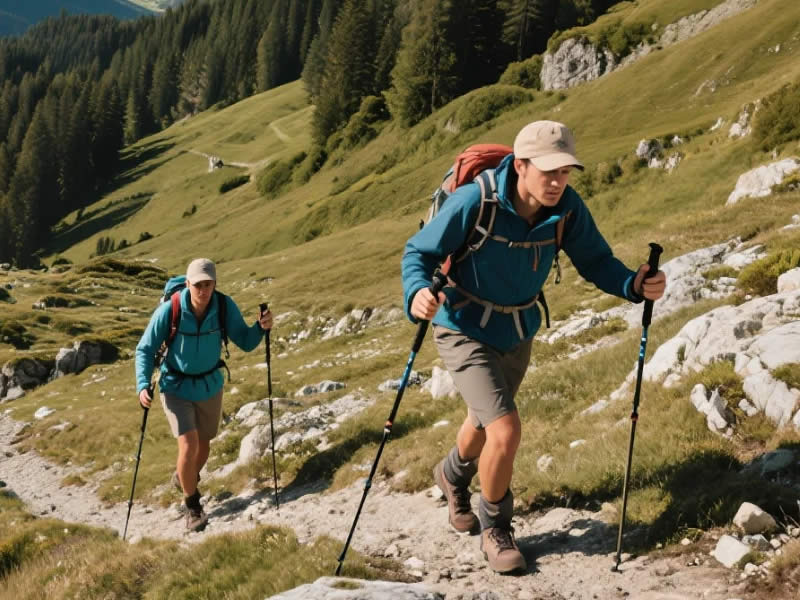
Recommended trekking pole purchase link: https://s.click.aliexpress.com/e/_c4M7OWaN
Why the Alps are different from lowland trails
Alpine day hiking involves steep, sustained gradients – often 500–1,000 meters of elevation gain and loss within a few hours. The terrain includes loose scree, polished limestone, wet grass, and rocky switchbacks. Unlike a flat forest path, a single slip on an Alpine descent can result in a long fall. Poles provide four points of contact, dramatically improving stability on unstable surfaces.
The knee argument – real and significant
Every step downhill on a steep Alpine trail sends a force of 3–5 times your body weight through your knees. Over a 1,000‑meter descent, that’s thousands of high‑impact shocks. Trekking poles transfer 20–25% of that load to your arms, sparing your quadriceps and kneecaps. For hikers over 40 or those with previous knee issues, poles are not just helpful – they’re protective.
When you might skip poles
- Short, low‑elevation loops (under 300m gain) on well‑maintained gravel paths.
- Scrambling routes where you need both hands free for rock holds (poles become an annoyance).
- Via ferrata – you’ll stow poles anyway because you need both hands for steel cables.
- Personal preference – some experienced mountaineers simply prefer the freedom of hands‑free hiking.
The case for taking poles even on “easy” Alpine days
Weather in the Alps changes fast. A sunny morning can turn into a rainy, slippery afternoon. Poles give you confidence on wet rock. They also help with stream crossings, testing snow bridges, and fending off curious marmots (just kidding). Additionally, poles reduce arm swelling – a common issue when you hike with arms hanging down for hours.
What about weight and hassle?
Good aluminum poles weigh ~500g per pair. That’s a small price for the safety and knee protection they offer. Modern folding poles pack down to 35–40 cm, easily strapped to a daypack. The few minutes spent adjusting length are trivial compared to the hours of comfort gained.
Expert consensus
Alpine guides and hut wardens almost universally recommend poles for day hikers. A 2022 survey of German Alpine Club (DAV) members found that 78% of regular Alpine day hikers use poles. The 22% who don’t are mostly young, fit, and hiking on forgiving trails.
Final verdict
Are trekking poles necessary for day hiking in the Alps? No. But are they a smart, low‑cost investment in your safety, knee health, and overall enjoyment? Absolutely. If you plan more than one or two Alpine days per year, buy a pair. Your 60‑year‑old knees will send you a thank‑you note. For the occasional gentle Alpine stroll on a perfect day, feel free to leave them at home. But if there’s any doubt – take them. You can always carry them in your hand or strap them to your pack.




