




Do I really need two trekking poles or is one enough?
You see hikers on German trails using a single wooden staff, while others plant two high‑tech poles. Which is right? The answer depends on your terrain, body, and goals. Let’s examine the science and practical experience to help you decide.
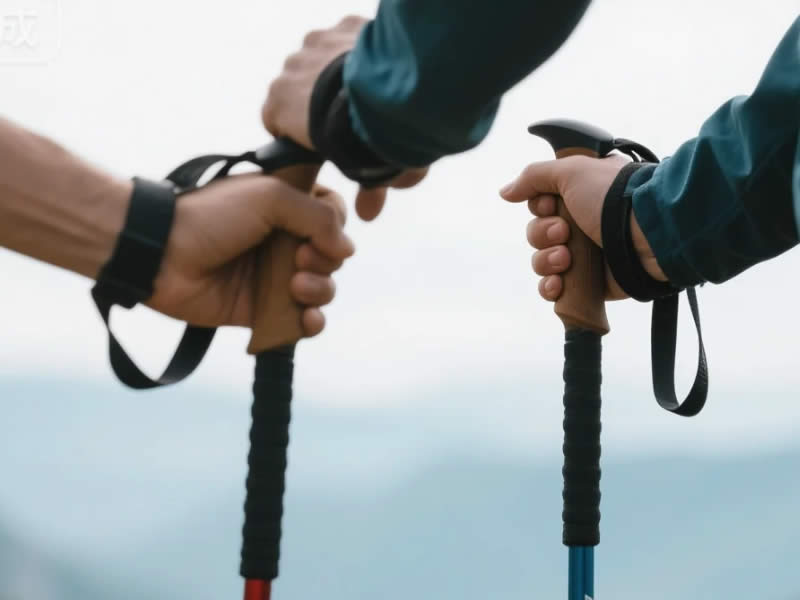
Recommended trekking pole purchase link: https://s.click.aliexpress.com/e/_c4M7OWaN
The case for two poles
Using a pair of trekking poles provides bilateral support. On steep Alpine descents, two poles transfer 20–25% of your body weight from your legs to your arms, significantly reducing impact on knees and hips. Research published in the Journal of Biomechanics shows that two poles lower knee joint loading by up to 25% compared to no poles – and even compared to one pole, the reduction is substantial because the load is distributed evenly across both sides of your body.
Two poles also improve balance and rhythm. On narrow, root‑covered trails or loose scree, four points of contact (two feet + two poles) create a stable base. You can plant one pole while moving the other, creating a natural walking cadence that saves energy over long distances. For backpackers carrying more than 8 kg, two poles are essential to counteract the forward pull of a heavy pack.
The case for one pole
A single walking stick or trekking pole can be sufficient for gentle, well‑maintained trails with little elevation change. Think of a flat forest path along a river or a gravel promenade. One pole helps with minor balance and gives you a free hand to drink water, use a map, or take photos. Some hikers with an old injury on one side prefer a single pole to offload only the affected leg.
However, a single pole creates asymmetrical loading. Your body twists slightly with each step to compensate, which can lead to back or hip pain over many kilometres. On steep descents, one pole only protects one knee – the other knee still takes full impact.
What the experts say
Alpine guides, physiotherapists, and long‑distance thru‑hikers overwhelmingly recommend two poles for any hike with significant elevation gain or rough terrain. The German Alpine Club (DAV) states in its training materials: “For safety and joint protection on Alpine trails, two poles are the minimum.” The only exceptions are very short, flat walks or when you need one hand free for scrambling (in which case you stow both poles).
The compromise: one pole plus a free hand?
Some hikers carry two poles but use only one on flat sections, then deploy both for descents. That’s a sensible approach. But deliberately buying only one pole is rarely a good idea – you can always carry the second collapsed on your pack.
Final verdict
For casual, flat, short walks (under 5 km, minimal elevation), one pole is enough. For everything else – Alpine day hikes, multi‑day treks, backpacking, or any trail with steep sections – two poles are significantly better. They protect both knees, improve balance, reduce fatigue, and cost only a few euros more than a single pole. Buy a pair, learn to use the wrist straps, and your body will thank you after every descent.




